IN Brief:
- EGA will route up to 250,000 tonnes of aluminium through Khorfakkan Port during the first year of the agreement.
- Planned volume rises to as much as 300,000 tonnes in year two, with scope for further growth afterwards.
- Gulftainer will develop port capabilities at Khorfakkan to support EGA’s additional industrial export traffic.
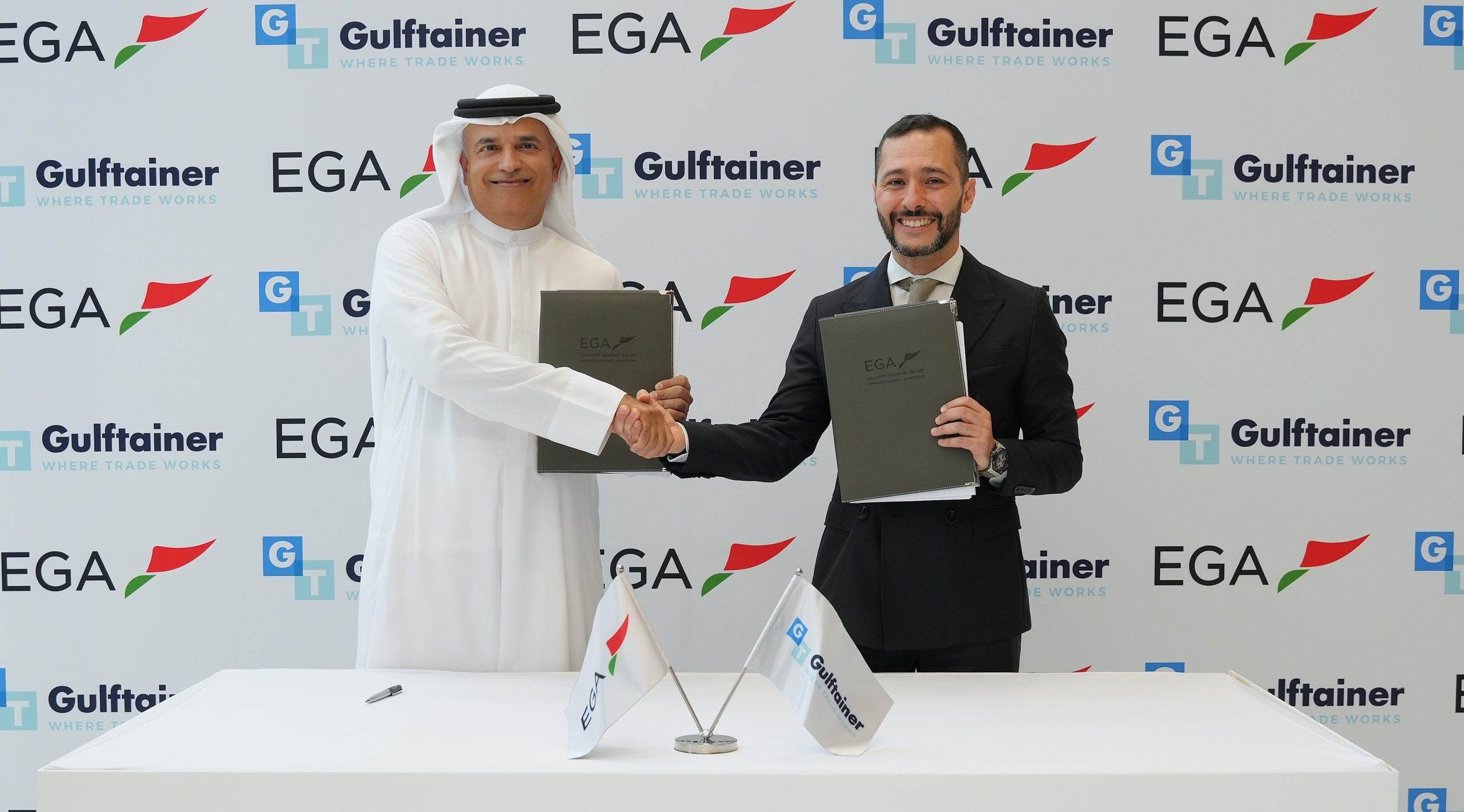
Emirates Global Aluminium will route up to 250,000 tonnes of aluminium through Khorfakkan Port during the first year of a new agreement with Gulftainer, adding another export channel for one of the UAE’s largest industrial manufacturers.
Volumes are planned to rise to as much as 300,000 tonnes during the second year, with the companies leaving scope for further increases afterwards. Gulftainer has committed to developing Khorfakkan’s port capabilities to accommodate EGA’s requirements as the additional metal flow is introduced.
The agreement adds physical export capacity around a manufacturer supplying customers in more than 50 countries. EGA produces aluminium for international industrial markets, making the movement from production site to vessel an important part of its ability to convert manufacturing output into customer deliveries.
Finished aluminium logistics involves different handling requirements from conventional container freight. Metal can leave production in several forms and dimensions, with individual loads requiring suitable transport equipment, storage areas, lifting arrangements, and cargo protection before shipment.
The scale of the agreement gives the port a substantial recurring industrial flow. At the maximum first-year volume, Khorfakkan would handle more than 20,000 tonnes a month if movements were distributed evenly, although actual shipments are likely to arrive in larger batches linked to production and vessel schedules.
That variation matters to terminal planning. A port needs sufficient storage and handling capacity for peak cargo arrivals rather than merely the mathematical monthly average, particularly when several shipments or other cargo streams require the same working areas.
Gulftainer has not yet detailed the machinery, storage layout, or other physical infrastructure that will be added for the EGA traffic. The agreement therefore establishes the tonnage and commitment to develop capability, while the equipment specification remains a later operational milestone.
For EGA, the additional route forms part of a wider effort to diversify outbound logistics. Manufacturing supply chain resilience is often discussed around raw materials and inbound suppliers, but a producer can face equally serious disruption when finished goods cannot reach shipping capacity or export infrastructure on schedule.
Using more than one gateway gives logistics planners another option when vessel availability, terminal congestion, or other operating conditions change. It does not remove risk, because each route still depends on road transport, port handling, shipping connections, and suitable storage, but it avoids concentrating every export movement through one physical channel.
The arrangement also gives Gulftainer a long-term industrial cargo flow around which to develop services. Large manufacturing customers differ from occasional project cargo because their output can generate repeated movements through the port over several years, making equipment availability and consistent handling performance commercially important.
Aluminium cargo also requires attention to condition and traceability. Finished metal has substantially higher value than many bulk commodities, and damage during handling can create problems for customers using it in subsequent manufacturing processes. Port operations therefore have to balance throughput with the need to prevent impact damage, contamination, or incorrect shipment allocation.
Storage can become a particularly important interface between production and shipping. A factory may produce continuously while vessels call at specific times, leaving finished metal to be accumulated before loading. Adequate port or near-port capacity prevents the shipping schedule from imposing the same timing directly onto the production operation.
The logistics requirement extends inland as well. Material must move from EGA’s production facilities towards Khorfakkan in sufficient volume to support vessel loading without overwhelming road or terminal capacity. The port development will consequently need to account for landside arrival patterns as well as marine handling.
Gulftainer’s announcement describes Khorfakkan as an additional strategic gateway for EGA rather than a replacement for its existing export network. The distinction is important because the commercial benefit comes from adding routing options while retaining the ability to use established channels elsewhere.
The second-year increase to 300,000 tonnes also gives the terminal a defined growth profile. Equipment and storage introduced for the initial flow need sufficient headroom to accommodate another 50,000 tonnes annually if the agreement reaches its stated second-year maximum.
There is no evidence yet of how quickly volumes will ramp up or which specific aluminium products will dominate the traffic. Those details will affect handling methods, storage density, loading equipment, and the balance between containerised and other cargo arrangements.
The current agreement therefore establishes a measurable industrial logistics programme rather than simply a port partnership announcement. Gulftainer has a commitment to develop capability, while EGA has identified maximum tonnage for the first two years.
The next useful stage will be the physical implementation: equipment, storage, and operating arrangements capable of receiving the metal and transferring it into international shipping services. Once those details emerge, the scale of Khorfakkan’s role in EGA’s outbound network will become considerably clearer.