IN Brief:
- Radha Exports has selected Körber for automated pallet storage and material movement at its new Pandan Road facility in Singapore.
- The design combines smart shuttle technology with interfloor conveying and a five floor pallet lifter.
- The automated system will provide almost 9,000 pallet positions while supporting Radha’s retail and wholesale distribution network.
Körber Supply Chain will deploy high density automated pallet storage and interfloor handling technology at Radha Exports’ new Pandan Road facility in Singapore, providing almost 9,000 pallet positions within a multi level operation.
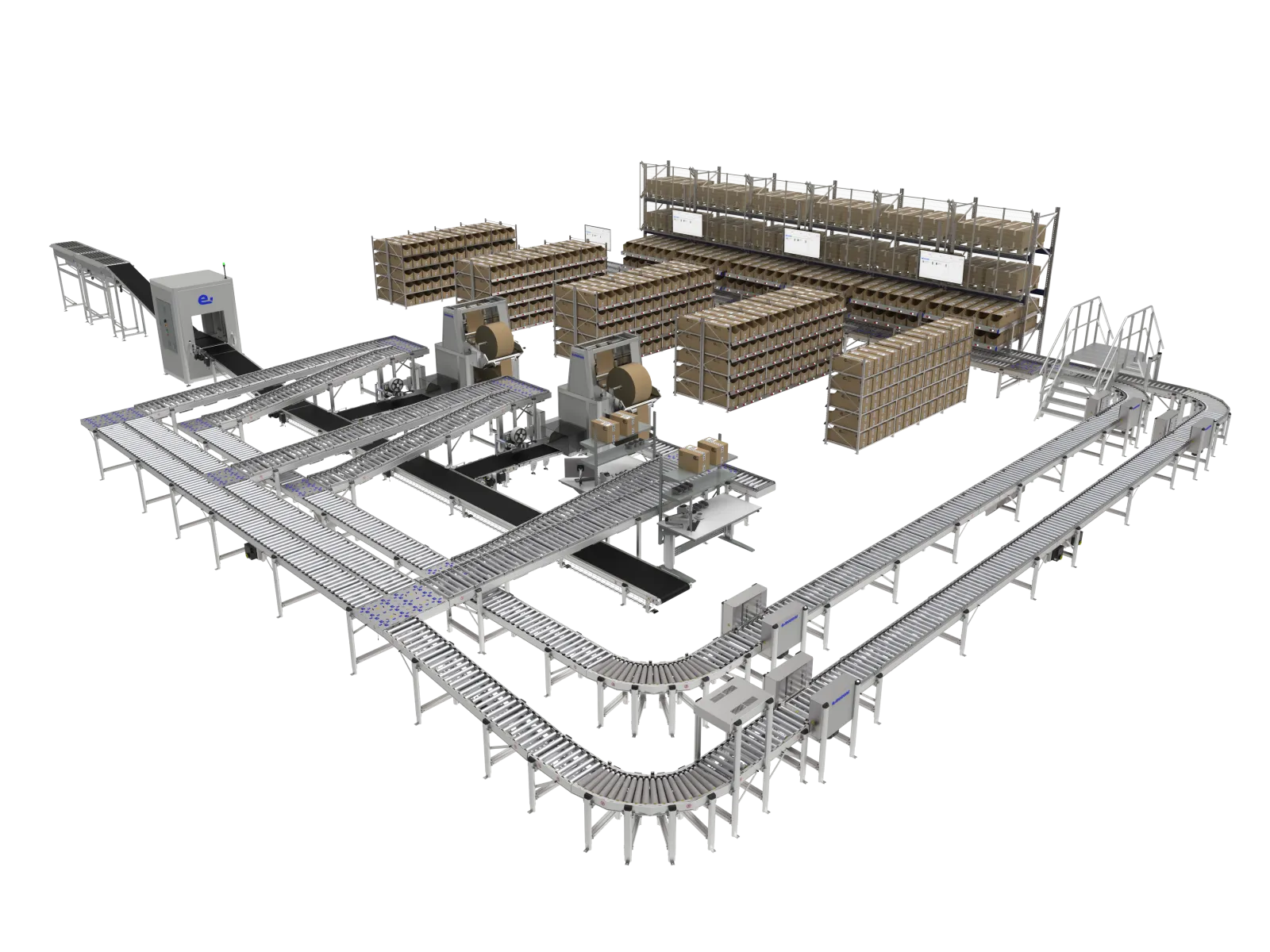
The system combines smart shuttle storage, conveyors and a five floor pallet lifter, allowing pallets to move both horizontally and vertically through the building without relying solely on conventional lift trucks and manual transfer points.
Radha Exports operates more than 200 outlets in Singapore through ABC Bargain Centre, ValuDollar and Japan Home. As an importer, wholesaler and retailer, the company has to receive international product flows and replenish a substantial store network in a market where industrial land is limited and warehouse density carries a significant property value.
High density shuttle storage reduces the floor area consumed by access aisles. Conventional selective racking gives lift trucks direct access to individual pallet positions, whereas a shuttle system can store pallets deeper within a lane and use automated equipment to bring loads to defined transfer points.
Greater density increases dependence on the handling system because pallets inside an automated lane cannot simply be reached by redirecting a conventional truck around a failed component. Controls, shuttles, conveyors, lifts and transfer points all have to remain sufficiently available for inventory to move when required.
The vertical layout at Pandan Road adds another constraint. A pallet lifter serving five floors has to coordinate incoming and outgoing loads with the conveyor systems on each level, while buffers are needed to prevent temporary differences in flow from stopping equipment elsewhere in the building.
If pallets arrive at the lift faster than it can process them, queues can form at transfer points and constrain upstream equipment. Conversely, an idle lift can reduce total throughput even when the storage system itself still has substantial unused capacity.
Software sequencing therefore becomes as important as the mechanical installation. Pallets need to be released in an order that reflects store demand, replenishment priorities and available downstream handling capacity rather than simply the sequence in which they were placed into storage.
The planned storage capacity gives Radha a substantial automated inventory reserve for consumer goods moving through its three retail brands. Product characteristics will influence how that capacity is allocated because fast moving stock creates different replenishment requirements from products held for longer periods.
Singapore logistics operators are increasingly using automation to extract more throughput from constrained industrial space. ALP and CapitaLand recently began developing the S$260m OMEGA 1 logistics hub, another project combining automated storage with high density logistics infrastructure.
Radha’s installation differs because the automation is being designed around one company’s existing distribution network rather than a speculative or multi-tenant facility. Known store volumes, product ranges and replenishment patterns can therefore inform the design before the system enters operation.
That does not remove the need for flexibility. Retail ranges and demand patterns change, which means storage logic has to accommodate different product velocities without requiring the physical system to be rebuilt whenever the merchandise mix shifts.
Shuttle technology can support that adjustment because locations and inventory rules can change through software, but the installed mechanical capacity still imposes limits. Storage positions, lift throughput and conveyor rates determine how much activity the building can absorb during peaks.
Maintenance planning also becomes more consequential as automated equipment assumes tasks previously distributed among manually operated vehicles. A fault in one critical lift or transfer point can affect several floors at once, making spare parts, diagnostics and technician response important parts of warehouse continuity planning.
The labour requirement changes alongside the equipment rather than disappearing. Repetitive pallet transfers can be automated while employees remain responsible for receiving, dispatch, inventory control, exception handling, system supervision and work that falls outside the standard automated route.
Retail distribution also creates pronounced peaks around promotions and seasonal periods. Dense storage provides space for inventory, but outbound performance still depends on how quickly the system can retrieve stock and feed staging and transport operations when store demand rises.
More than 200 outlets give the new facility a defined replenishment function from the outset. The automation will have to serve different store formats and product profiles while maintaining enough throughput to keep stock moving across Radha’s network without shifting the bottleneck from warehouse space to material handling.
Körber’s design brings several established automation components into one vertically distributed system. Smart shuttles provide storage density, conveyors move pallets across each level and the central lifting function connects the floors, leaving the controls to coordinate those components as one flow.
The success of the Pandan Road operation will therefore depend on the interfaces between the equipment as much as the headline number of pallet positions. Almost 9,000 locations increase storage density, but the commercial benefit will come from retrieving and moving that inventory reliably enough to support Radha’s stores during everyday demand and peak trading periods.