IN Brief:
- Lesters is taking a 101,000 sq ft Cannock facility for warehousing, stores, distribution and specialist packaging production.
- Its existing Burntwood factory will be refocused on high-volume manufacturing as functions move to the new site.
- Cannock will gain a conveyor system intended to reduce manual movements alongside new strapping, stitching and waste-extraction equipment.
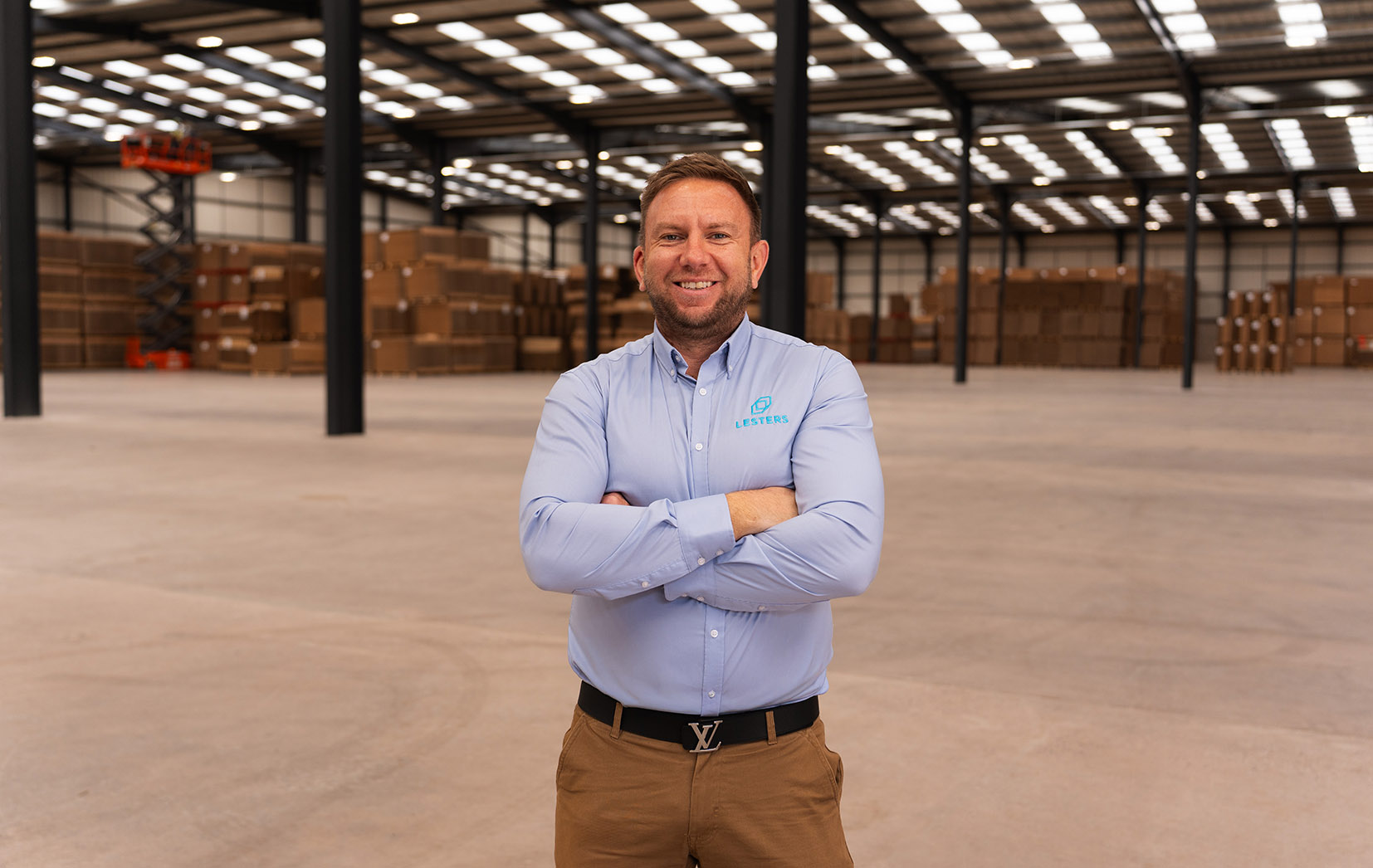
Lesters is reorganising its Midlands operating footprint around a new 101,000 sq ft Cannock headquarters, separating warehousing, stores and distribution from much of the high-volume production activity that will remain at its existing Burntwood factory.
The packaging manufacturer is investing more than £2 million in the Cannock site near Watling Street. Rather than simply adding another building, the company is redistributing functions between two locations so Burntwood can concentrate on higher-volume manufacturing while Cannock takes warehousing, stores, administrative operations, distribution and lower-volume specialist production.
Distribution, specialist manufacturing and high-volume flatbed die-cutting are due to be operating at Cannock during November, with office staff expected to move by the new year. Ten jobs are initially planned as the facility comes into use.
The new layout creates a clearer split between manufacturing profiles and the logistics activity around them. Lesters says its Mount Road factory in Burntwood will continue to handle high-volume production, while Cannock becomes the administrative centre and home for warehousing, stores and lower-volume specialist packaging manufacture.
That separation can reduce the amount of factory floor area competing for several different purposes. Large-format corrugated packaging occupies space not only while it is being manufactured but also while incoming materials, work in progress and finished cases are waiting for the next stage of the process. Storage and dispatch requirements can therefore constrain production even when the manufacturing equipment itself still has available capacity.
Moving warehousing and stores to Cannock gives Lesters another location in which to hold materials and finished products without routing every logistics activity through the same footprint as its main high-volume manufacturing operation. The company can allocate more of Burntwood to production while using Cannock for the inventory, handling and dispatch functions surrounding that output.
Internal material movement is also part of the investment. Lesters plans to install a conveyor system at Cannock that managing director Billy Hutchinson says will reduce the number of manual movements required. The site will also gain a new strapping line, waste-extraction system and two-piece stitcher.
The conveyor element is directly relevant to the new warehouse and distribution model. Moving large packaging products manually between production, finishing, storage and dispatch consumes labour without altering the product itself. A conveyor can remove some of those repeated transfers, although Lesters has not published throughput figures or a quantified labour-saving target for the equipment.
The two-site model also creates a clearer route for different types of work. High-volume manufacture can continue through Burntwood, while lower-volume and specialist products can be handled at Cannock alongside warehousing and distribution. That reduces the need for every order profile to compete for the same production and storage space.
Lesters says its wider operation already includes design, recycling and logistics services alongside packaging manufacture. The company describes itself as capable of producing and delivering tens of millions of boxes each year, serving customers in sectors including 3PL, ecommerce, freight forwarding and automotive.
Those markets create different fulfilment demands. A large logistics or ecommerce customer may require predictable high-volume output, while industrial or automotive packaging can involve shorter runs, different dimensions and more specialist handling. Separating part of that work physically gives Lesters more scope to manage those differences without interrupting the factory area dedicated to its highest-volume production.
The additional Cannock space is also influencing future equipment planning. Lesters says the expanded footprint has given it the freedom to explore the purchase of a second TCY Jumbo Casemaker, following installation of its first machine in 2021. Talks with the equipment manufacturer are continuing, and Lesters says a second machine could be operational within 18 months.
That second machine remains a prospective investment rather than committed installed capacity. Its inclusion in the company’s planning nevertheless shows how property and logistics decisions can affect later manufacturing investment. Moving storage, distribution and specialist work away from constrained production space can create room for additional machinery without requiring every expansion to take place inside the original factory.
Lesters currently employs 64 people and says it had outgrown its existing footprint. Hutchinson said the move would allow the company to refocus operations, become more efficient and give customers access to greater capacity. Lesters is targeting annual revenue of £30 million by 2030, although that remains a commercial objective rather than an achieved result.
The company also says the new headquarters provides a platform to increase sales by 25% within three years and by 50% over the next decade. Those targets depend on customer demand as well as physical capacity, so the additional space should not itself be treated as evidence that the growth has already been secured.
Running two specialised sites introduces its own logistics requirement. Materials, work in progress or finished products may need to move between Cannock and Burntwood depending on where individual manufacturing and distribution stages take place. The benefit of freeing Burntwood for high-volume output therefore depends partly on keeping those inter-site transfers controlled and avoiding unnecessary extra handling.
The November start for distribution and specialist manufacturing at Cannock will begin that operating transition. If the functions are allocated cleanly between the two locations, Lesters will have changed more than its property footprint: Burntwood will concentrate on high-volume production while Cannock carries much of the warehousing, stores, specialist work and distribution activity required around it.