IN Brief:
- First Supply says its Exotec Skypod system increased picking speed tenfold compared with its previous manual process.
- More than 14,000 SKUs are held within the automated system at the new distribution centre.
- Orders for next-morning delivery can account for up to 20% of daily order volume.
First Supply is using Exotec’s Skypod warehouse automation system to support next-morning delivery for orders placed as late as 5pm, with the companies reporting results after more than a year of operation at the wholesaler’s new distribution centre.
The US business supplies heating, ventilation and air-conditioning equipment, plumbing products, lighting, waterworks products and other construction and industrial supplies. Its distribution network serves contractors whose work can depend on replacement parts and project materials arriving within a narrow delivery window.
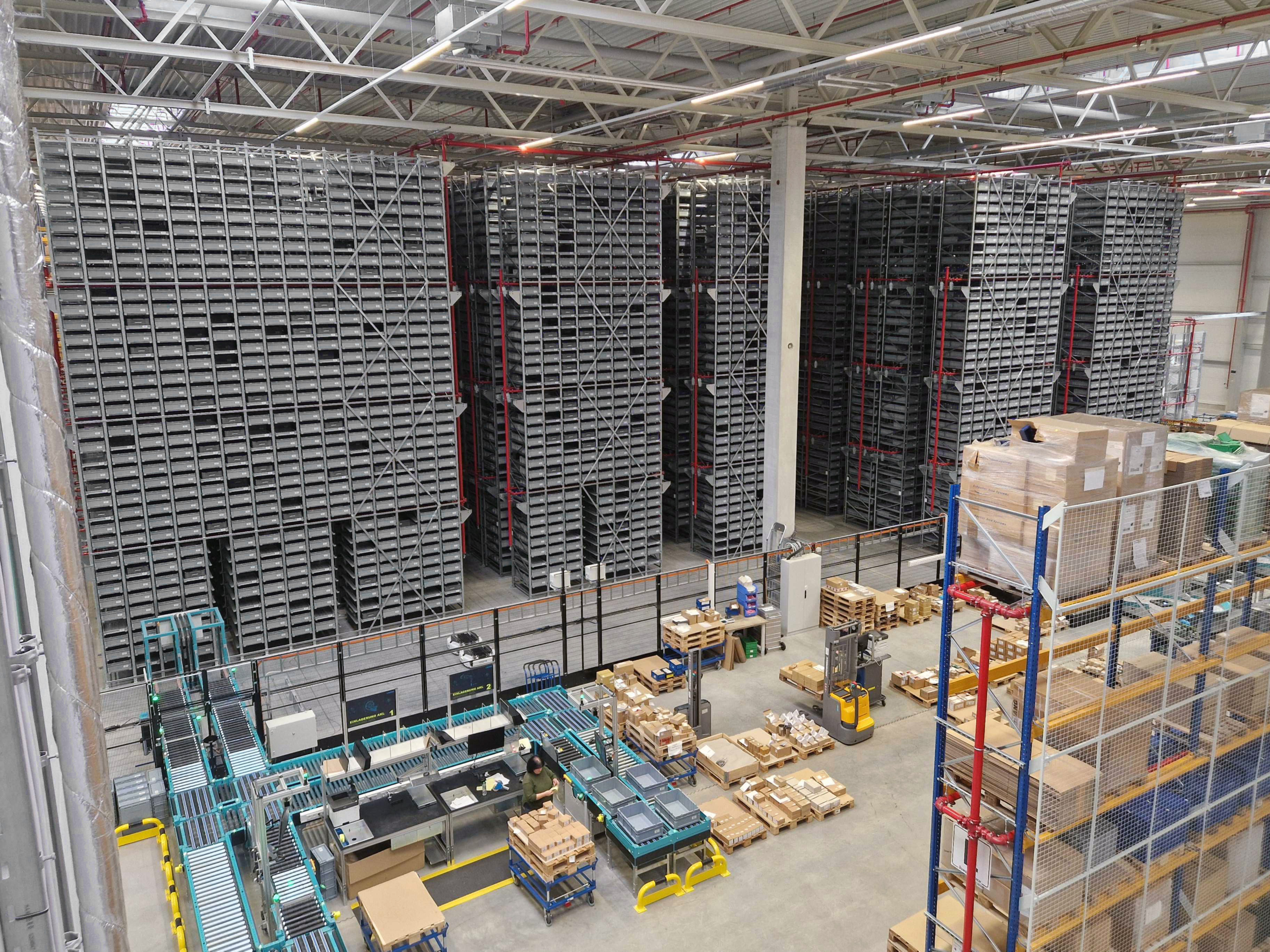
More than 14,000 SKUs are held within the Skypod system. Exotec says the installation has increased picking speed tenfold compared with First Supply’s previous manual process and provides four times the storage capacity within the available footprint.
The goods-to-person system stores products vertically in racks accessed by mobile robots. Robots travel through the structure, retrieve the required bins and bring them to picking stations, reducing the amount of walking employees have to complete between individual storage locations.
First Supply is using that faster picking process to support a later customer order cut-off. Orders placed by 5pm can be dispatched for delivery the following morning, while orders using that service can represent up to 20% of daily volume.
The timing requirement is more demanding than the picking-speed figure alone suggests. A late cut-off compresses the period available for order release, picking, consolidation, packing, staging and loading before outbound transport departs.
Increasing one process in isolation would simply move the constraint elsewhere. If picking produces orders faster than packing or loading can absorb them, unfinished work accumulates downstream. The next-morning service therefore provides a broader operating indicator because it links automated storage and retrieval with the rest of the fulfilment process.
The Skypod architecture also increases storage density. Instead of allocating conventional floor-accessible pick faces across a wide warehouse, the system uses vertical storage that robots can access directly. That allows more inventory to be held within the same footprint while workers remain concentrated around picking stations.
Storage density matters for a wholesaler carrying thousands of products with very different demand profiles. Slow-moving components still need a defined inventory location even if they are selected far less frequently than common fittings or consumables. Reducing the floor area required for that catalogue can release space for receiving, packing, staging and outbound activity.
Exotec says the First Supply installation provides four times the storage capacity in the available footprint and retains a further 30% capacity reserve for future hardware expansion. Those figures describe the supplier’s design and operating assessment rather than independently audited warehouse metrics.
The expansion reserve gives First Supply a route to increase the amount of hardware inside the existing system as volumes rise. That can be operationally useful because many automation projects become constrained when growth requires another building project before additional robots or storage can be introduced.
Automation also changes how labour is used rather than removing people from fulfilment entirely. Employees still complete picks and handle exceptions at workstations, but the robots perform much of the travel between stored inventory and the operator.
That can make throughput less dependent on the walking distance covered during a shift and concentrate employee time on item handling, verification and exceptions. The actual labour requirement still depends on order profiles, workstation design and the processes surrounding the automated system.
First Supply logistics director Steve Baer said the system allows the distribution operation to handle daily and seasonal peaks while retaining headroom for future growth. The important distinction is that the latest figures follow more than a year of operation rather than describing projected performance before commissioning.
Warehouse automation announcements frequently rely on theoretical system capacity. Here, First Supply and Exotec are also reporting an order cut-off, SKU count and share of daily orders using next-morning delivery, giving the installation a clearer connection with routine fulfilment activity.
The tenfold picking-speed figure still requires context. It is Exotec and First Supply’s comparison with the previous manual process and should not be treated as a general performance expectation for other warehouses. Different SKU mixes, order structures and system layouts will produce different results.
The next test comes as First Supply uses more of the growth capacity designed into the site. Additional inventory and order volume can alter robot traffic, workstation utilisation and outbound pressure, so maintaining the 5pm-to-next-morning service as throughput rises will show how much operational headroom the installation has created.