IN Brief:
- DSV will use CMA CGM’s ACT+ service under a two year agreement targeting 12,000 tonnes of CO2 reduction.
- The programme will use second generation UCOME biofuel produced from used cooking oil and allocated through CMA CGM’s mass balance system.
- ACT+ calculates reductions across the complete fuel lifecycle and allows emissions savings to be allocated to participating customer shipments.
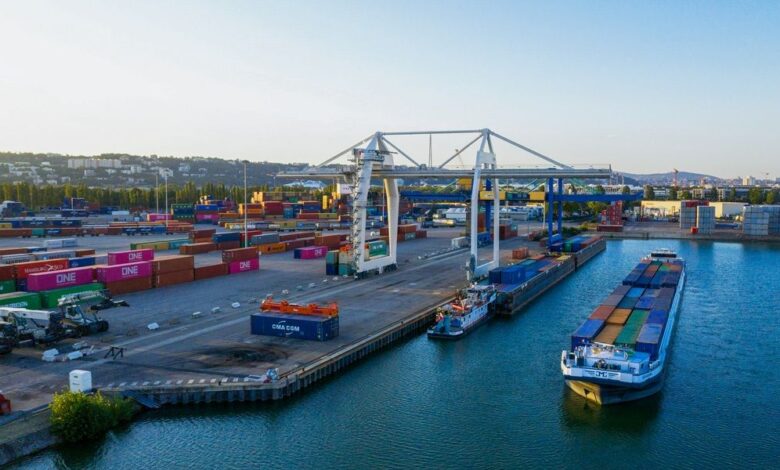
DSV has expanded its lower carbon ocean freight programme with CMA CGM through a two year agreement targeting 12,000 tonnes of CO2 reduction using second generation marine biofuel. The programme uses CMA CGM’s ACT+ service, which allows customers to fund lower carbon fuel use within the carrier’s fleet and allocate the resulting emissions reductions to their freight through mass balance accounting.
The fuel specified for the DSV programme is UCOME, or Used Cooking Oil Methyl Ester, produced from waste cooking oil rather than virgin fossil feedstock. CMA CGM calculates the associated reduction across the complete production, transport and combustion cycle, and says qualifying ACT+ shipments can achieve a calculated carbon footprint up to 83% lower than conventional marine fuel.
That 83% figure is a programme maximum rather than a uniform reduction for every DSV shipment. The agreement establishes an aggregate target of about 12,000 tonnes over two years, and the number of containers covered has not been specified, so the reduction per container cannot be calculated.
Mass balance accounting allows the environmental benefit to be linked with customer cargo even when the alternative fuel is consumed by a different vessel elsewhere in the carrier’s network. CMA CGM can bunker qualifying fuel where supply and vessel deployment make operational sense, record the quantity and lifecycle benefit, then allocate the corresponding reduction to participating freight.
Separating the physical fuel from the individual container gives the carrier more flexibility over where lower carbon fuel is used, because every participating ship or route does not need its own dedicated supply. The trade off is a greater dependence on traceability, since the customer needs evidence that the allocated reduction corresponds with an actual quantity of qualifying fuel introduced into the fleet.
CMA CGM says ACT+ is regularly audited independently and provides customers with documentation recording the lower carbon fuel quantity and associated CO2 saving. Those controls are central to the programme because the same environmental benefit cannot credibly be assigned to several customers or to freight without a matching fuel purchase somewhere in the network.
For DSV, the arrangement provides a route to address emissions from ocean transport that the logistics company does not operate directly. A freight forwarder can replace equipment inside its own warehouse or road fleet, while reductions from purchased maritime capacity depend on the fuels and operating practices chosen by external carriers.
DSV has committed to net zero emissions across its operations and value chain by 2050, making carrier agreements one element of a broader decarbonisation programme. Efficiency measures such as routing, vessel speed and container utilisation can reduce the amount of fuel required for a shipment, while ACT+ changes the fuel mix supporting the transport service and allows customers to fund that change through their freight purchasing.
The two approaches can complement one another because lower fuel consumption reduces the total energy requirement while alternative fuels can reduce the lifecycle emissions associated with the energy that remains. Neither removes the need to measure the underlying transport activity accurately, particularly where customers are using the result to report emissions against supply chain targets.
Fuel availability is one of the constraints on wider adoption because waste based feedstocks such as used cooking oil are finite and are also sought by road transport, aviation and other sectors. Higher customer demand can improve the commercial case for using lower carbon fuel, but it cannot create unlimited physical supply, so programme growth has to be matched by access to suitable feedstock.
The quality and origin of that feedstock also affect the lifecycle result because different production routes can carry different emissions before the fuel reaches the vessel. The quoted 83% reduction therefore depends on the fuel and methodology used rather than applying automatically to every form of biofuel that might be consumed in maritime transport.
CMA CGM is expanding its fleet of vessels capable of using alternative fuels alongside customer programmes and expects to operate about 200 vessels capable of using LNG or methanol by 2031. Vessel capability and fuel availability remain separate parts of the transition, because a ship designed to use a lower carbon fuel still depends on that fuel being available at the ports and volumes required by its service pattern.
The mass balance model gives customers a way to support fuel use without waiting for every route they buy to have dedicated alternative fuel supply. That can accelerate commercial participation, while the credibility of the resulting claim still rests on the carrier maintaining a transparent connection between purchased fuel, calculated lifecycle reduction and customer allocation.
The DSV agreement brings those elements together through a measurable two year target rather than a general commitment to greener shipping. Its value will depend on CMA CGM delivering the corresponding qualifying fuel volumes, maintaining the accounting records behind each allocation and showing that the 12,000 tonne reduction is supported by actual changes in the fleet’s fuel mix rather than by an accounting claim alone.