IN Brief:
- KUKA and TD SYNNEX have agreed a European distribution partnership covering KUKA’s autonomous mobile robot portfolio.
- The rollout begins in the UK, France, Spain and Benelux, with additional European markets planned.
- TD SYNNEX will provide product distribution, technical training and partner support intended to expand access to industrial robotics.
KUKA has appointed TD SYNNEX to distribute its autonomous mobile robot portfolio across parts of Europe, using the technology distributor’s reseller network to reach customers beyond the traditional specialist robotics channel. The rollout begins in the UK, France, Spain and Benelux, with additional markets planned as partners complete product and technical training.
The initial agreement centres on AMRs, while collaborative robots, education packages and industrial software are expected to follow later. Starting with mobile materials handling gives the partners a defined application around which to build sales and integration capability before extending the distribution model into a broader automation portfolio.
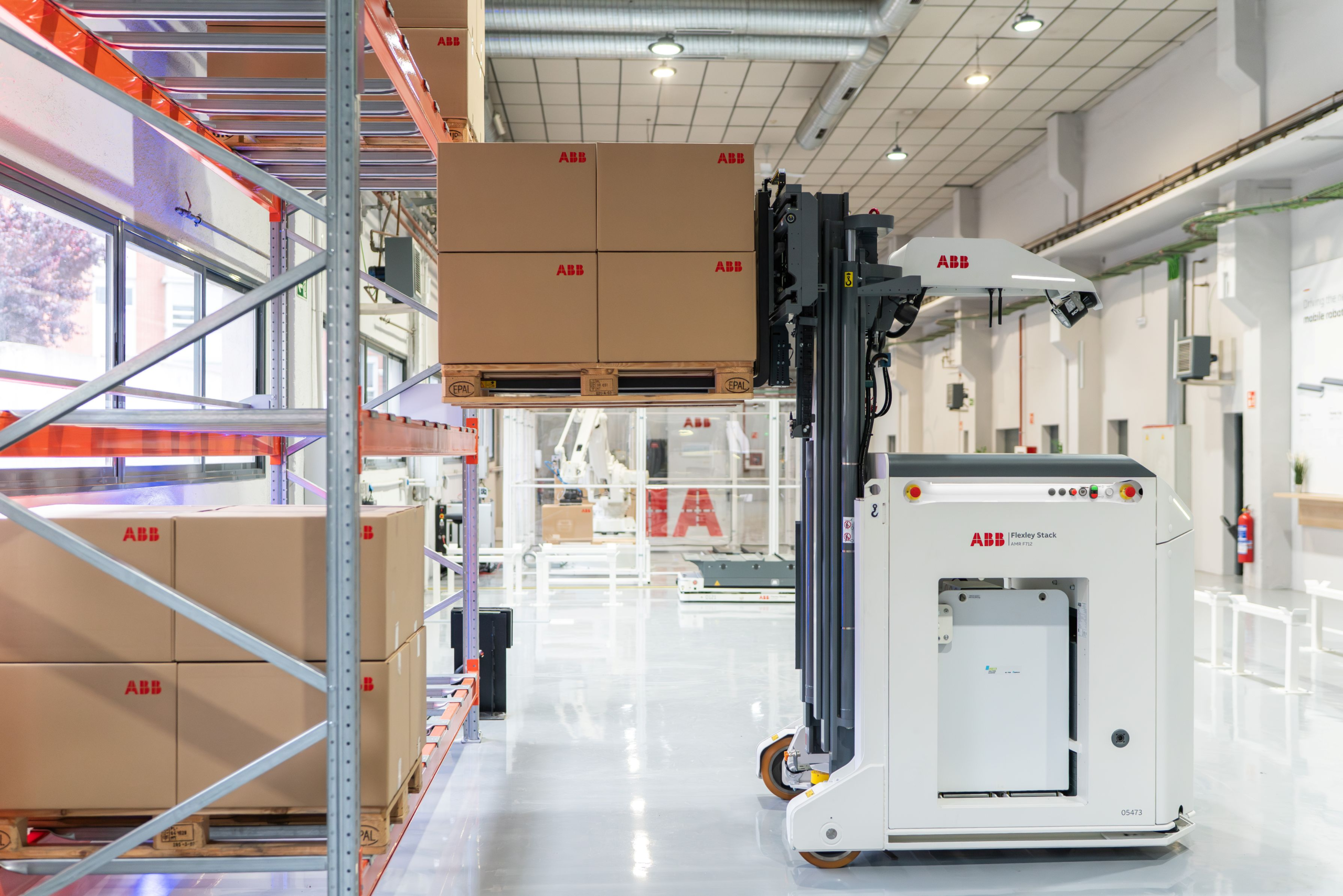
AMRs move pallets, totes, components and other loads between defined points without requiring an operator to drive each journey. Their advantage over fixed conveyors is flexibility because routes can change as the facility changes, but useful fleet capacity still depends on traffic management, charging, pickup positions and the way transport tasks are generated by the surrounding warehouse or factory systems.
As fleets grow, those dependencies become more important because adding vehicles can increase carrying capacity only until robots begin competing for the same aisles, charging points or handover positions. A deployment therefore has to be sized around the process being automated rather than around the number of robots a site can physically accommodate.
The distribution agreement expands the number of companies able to sell and support that technology. Industrial robotics has traditionally moved through specialist automation businesses with engineering experience in controls, safety and physical systems, whereas TD SYNNEX works through a much broader information technology reseller network.
That distinction is narrowing as warehouse automation becomes more dependent on software and network infrastructure. A mobile robot has to navigate safely around people and equipment while receiving tasks from warehouse or execution systems, reporting status, accessing wireless networks and coordinating with fleet software that allocates work according to position, workload and charge.
Resellers entering the market therefore need to understand both the physical and digital environment around the robot. A warehouse with long repeatable routes may provide a straightforward AMR application, while a congested site with irregular pickup positions, heavy manual forklift traffic or poor wireless coverage can require process changes before the vehicles deliver useful throughput.
Site assessment also has to cover the objects being moved. Pallet dimensions, load stability, handover heights and pickup accuracy can determine whether a robot can complete a transport task reliably, while damaged floors or poorly defined staging positions can introduce exceptions that are invisible in a software demonstration.
TD SYNNEX partners will receive online and local language technical training, including access to KUKA Colleges, alongside workshops and executive briefings. The programme is intended to give resellers enough operational knowledge to move beyond selling the vehicle as a hardware product and into the site assessment, integration and support work required around a live installation.
That support becomes more important after commissioning because warehouse layouts and workloads rarely remain fixed for the life of the system. A customer may add new storage zones, change shift patterns or increase the number of autonomous vehicles, requiring fleet rules and traffic plans to be adjusted without undermining the performance of the original deployment.
The agreement also reflects the wider convergence between operational and information technology. Robotics, artificial intelligence, cloud services, edge computing and data infrastructure increasingly sit inside the same automation project, allowing IT resellers to extend existing customer relationships into physical operations while increasing the engineering demands placed on them.
Customers can benefit from that convergence when the same partner understands how warehouse software, networks and mobile equipment interact. Integration becomes harder, however, when responsibility is split between several providers and each optimises its own component without accounting for the throughput of the complete material flow.
KUKA has not published sales or deployment targets, so the immediate change is one of market access rather than installed fleet size. TD SYNNEX can now take the AMR portfolio to partners across four European market groups, while KUKA gains a route into customers that may already buy computing or software through those resellers without having an established relationship with a conventional robotics integrator.
The first deployments generated through the channel will therefore test more than demand for the machines themselves. They will show whether resellers can translate their existing technology expertise into enough operational understanding to configure routes, interfaces, safety controls and support processes around live warehouse and factory workflows.
Wider distribution can make AMRs easier to buy, but sustained adoption will depend on the quality of those projects. The strongest installations will be the ones in which software integration, warehouse layout, traffic patterns and physical equipment are designed as one operating system, allowing the flexibility of mobile robots to translate into measurable throughput rather than simply adding another layer of technology to the site.