IN Brief:
- Germany has prohibited Cosco from acquiring an 80% stake in Hamburg logistics company Zippel.
- The government said the acquisition could deepen foreign dependencies and threaten supply chain resilience in Germany and the European Union.
- Zippel moves containers between seaports and inland destinations using rail, inland shipping and road transport.
Cosco Shipping has been prevented from acquiring an 80% stake in Hamburg logistics company Zippel after the German government concluded that the transaction could deepen foreign dependencies and weaken the resilience of critical supply chains. The federal cabinet approved the prohibition on 7 October following a foreign investment review, despite the acquisition having already cleared competition scrutiny.
Competition and foreign investment reviews can reach different conclusions because they examine different forms of risk. Competition authorities assess whether ownership would damage market rivalry or create excessive concentration, while investment screening can consider national security, public order and the consequences of allowing control over strategically important operations.
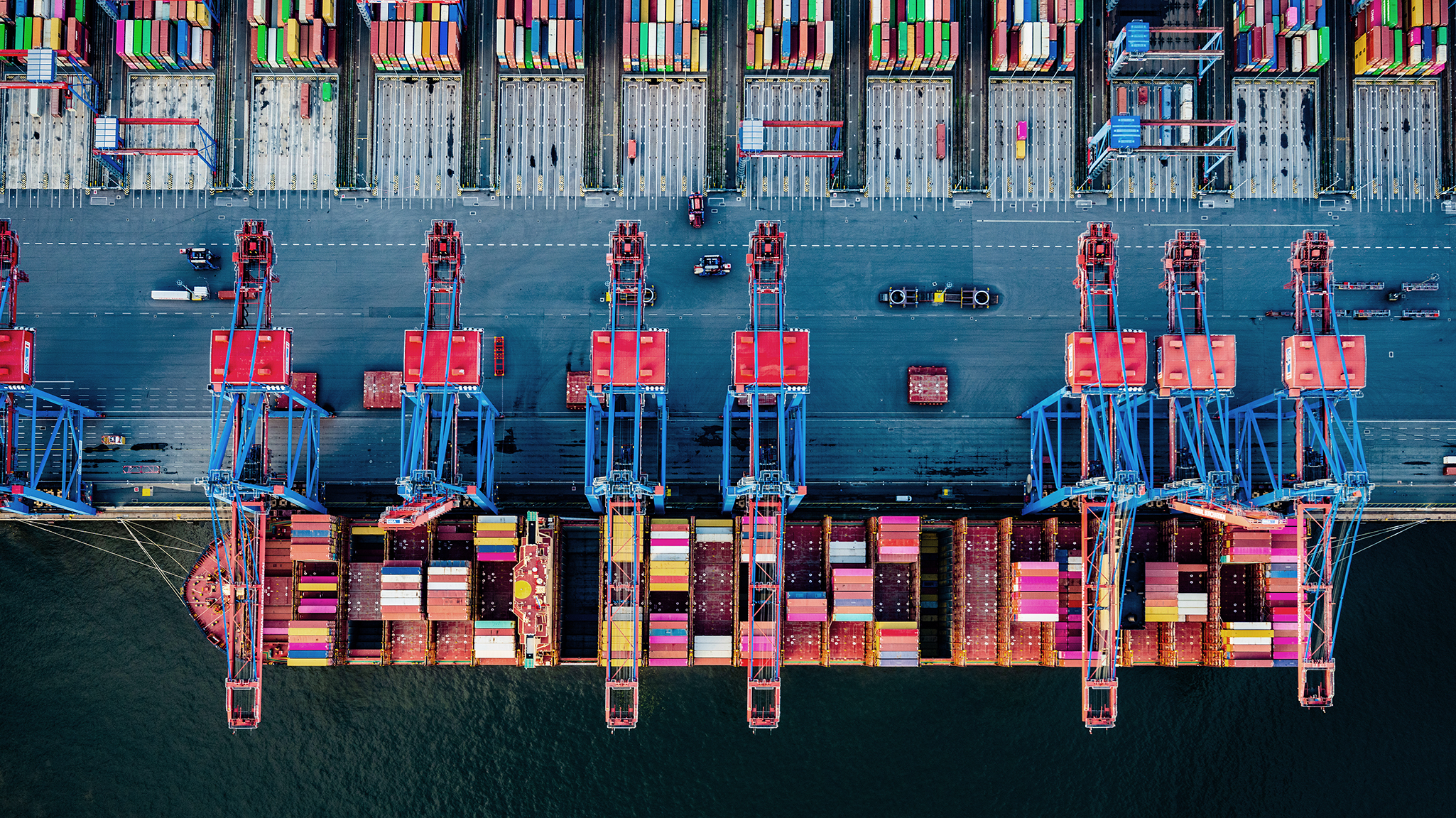
Zippel sits within that second category because its rail, inland shipping and road services connect seaports including Hamburg and Bremerhaven with factories, warehouses and distribution centres farther inland. Containers arriving by sea still depend on those landside connections to leave the port, while exports rely on the same network to reach the terminal in time for loading.
When inland capacity becomes constrained, the effect can feed back into the maritime gateway even if cranes and berths continue operating normally. Containers that cannot leave occupy terminal yard positions for longer, while unreliable connections can force shippers to hold more buffer inventory or reroute freight through another gateway. Control of an inland operator can therefore influence the resilience of a port network without involving ownership of the quay itself.
Cosco’s proposed 80% stake would have extended the Chinese state shipping group’s ownership farther along that inland connection. The company already has interests across container shipping, terminals and logistics, so the proposed Zippel acquisition would have added rail, barge and road capability serving German maritime gateways to a wider integrated transport portfolio.
German authorities have previously scrutinised that expansion at the port itself. Cosco was allowed to acquire a minority holding in Hamburg’s Tollerort container terminal in 2023 after political and security concerns reduced the stake from the level originally sought. Zippel presents a different ownership question because the company moves boxes beyond the port and into the domestic transport network.
Shipping groups have been expanding into those inland activities for years as they seek to manage more of the journey between manufacturer and customer. Terminals, warehouses, freight forwarding, air cargo and road or rail operations allow carriers to combine several transport stages under one commercial relationship and coordinate capacity more closely when disruption occurs.
That integration can simplify procurement for customers by reducing the number of providers involved in one movement. It can also give the logistics group greater control over routing, capacity allocation and operational data, which becomes more sensitive when the assets involved are difficult to replace or sit on a strategically important freight corridor.
The German prohibition therefore leaves commercial trade with China and Cosco’s existing shipping services unaffected while preventing one ownership change. Zippel can continue moving containers through its existing network, and chief executive Axel Plass has said operations will carry on following the decision.
Customers consequently avoid the disruption that would follow if the operator itself were restricted. Rail, barge and road services can continue under the current ownership structure while the government addresses its concern through the transaction rather than through limits on Zippel’s day to day activity.
For investors, the decision shows that conventional logistics businesses can attract strategic scrutiny when their position in the network gives them influence beyond their headline size. A warehouse, inland terminal or rail operator may control capacity that is difficult to substitute quickly, making ownership politically sensitive even where the company does not resemble traditional national infrastructure.
That consideration can affect transaction planning before a formal filing begins because buyers may need to assess political and security exposure alongside valuation, financing and competition approval. Deals involving ports, rail links, large distribution hubs or other scarce logistics capacity can therefore carry execution risk that is not visible from market share alone.
The same issue is likely to arise more often as carriers continue extending beyond vessel operations. Buying an inland transport company gives a shipping group more influence over cargo after it leaves the terminal, while governments may judge that influence across the whole freight chain rather than viewing each asset separately.
Germany’s decision leaves Zippel’s current services in place while drawing a firmer boundary around control of the network connecting its maritime gateways with inland industry. For logistics companies pursuing integrated ownership models, the case shows that the strategic importance of a transport business can be determined by where it sits in the supply chain as much as by its revenue or physical scale.