IN Brief:
- China's transport ministry identifies nine safety, ten efficiency, and three environmental applications for AI across waterways, ports, and shipping.
- Proposed systems include coordinated container-terminal machinery, navigation risk monitoring, and energy-management controls rather than a completed deployment programme.
- Future work will address sector-specific models, intelligent agents, technical guidance, and the validation of use cases.
China’s Ministry of Transport has identified 22 priority applications for artificial intelligence in waterborne transport, setting out where port operators, navigation authorities, and shipping companies should direct further technical development. The guidance divides the applications into nine safety scenarios, ten aimed at improving efficiency, and three covering environmental performance. It is an implementation framework rather than a claim that 22 new AI systems are already operating.
The ministry issued its Water Transport Artificial Intelligence Application Scenarios Guidance under reference Jiao Ban Shui [2026] No. 63. An official explanation dated 14 October was followed by a technical interview published on 15 October. The ministry is asking water transport organisations to choose applications that match their operational circumstances, develop suitable models and demonstrators, and report useful results. It has not imposed a single national deadline to install AI equipment at every terminal.
Nine of the applications address operational safety across ports, waterways, and vessels. They include intelligent prevention of port hazards, navigation-channel monitoring, shipping-operation risk controls, water-traffic surveillance, and maritime search and rescue. Their common requirement is to turn changing operating information into warnings or interventions early enough for people and established control systems to respond.
The Ministry describes proposed port safety management agents that would combine knowledge graphs, large language models, and process automation. Potential functions include checking operational procedures against safety requirements, identifying hazards, and delivering tailored training. Such systems would still depend on the completeness of site records, the quality of inputs, and safeguards against incorrect model outputs. The new guidance does not certify any particular AI model for safety-critical decision-making.
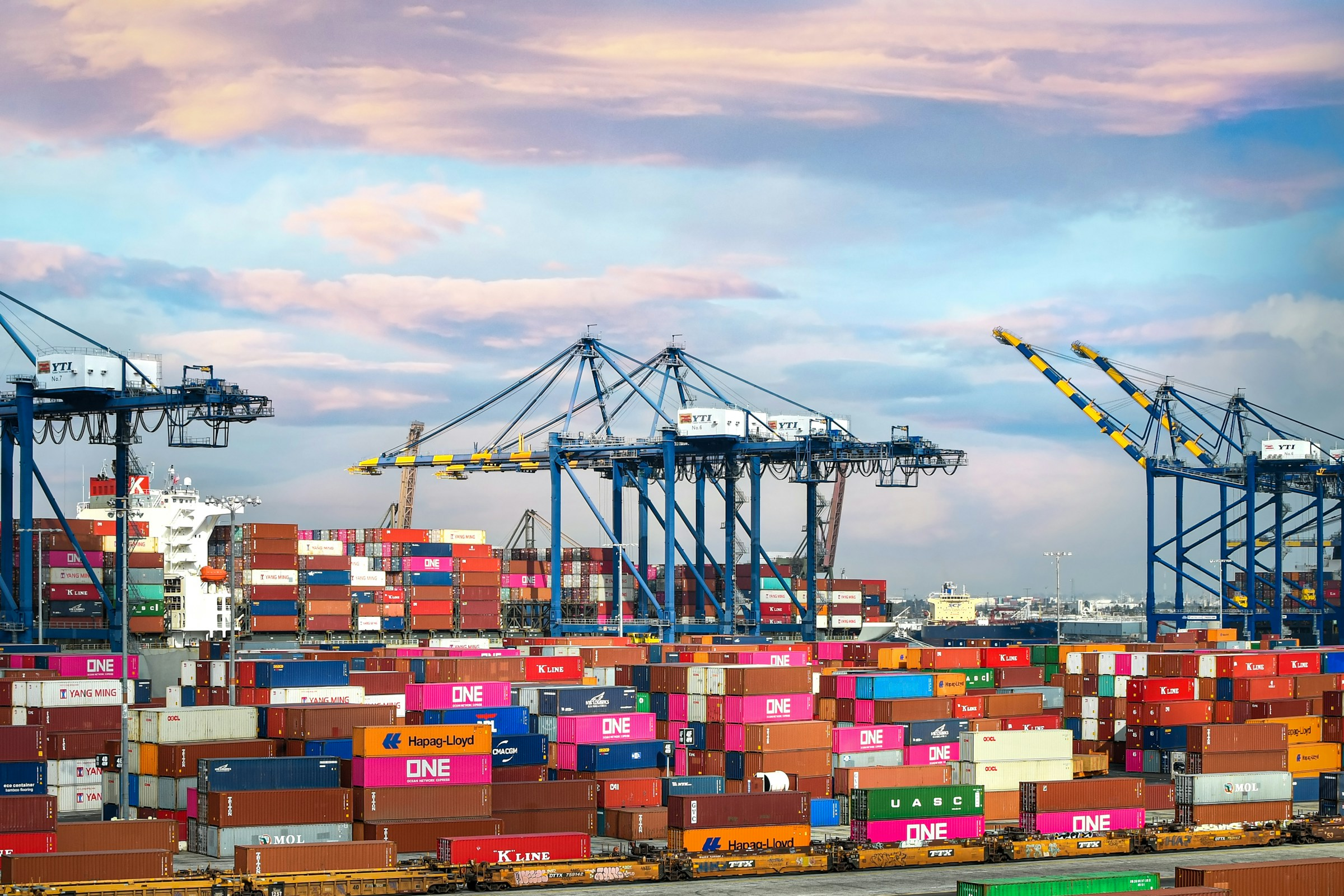
Efficiency accounts for the largest group, with ten applications involving automated terminals, coordinated port logistics, smarter waterway services, and data-supported shipping operations. One specified direction is the integration of BeiDou satellite navigation, 5G communications, and AI into an operational platform covering port machinery. The proposed architecture would coordinate ship berthing, quayside loading, horizontal container transport, and storage-yard activity instead of optimising each task in isolation.
Port productivity depends on the timing of consecutive handling tasks. A quay crane can discharge a container quickly but still be held up when the assigned vehicle is unavailable or the destination stack is occupied. A shared scheduling system would have to reconcile vessel plans, berth availability, road or yard routes, equipment condition, and storage positions. Better exchange of operational data may enable revised assignments as circumstances change; the ministry has not supplied a universal productivity gain for the proposed applications.
Navigation authorities face related coordination problems at locks and along restricted waterways. Vessels of differing dimensions and speeds must be sequenced against channel conditions, available lock chambers, and traffic-control requirements. The guidance identifies intelligent waterway services and digital shipping operations as potential areas for decision support. Established navigation inspections, traffic controls, and vessel safety obligations remain in force irrespective of whether new analytical software is introduced.
Three further applications concern environmental management: intelligent operation of greener ports, energy and emissions management in shipping, and monitoring compliance with vessel-related environmental requirements. The proposed port systems would incorporate energy sensors and the operation of solar generation, energy storage, and shore power. Their role would be to make consumption and carbon reporting more measurable while allowing equipment and energy supplies to be controlled against actual demand.
Energy-monitoring data alone do not cut electricity consumption. Reductions would depend on when cranes, chargers, and shore-power equipment operate, how stored energy is dispatched, and whether the site’s electrical connection can accommodate competing loads. The ministry’s three environmental applications provide areas for system development, not verified emissions savings for individual ports or a mandate to replace existing plant immediately.
China’s earlier AI-plus-transport policy and its Intelligent Shipping 2030 Action Plan provide the wider programme behind the new guidance. Those documents set a development path for digitally supported waterways, intelligent shipping and more automated operations. The latest list translates that programme into defined tasks that organisations can test and evaluate separately, rather than asserting that connected waterways or autonomous vessels are already operating everywhere.
The ministry also described systems already in service to establish the sector’s starting point. It reported 60 automated container and dry-bulk terminals across China, with published electronic navigational charts covering more than 19,000 kilometres of waterways. It cited examples involving terminal routing, lock scheduling, and shipping information services. These are pre-existing projects and reported operational outcomes; none should be counted as an installation delivered under the new 22-scenario list.
Further work will address application guidance, technical standards, sector-specific models, and AI agents configured for particular port and shipping tasks. Officials expect to revise the list as technical capability and industry demand develop. Implementation will depend on compatible machinery, reliable operating data, safety assurance, and investment decisions by individual authorities and businesses. The guidance sets the direction of development without prescribing one commissioning date for all 22 scenarios.