IN Brief:
- Cargofy 2.0 introduces Architect, an AI system that learns operational requirements from public company information and leadership interviews.
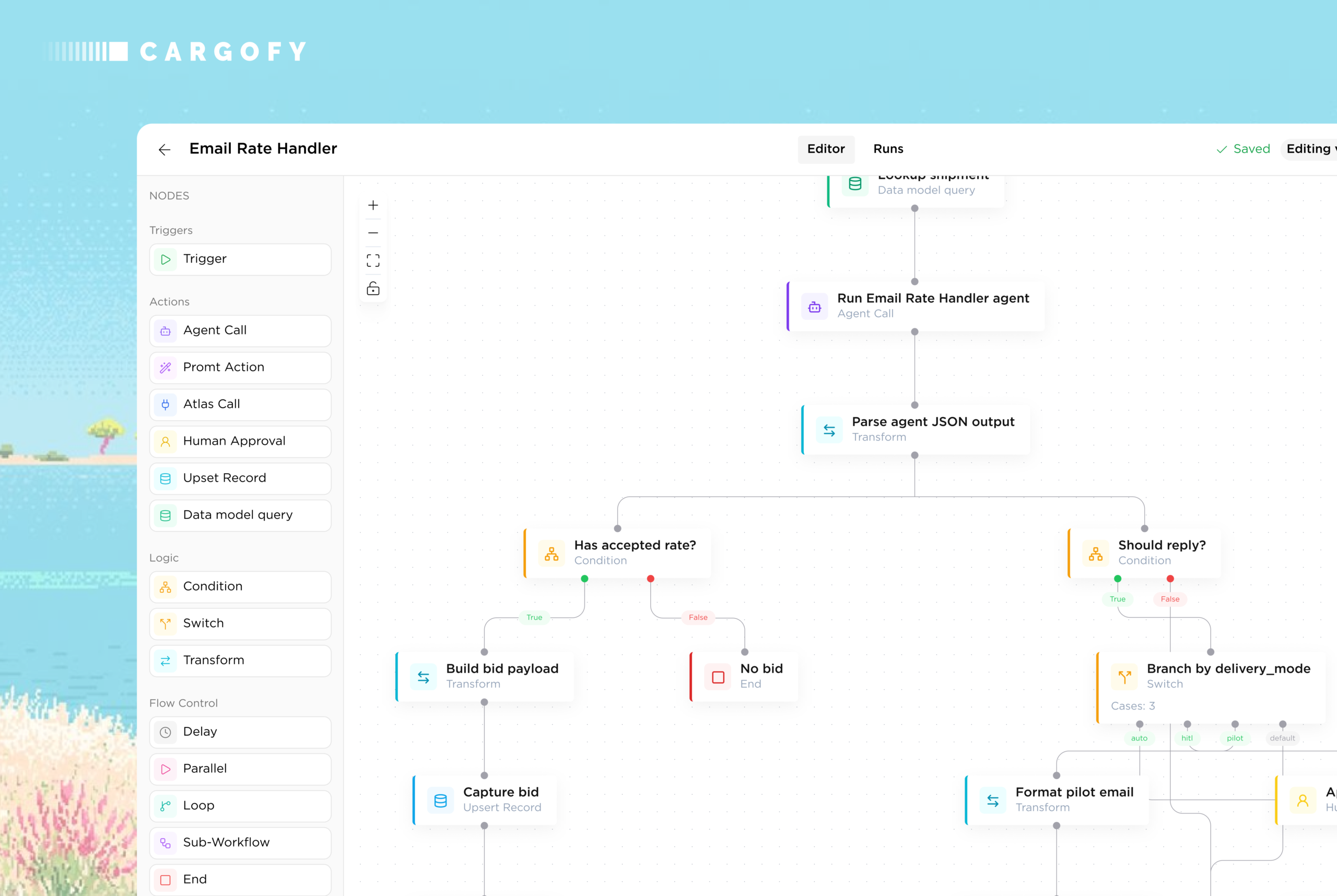
- Cargofy Studio enables teams to edit data models, forms, interfaces and digital workers alongside AI-generated workflows.
- Cargofy markets more than 100 integrations, although its published catalogue lists 98, and plan limits govern access to Architect and other tools.
Cargofy has launched Cargofy 2.0, adding an AI-assisted system designed to configure logistics software around an individual company’s operating processes. At the centre is Architect, which examines publicly available business information, interviews the management team about missing details and builds a proposed digital workflow. The launch also introduces Cargofy Studio, an environment in which staff can edit the processes, forms and software components generated by the AI rather than returning every change request to a developer.
Cargofy is offering customers self-service registration alongside its new configuration tools. Under the previous implementation model, the company mapped customers’ requirements and developers set up the processes, creating a dependency on Cargofy’s own delivery team. Architect is intended to replace much of that initial configuration work with an interactive assessment of the customer’s operation. Cargofy says early versions have been tested with businesses in Europe, Asia and the United States since January, but has not released independently audited implementation results from those deployments.
Architect uses publicly available information to establish a starting description of the company and then asks leadership about internal rules, customers, responsibilities and exceptions. It creates an operating map for executive review before setting up the software. That checkpoint allows managers to correct assumptions that could affect who can approve a rate, access a customer record or issue a carrier instruction. Following approval, digital workers can carry out selected routine tasks, with further human checkpoints determined by the customer’s configured permissions and workflow rules.
The platform offers 14 ready products covering freight procurement, quoting, tracking, documentation and finance, among other activities. In a procurement workflow, a digital worker can read an incoming shipment request, prepare a tender, contact carriers and collate replies into a comparison. The records still need reliable information about the load, equipment, route, collection time and commercial terms. A configured AI worker may help assemble and circulate those details, but it does not remove the operator’s responsibility for dangerous-goods checks, carrier eligibility and final contract approval.
Cargofy supports communication through voice calls, email and messaging channels including WhatsApp, and advertises more than 100 integrations across logistics and business systems. Its publicly displayed integration catalogue currently identifies 98 connectors, so the larger figure remains the company’s general claim rather than a count confirmed by the published list. REST APIs, webhooks and model context protocol connections provide additional options for linking other systems. Actual access varies by subscription tier: the pricing table restricts included connector numbers and places some enterprise-system connections on higher plans.
Cargofy Studio lets staff adjust the data models, forms, screens and workflow logic produced through Architect. A freight broker could, for example, insert an approval step whenever a quoted carrier rate exceeds a defined threshold or require a separate check before a shipment is booked. A warehouse operator might add a reference field used in its own customer documents and then ask Architect to connect it to a digital worker. Changing those settings creates a need for version control, testing and permission management; Cargofy has not published a universal validation period for customer modifications.
There is a difference between collecting information and executing an instruction. Carrier rates may arrive in different currencies and include separate fuel surcharges; driver location updates may be late or manually entered. AI-assisted workflows can gather records and flag gaps, while the customer must set the rules for validating information, obtaining consent and authorising a booking or payment. The system’s value depends on what happens when an input is ambiguous or a partner does not respond, rather than on its ability to generate a plausible message automatically.
Cargofy says a business can bring some configurations into use within hours, particularly when selecting existing products and straightforward workflows. That is a supplier claim, not a measured implementation benchmark or a guarantee for complex deployments. Data migration, customs integrations, user permissions and testing may require additional work. The public pricing page also distinguishes the platform subscription from implementation charges and lists starting implementation fees for Plus and Pro customers; the final cost of a bespoke deployment depends on scope.
Auditability becomes important when people and digital workers share freight processes. The company’s examples include chasing proof-of-delivery documents, requesting driver location updates, collecting carrier quotes and passing those inputs into existing systems. A record should show where a figure originated, which automated action was taken and whether an employee approved the result. Cargofy presents Studio as a way to alter those steps as contracts and routes change, although the announcement does not provide independent evidence of error reductions or savings from the new release.
Cargofy plans an online demonstration of version 2.0 on 5 November 2026. The announcement establishes the availability of self-service registration and new AI configuration functionality but provides no independently verified comparison of deployment speed against the former onboarding process. The wider product and pricing pages describe integration and usage limits that customers must consider before adoption. Evidence from live shipments, including exception handling, accuracy and completed workflow rates, will be needed to assess the operational effect of the launch.