IN Brief:
- A 240 TEU battery-electric container ship departed Nansha for Hong Kong International Terminals on 13 October with Guangdong-produced cargo.
- Containerised batteries can be lifted ashore for exchange or charged directly, while an onboard platform monitors energy and equipment operation.
- Port authorities project annual carbon reductions exceeding 550 tonnes per vessel; these are estimates, not independently verified operating results.
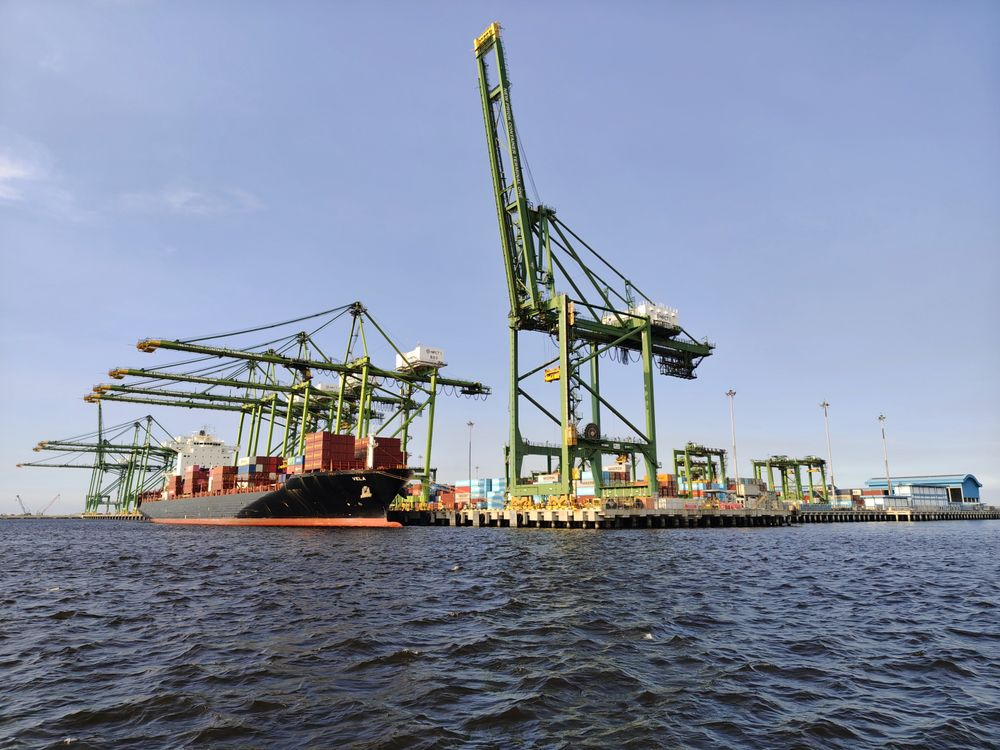
Guangzhou Port Group has opened an electric container shipping service between Nansha and Hong Kong, introducing a battery-powered vessel capable of carrying 240 twenty-foot equivalent units (TEU). Sui Gang Dian Hang 02 departed Nansha’s Phase III terminal on 13 October with Guangdong-manufactured furniture and consumer products bound for Hong Kong International Terminals. The sailing marks the launch of a new cross-border freight service, rather than the delivery of a vessel still awaiting commercial use.
The Guangzhou Port Authority describes the operation as the Greater Bay Area’s first zero-carbon container route. The vessel’s distinctive feature is a containerised battery supply that can be replaced by crane or charged directly. Either method allows the operator to replenish propulsion energy without taking on conventional marine fuel, although the announcement gives no verified charging duration, regular sailing frequency, or utilisation rate. The zero-carbon label is the project’s description, rather than an independently audited account of emissions over the vessel’s entire lifecycle.
Electrical propulsion draws power from battery modules carried on the ship. Where a terminal has suitable lifting equipment and charged modules ready, an exhausted module can be removed and replaced; direct charging provides an alternative where shore power is available. The appropriate replenishment method depends on the energy required for the next trip, available electrical infrastructure, terminal handling arrangements, and the dwell time between calls. None of those constraints can be inferred from the stated 240 TEU payload capacity alone.
Port authorities say the design addresses a major operational challenge for battery-electric inland shipping: retaining cargo carrying capability while providing sufficient energy for the intended route. The 240 TEU rating indicates the vessel’s container carrying capacity, not a statement that every sailing will load that many units. The announcement confirms a cargo-laden inaugural departure but does not disclose the actual TEU count, distance covered under battery power, or measured electricity consumed on the voyage.
The ship incorporates an intelligent operations platform covering energy monitoring, equipment maintenance, data handling, and ship–shore coordination. Bringing propulsion and machinery information together can assist crews and shore teams with energy planning and equipment readiness. The port authority describes this as part of a broader digital operations system, but has not published independent performance figures showing reduced vessel turnaround time or a quantified improvement in asset availability.
Guangzhou Port Group is integrating the electric sailing with its established Shuttle Bus inland feeder network. According to the authorities, the network’s barge fleet has aggregate carrying capacity exceeding 10,000 TEU and total vessel tonnage above 140,000 tonnes. More than 70 inland feeder services link over 20 cities to ports in the Pearl River Delta. Those fleet figures describe the existing network, not additional capacity created by commissioning one electric ship.
The new electric service connects Nansha, a major hub for Guangdong’s container exports, with Hong Kong’s container infrastructure. A feeder movement between those ports can place cargo into established international shipping networks without requiring every originating shipment to use a separate direct ocean service. The new propulsion arrangement changes how that feeder leg is powered; it does not remove cargo handling, customs, berth planning, or the need for compatible infrastructure at either end.
Authorities estimate that vessels in the series can avoid more than 550 tonnes of carbon emissions each year relative to conventional fuel-powered operations, with a projected lifetime reduction of about 19,000 tonnes per vessel. Those numbers are forward-looking estimates presented by the project organisations. No independently audited lifecycle analysis, assumptions about electricity generation, or actual first-voyage emissions result has been supplied with the launch.
Battery propulsion eliminates onboard fuel combustion during an electrically powered voyage, but the electricity used for charging, the manufacture of battery modules, and port handling operations can still produce emissions. Guangzhou’s projected reductions therefore depend on a comparison with conventional fuel-powered shipping and on the accounting boundary selected. Neither an independently audited lifecycle calculation nor measured first-voyage emissions was included in the launch announcement.
The vessel series has been placed on China’s national list of advanced green and low-carbon demonstration technologies. Its inclusion recognises the intended demonstrator role of modular electric propulsion rather than establishing that a larger fleet has already been commissioned. Replication on other routes would require compatible energy modules, terminal charging and lifting arrangements, reliable components, and a commercial schedule capable of absorbing the energy replenishment process.
Guangzhou’s port authority intends to develop further green shipping technologies and associated operating standards. The 13 October sailing confirms that Sui Gang Dian Hang 02 carried commercial cargo from Nansha towards Hong Kong using the new service. Its longer-term operating performance will be established by subsequent voyages, actual energy consumption, battery replenishment times, and the volume of freight moved during routine service.