IN Brief:
- Qingdao Haixi Heavy Machinery won a RMB32.01 million contract to retrofit nine gantry cranes at Ningbo Beilun Third Container Terminal.
- The tender specifies remote-control integration, automatic positioning and handling functions, with electrical work on eight units.
- The turnkey work must be completed within 21 months of contract signing, although no signing date is confirmed.
Ningbo-Zhoushan Port has awarded a RMB32.01 million contract to Qingdao Haixi Heavy Machinery to retrofit nine gantry cranes at Ningbo Beilun Third Container Terminal. The project covers remote operation, automated handling functions and the connection of existing yard equipment to a central control platform at the Chuanshan port area.
The award was listed by the port’s electronic procurement platform on 23 October following a tender issued in September. The original tender calls for nine four-rope yard gantry cranes to be converted for single-machine remote control and automation. Their upgrade includes automatic mechanism positioning, handling functions, protective systems, audiovisual equipment and communication with the established terminal remote-control platform. The reported award value is RMB32.01 million, distinct from the original RMB34.2 million tender ceiling.
The project is a retrofit of equipment already working in the container yard, rather than the purchase of nine newly built cranes. Mechanical structures and serviceable lifting assemblies can remain in place while control equipment and interfaces are altered. That approach depends on the condition of each machine, the available drive-control functions and the ability to introduce remote commands without compromising safety interlocks or maintenance access.
The tender separately specifies electrical-control improvements for eight cranes and relocation and commissioning of eight existing operating consoles in the remote-control room. These subcounts should not be confused with the nine machines in the principal conversion scope. Transferring consoles also requires coordinating the operator interfaces with machine identities, camera feeds, emergency-stop functions and the terminal’s central system before routine yard work can be handed over.
The nine cranes are to be connected to a common remote-control platform, allowing equipment status and work commands to be handled from a central operating environment. The specified design does not say how many crane operators will be required after conversion or how many movements can run automatically without supervision. Remote control changes where work is performed; it does not by itself demonstrate that the yard will operate without personnel or human intervention.
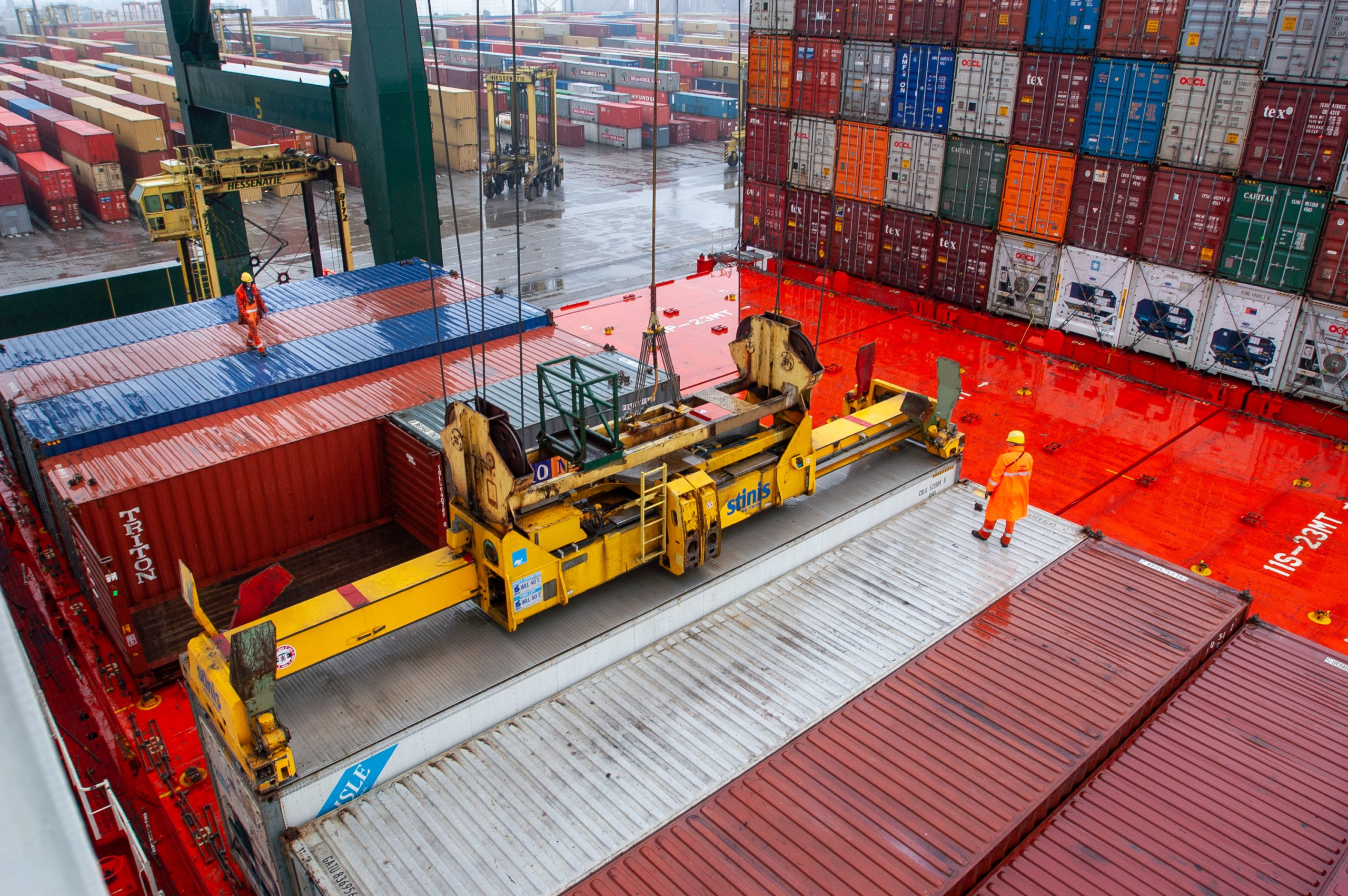
A yard gantry crane must position its spreader accurately above a container, engage its lifting points and move the load clear of stacks, vehicles and adjacent equipment. The tender identifies automated positioning, handling and safety protection, but it does not publish a full sensor list or detailed functional-safety design. Final control performance will depend on how the retrofit measures load position, restricts travel and responds to obstructed or unexpected movements.
Audio and video systems will provide the operator with views and warnings that would otherwise be available in or near the crane cab. Reliable remote control also requires consistent communications between equipment and the terminal control room; interruptions must be handled safely through the machine’s control architecture. The procurement specifies these system families but gives no measured evidence yet of performance in poor visibility or adverse weather.
The central platform must exchange job, position and status information with each crane to coordinate yard movements. A single scheduling view could assist the terminal in managing different equipment generations, but the award does not specify fully automated lorry dispatch or wider terminal logistics functions. Interfaces to existing systems and physical equipment remain significant acceptance-test obligations as the contractor takes the machines through installation and commissioning.
Qingdao Haixi’s turnkey responsibilities include engineering, procurement, software development, installation, testing, commissioning, operator training and associated service support. The tender sets a completion period of 21 months after contract signature. Because the date of signing has not been established in the available public documents, no fixed calendar completion date can be stated. The programme will have to accommodate planned crane downtime and testing while the terminal continues handling containers.
Ningbo-Zhoushan handled about 22.9 million TEU in the first half of 2026, compared with approximately 22.7 million TEU at Singapore, according to cited industry throughput data. These are figures for the wider ports, not the individual Beilun Third Container Terminal or the nine cranes. They demonstrate the scale of the gateway but cannot establish how many extra container moves the retrofit will enable or whether it will cut vessel turnaround times.
The disclosed contract specifies the scope and delivery period, but no productivity target or verified annual operating saving. Engineering design, progressive installation and equipment acceptance tests remain the next measurable steps. Confirmation that all nine cranes have been connected to the central platform and commissioned for routine handling will be needed before the effects on yard throughput, operator workload and maintenance can be assessed.