IN Brief:
- AMX is planned as a weekly Asia–Mexico service beginning in January 2027.
- ASX will connect Asian and Brazilian ports from April 2027, including two calls at Santos.
- Feeder arrangements will extend coverage to additional Latin American destinations, with detailed sailing schedules still outstanding.
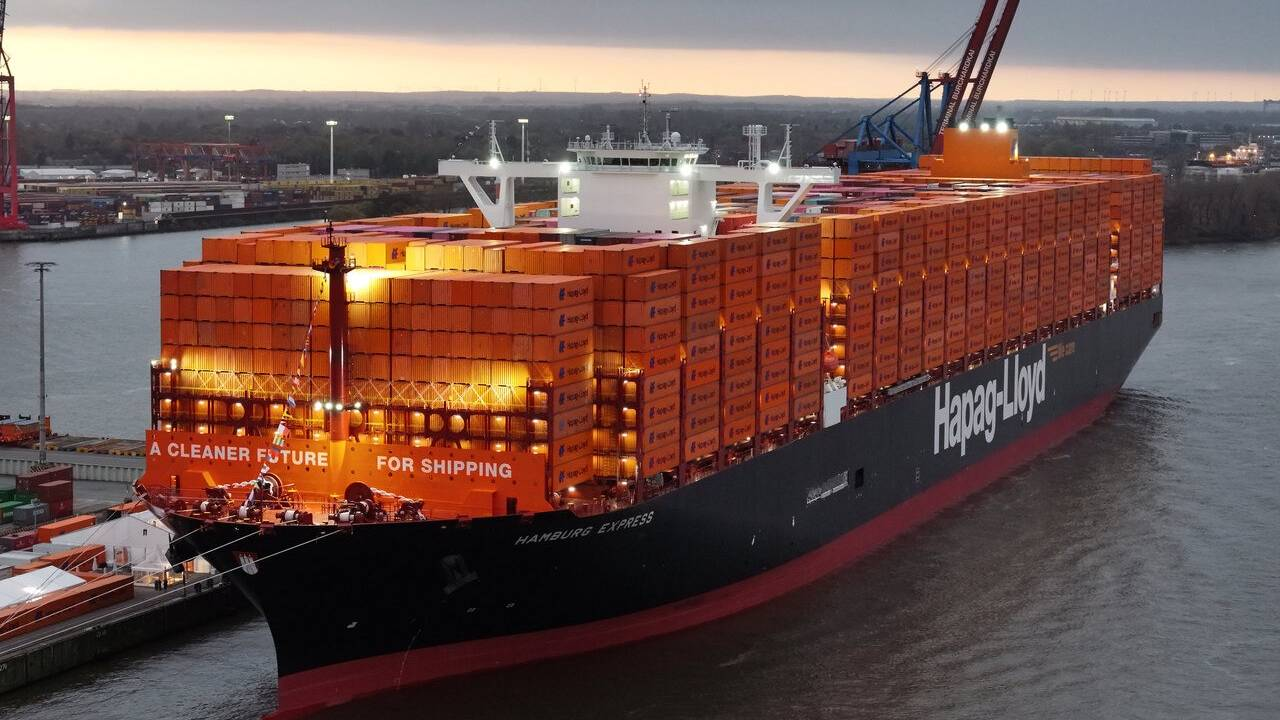
Hapag-Lloyd plans to introduce two standalone container shipping services connecting Asia with Latin America during the first four months of 2027. The proposed AMX service will operate between Asia and Mexico from January, while ASX will connect Asian ports with the east coast of South America from April. Both are intended to provide additional routing options within the carrier’s international network.
The AMX service is planned as a weekly operation with direct calls at Ningbo and Qingdao in China, Busan in South Korea, and the Mexican ports of Ensenada, Manzanillo, and Lázaro Cárdenas. The published rotation establishes the principal port sequence, although detailed sailing dates, vessel assignments, and individual port-to-port transit times have not yet been confirmed.
Mexico provides several potential discharge points for cargo moving from Asian manufacturing and export centres. The three Mexican ports occupy different positions on the country’s Pacific coast, creating opportunities for shipments to connect with onward inland transport or other maritime services. The most suitable routing will depend on the shipment’s destination and the transport arrangements available beyond the discharge terminal.
Hapag-Lloyd also intends to provide onward connections to additional destinations along Latin America’s west coast through transhipment at Mexican ports. These movements would involve transferring containers between the mainline vessel and a connecting service. The proposed arrangements therefore extend the geographical coverage of AMX without establishing direct vessel calls at every destination served by the wider network.
Transhipment introduces an additional operating stage between the origin and final destination. Containers must be discharged, positioned within the connecting terminal, and loaded onto another vessel. The interval between those movements depends on the timing of the two services, berth availability, terminal handling capacity, and the operational condition of each vessel.
Weekly departures are intended to provide a regular planning framework for cargo moving through the corridor. However, the reliability of the complete movement will depend on the coordination of the mainline service with any onward connections. A published sailing frequency does not independently establish the total transit time for shipments requiring a second vessel or an inland transport connection.
The second service, ASX, will connect Asia with Brazil’s principal container gateways. Its proposed rotation runs from Qingdao to Ningbo, Shekou, and Tanjung Pelepas before calling at Santos, Itajaí, Rio Grande, and Paranaguá. The vessel will then return to Santos before proceeding through Singapore to Qingdao.
The repeated Santos call forms part of the proposed service rotation. It may provide different loading and discharge opportunities during the vessel’s passage along the Brazilian coast, although the precise cargo allocation and transit times for the two calls have not been specified. Those details will become clearer when the carrier publishes its operational schedule.
ASX will also provide feeder connections from Rio Grande to Montevideo in Uruguay and Buenos Aires in Argentina. Neither destination appears as a direct mainline call in the announced rotation. Freight moving through those connections will depend on the transfer of containers at Rio Grande and the scheduling of the subsequent feeder service.
Additional transhipment connections in Asia are expected to provide access to other origins and destinations beyond the direct ports. The service’s coverage will therefore combine mainline calls with regional networks at both ends of the corridor. These arrangements can provide access to a wider range of markets, while introducing additional handling and scheduling requirements for cargo that does not move directly between named ports.
Both AMX and ASX will include Qingdao, strengthening the port’s role within the carrier’s proposed Asia–Latin America network. The services otherwise follow substantially different geographical routes. AMX focuses on Mexico and west coast connections, while ASX crosses the Pacific and serves the east coast of South America through a longer rotation incorporating south-east Asian ports.
The ASX introduction also coincides with changes to Hapag-Lloyd’s existing cooperation with MSC and Ocean Network Express on the Asia–east coast South America trade. MSC and ONE are expected to continue their Ipanema/SX1 service without Hapag-Lloyd from April 2027. The German carrier’s planned standalone operation will consequently alter its participation in the corridor.
Hapag-Lloyd has not explicitly confirmed that ASX will replace its existing AS2 product. Further information is expected concerning the transition of bookings, the precise launch date, and the relationship between the new service and current cargo arrangements. Until those details are published, existing bookings should not be assumed to transfer automatically to the proposed rotation.
The number of vessels assigned to each service has also not been disclosed. A weekly container service normally requires enough ships to complete the full rotation while maintaining a consistent departure interval. The required fleet depends on the duration of the voyage, time spent in ports, and the operating allowances included within the schedule.
Vessel capacity will determine the nominal amount of container space available on the new routes, but actual cargo intake will also be affected by equipment availability, container weights, demand across individual port pairs, and commercial allocations. Hapag-Lloyd has not yet announced the deployed capacity or the first specific sailings for either service.
The planned January and April launches therefore establish the intended development of the carrier’s network rather than transport capacity already available for booking. Detailed schedules will determine the practical connections, transit times, and booking arrangements offered to customers. The final operating structure will also show how Hapag-Lloyd intends to manage the transition from existing cooperation arrangements to its standalone services.