IN Brief:
- DP World estimates that Southampton’s rail incentive programme has prevented 50,000 tonnes of CO₂e emissions and 18 million road miles since September 2023.
- More than 220,000 additional containers have travelled by rail, while rail’s reported share of inland movements increased from 21% to 29%.
- The £10 import-container levy funds the programme; the published rules already included performance-linked payments for rail freight terminal operators before November 2026.
DP World estimates that Southampton’s Modal Shift Programme has helped avoid 50,000 tonnes of carbon dioxide equivalent emissions by diverting import containers from road to rail over three years. The port operator reported the cumulative result on 17 November, together with arrangements for performance-linked payments to rail freight terminal operators.
More than 220,000 additional containers have moved by rail under the Modal Shift Programme since its introduction in September 2023, according to DP World. The company estimates that the movements avoided about 18 million road miles. Rail’s share of container movements from Southampton has increased from a 21% starting point to 29%, although the figures do not establish the precise contribution of every individual rail service.
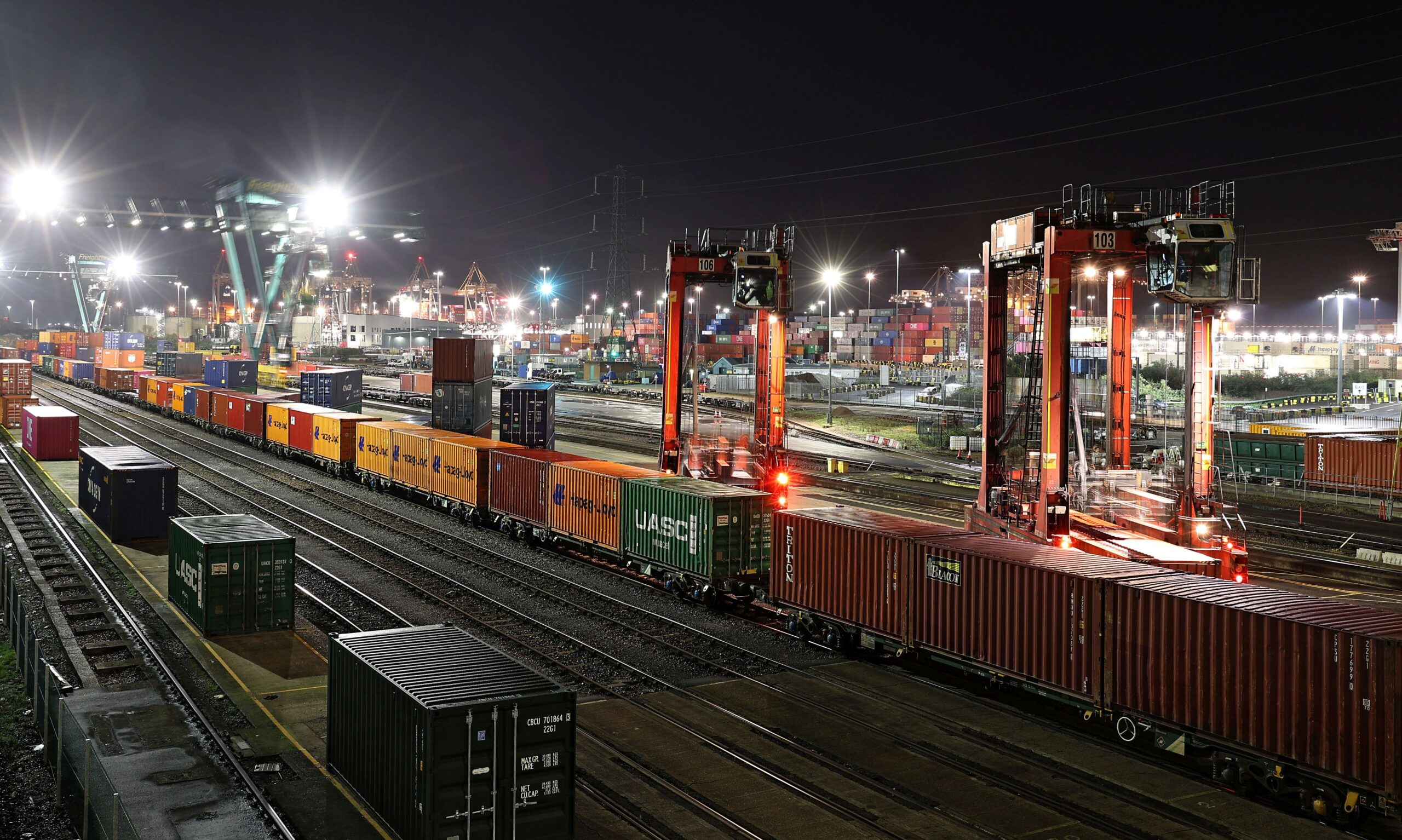
The scheme is intended to alter the cost calculation for moving an import container inland. A train can carry multiple boxes from Southampton to an intermodal terminal, where a road vehicle may complete the final journey to a warehouse. The incentive supports that combination when a shipper might otherwise book a longer road movement from the port.
The programme is financed by a £10 charge on loaded import containers arriving at Southampton. Eligible import containers must travel by rail to a designated inland terminal within the programme’s approximately 140-mile incentive zone. The levy applies to incoming boxes covered by the scheme, whereas payments are linked to qualifying rail movements and the rules in force for the relevant period.
DP World describes a further expansion of performance-based disbursements to rail freight terminal operators. Its existing programme guidance, however, records such payments from October 2025, with individual quarterly volume targets. The November change should therefore be understood as a continuation or revision of operator incentives, rather than the first introduction of that category of payment.
The published guidance distinguishes incentives paid to clearing agents from performance-related amounts intended for terminal operators and freight operating companies. Eligibility can depend on the railhead, container status, and the volumes an operator achieves. The press account does not establish a uniform payment to every carrier or terminal for each container that reaches the port.
The economics of an inland container movement are sensitive to both the train leg and the road journey needed after a container reaches its railhead. Rail can move many containers in a single service, but the total shipment still requires terminal handling, a compatible timetable, available capacity and a final delivery slot. An incentive can reduce a cost difference without removing those operational requirements.
DP World says the scheme has supported five additional Southampton rail services serving Birmingham, Cardiff, East Midlands Gateway, Doncaster, and Northampton. These routes provide alternative inland gateways for customers with goods bound for the Midlands, Wales, and northern distribution centres. A service is commercially useful only when its scheduled capacity, arrival window, terminal handling, and final delivery arrangements match the cargo requirement.
Rail capacity is useful only if a container can be placed on an appropriate train and collected reliably at the inland end. Importers and their forwarders must coordinate vessel arrival, customs release, train loading, terminal handling and local haulage against the requested delivery time. Delays at any one stage can diminish the operational benefit of a rail option even when its cost and emissions profile are favourable.
The reported emissions reduction is a cumulative estimate rather than a direct measurement of fuel used by every lorry displaced. It depends on the distances attributed to avoided road trips and the emissions assigned to the alternative rail movements. DP World has not published an independently audited, route-by-route breakdown alongside the November update, so the 50,000-tonne figure remains the company’s estimate.
Rail’s reported share of inland container movements increased from 21% to 29%, an eight-percentage-point difference. The percentage should be read alongside overall port volumes: changes in total imports and rail traffic could affect the share separately. DP World has not supplied a detailed year-by-year movement table in the current account.
Regular inland train services require enough committed freight to sustain wagon use, terminal staff, lifting equipment, and viable departure times. Quarterly volume incentives can reward a more consistent flow, but operators must still secure available network paths and coordinate with the importer’s final-mile haulier. The scheme does not remove those physical and scheduling constraints.
DP World continues to offer importers the choice of road or rail routing from Southampton, with the programme’s next results dependent on the volumes that customers place on eligible inland trains. The reported emissions, mileage, and container totals cover the period since September 2023; the company has not specified a new completion date for the incentive programme.