IN Brief:
- Containership time-charter rates are reported to be 7%–23% higher year on year, depending on vessel size.
- CMA CGM has chartered the 5,610 TEU Aigio for three and a half years, but the agreed daily rate has not been disclosed.
- Extended fixture commitments contrast with pressure on spot container freight rates, while future feeder deliveries could alter vessel availability.
Linerlytica reports that containership time-charter rates are between 7% and 23% higher than a year ago, depending on vessel size, even as spot freight prices on several long-haul trade lanes have softened. In market reporting published on 17 November, the shipping consultancy identified further multi-year vessel fixtures and particularly strong year-on-year increases in parts of the feeder market. Shipowners with readily deployable tonnage are retaining negotiating power because carriers need capacity for service commitments already made to cargo customers.
A time charter secures a vessel for an agreed period, generally against a daily hire payment. Spot container freight rates measure the price paid by a cargo owner to transport an individual container, often over a particular route and sailing. Those markets can move in opposite directions: carriers still need ships for scheduled services when new spot bookings become less profitable, and a charter signed today may remain in force long after prevailing container prices change.
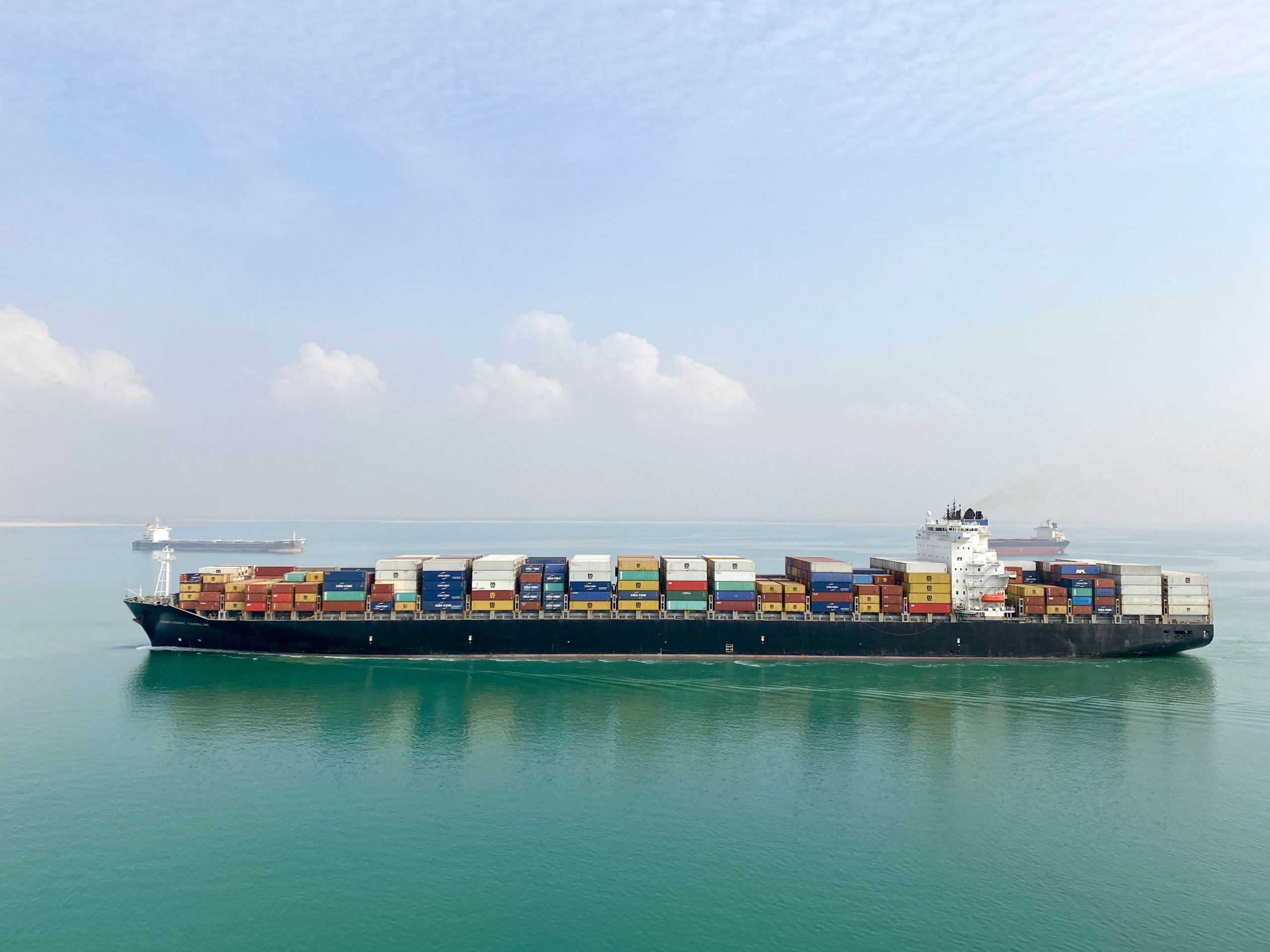
CMA CGM has reportedly taken the 5,610 TEU Aigio, built in 2001 and previously named Wan Hai 611, on charter for three and a half years. The daily hire agreed for this particular fixture has not been disclosed. Linerlytica places the prevailing rate for comparable vessels at approximately US$66,000 a day, around 10% above a year earlier; that assessment is a market comparison rather than a verified contract price.
A three-and-a-half-year commitment gives CMA CGM assured access to a particular vessel while giving its owner a defined period of employment. The carrier accepts the risk that cargo yields may decline during the term, whereas the owner reduces exposure to finding new employment at short notice. Charter duration therefore affects both price and risk, particularly where operators are committing ships against projected rotations that may later be adjusted.
Smaller feeder ships connect regional ports with major container hubs, handling cargo that cannot travel on a direct mainline call. Regular coastal services, port draught restrictions and terminal equipment can favour a particular vessel size or configuration. Linerlytica identifies feeders as a strong source of year-on-year charter gains, although a separate Lloyd’s List market assessment describes demand in some feeder segments as more mixed than for larger and mid-sized vessels. The assessments use different vessel classes and comparisons, rather than establishing a uniform shortage across every ship size.
Ship availability cannot be read directly from the size of the global orderbook. A newbuilding ordered for delivery in two years does not provide capacity to a carrier trying to fill a sailing next month. Similarly, a vessel already committed under a long charter, undergoing maintenance or positioned on another trade is not immediately available for deployment. The effective supply depends on delivery dates, vessel dimensions, charter expiry dates and the ports that each ship can serve.
Linerlytica reports that forward charter fixtures are extending towards the end of 2027. Booking ships so far in advance reduces uncertainty over access to equipment but makes operators’ network planning more dependent on future assumptions. Liner companies need to decide where they expect cargo demand, port congestion and service rotations to generate requirements for specific vessel sizes. Those decisions determine whether a long charter provides useful capacity or becomes an expensive obligation.
Fixture duration also affects the apparent day-rate premium. Lloyd’s List reported on 17 November that one-year hires averaged 23%–35% above two-year contracts across the vessel classes it examined. The difference is not a marketwide annual rate of inflation: it compares contracts of different lengths. A short fixture may offer flexibility to the charterer but less predictable income to the owner, while a longer fixture can command a lower daily payment in exchange for sustained employment.
Earlier broker analysis placed a 1,700 TEU geared feeder at about US$33,750 per day on a six-to-twelve-month charter, up roughly 19% from a year earlier. That assessment provides background on the feeder market rather than a verified price for a specific 17 November fixture. Geared vessels carry their own cargo-handling cranes, which can be important at ports without extensive shoreside lifting equipment. Ship configuration, not merely nominal TEU capacity, consequently affects how much practical choice an operator has when replacing a vessel.
Higher hire costs can affect network economics without being passed directly into the next container quotation. Shipping lines may respond by adjusting rotations, sharing ship capacity, reducing the frequency of selected services or committing to longer charters where they expect vessel scarcity to persist. The effect depends on the operator’s existing fleet of owned and chartered ships and the proportion of its cargo moving under longer-term customer contracts. No single current charter fixture provides a reliable measure of a carrier’s overall operating margin.
New feeder deliveries expected in 2027 may eventually loosen the shortage of available vessels, although the volume of fresh capacity reaching each regional trade is not yet established. Deliveries can slip, new ships may replace ageing units rather than add full net capacity, and operators can redeploy vessels when routes change. Charter rates will respond to the usable tonnage made available, the freight networks requiring it and the point at which expiring contracts release existing ships.
The latest fixtures leave container carriers committed to vessel costs for periods extending beyond the current weakness in spot freight prices. CMA CGM’s Aigio charter illustrates that exposure without revealing the precise hire agreed. Future fixture durations, deliveries of feeder tonnage and the pattern of cargo demand will determine whether shipowners retain the same bargaining position through 2027.