IN Brief:
- Reuters reports that GM asks parts suppliers bidding for contracts to describe their automation plans and assesses those plans in supplier selection.
- The automaker reportedly aims to increase factory robotics and other automation use by 20% by 2028 and is developing robots in-house.
- The supplier scorecard and factory expansion target have not been formally confirmed by GM; labour implications remain contested.
General Motors is asking parts suppliers bidding for new contracts to describe their automation plans and considering those responses in purchasing decisions, according to Reuters reporting on 17 November. Two people familiar with the matter told the news agency that GM uses a scorecard to assess suppliers’ efforts. GM has not published the scoring criteria, the weighting assigned to automation or the contract categories affected.
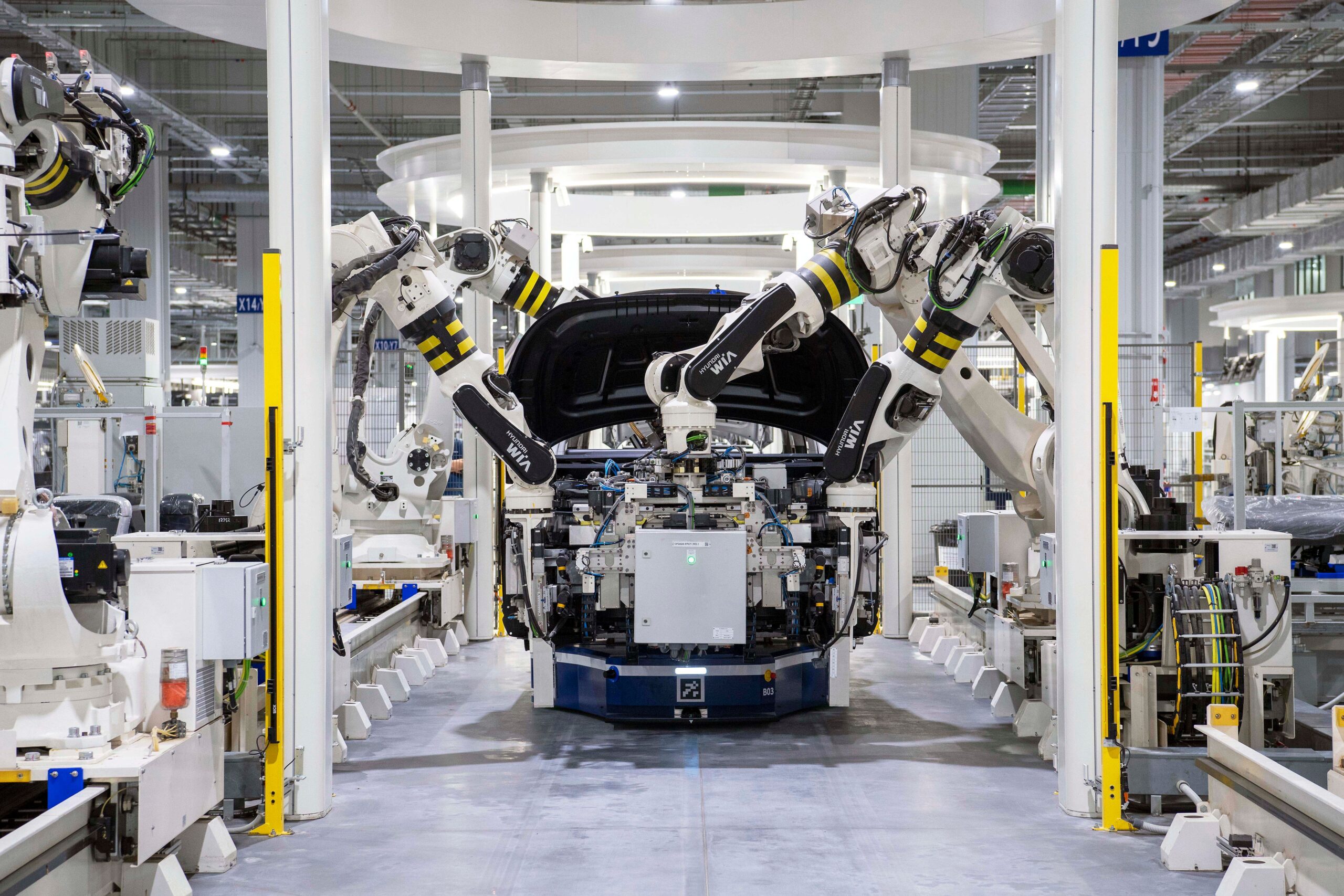
Reuters also reports that GM aims to increase use of robots and other automation by 20% at its North American factories by 2028, citing people familiar with its plans. The reported expansion includes developing and assembling some robots in Kokomo, Indiana, and increasing use of autonomous mobile robots for internal component movements. GM has discussed its wider interest in robotics, but the specific 20% target and supplier scorecard have not been independently confirmed in a company announcement.
Supplier selection ordinarily considers quality, cost, delivery performance and production capacity. A structured assessment of automation plans would add information about how prospective component makers intend to manage labour requirements, consistency and scale. Reuters did not obtain a published scorecard or confirm whether GM applies the same requirements to all component groups. A proposed automation investment and a demonstrated improvement in production performance are not necessarily equivalent.
A supplier’s automation plan can describe several quite different kinds of investment. Industrial robots may undertake welding, machine loading, dispensing or inspection on a production line. Automated guided vehicles generally follow controlled routes, while autonomous mobile robots use sensors and navigation software to move materials with less dependence on fixed pathways. Conveyor systems, barcode identification and warehouse management software can also automate parts of an operation without changing the manufacturing process itself.
Those systems influence cost and service in different ways. Repeated operations in stable production conditions can suit fixed automation, particularly where cycle time, positioning and quality checks are well defined. Component transfer between production cells may involve variable routes, mixed loads and interaction with people, which creates different safety and control requirements. A high robot count does not by itself show that a plant can handle changing production schedules or reliably deliver the required parts to an assembly line.
Parts suppliers must connect production processes with inventory records, replenishment and dispatch. A robotic welding cell may meet its cycle-time target while an upstream material shortage still stops output; an automated transfer system may move the wrong component if identification records are inaccurate. GM’s reported interest in automation therefore intersects with supplier traceability, stock control and manufacturing quality, although Reuters does not establish that its scorecard evaluates each of these functions separately.
A bid describing intended robot installations does not establish that those machines are commissioned, reliable or capable of meeting fluctuating vehicle production schedules. Suppliers may be at different stages of investment and use different technologies to meet similar performance obligations. The reported scoring mechanism could influence bids, but its effect on awards cannot be quantified without GM’s criteria and evidence of how assessments are applied.
The carmaker’s interest in automation comes against a background of higher production costs and efforts to localise manufacturing. Investment in North American capacity can alter the economics of supplying components, particularly where labour costs and the availability of skilled workers affect production. Automated equipment introduces its own expenses, including design, installation, maintenance, software integration, employee training and downtime during commissioning. Cost savings depend on utilisation and operating performance over the equipment’s useful life.
GM has previously discussed the development of in-house robotics expertise, and Reuters reports that the company had a team of roughly 100 robotics, hardware and AI specialists in 2025. Developing some equipment internally may give the carmaker greater influence over its design and integration with plant systems. It does not mean GM has stopped using third-party robotics suppliers, nor has the company disclosed the number of internally built robots already in service.
The United Auto Workers union has challenged the employment implications of expanding automation. Reuters reported a critical response from UAW vice-president Ryan Hiestand, while existing contracts with the three major Detroit automakers are due to expire in 2028. The reporting does not identify a confirmed number of GM positions to be replaced, and it would be premature to infer job losses directly from the reported 20% automation target.
Safety and quality controls will determine how any additional factory robots are deployed. Industrial robot cells generally need controlled access, appropriate guarding and safety-related interlocks. Mobile robots working around people require suitable traffic management, detection and stopping provisions. Equipment that handles components also has to preserve the correct identification and sequencing of parts, particularly when several models share a production facility. Reuters did not identify individual new installations or certify these arrangements at specific GM factories.
The reported supplier scorecard could introduce a further criterion into GM’s purchasing decisions. Prospective parts manufacturers may be asked to document not only production capacity but the automation investment behind it, yet no minimum robot count or mandatory spending threshold has been disclosed. Further details from GM would be needed to determine whether the criteria have become standard purchasing policy and how they affect supplier bids.