IN Brief:
- The Singapore partnership runs for five years, with operational pilots planned at CEVA’s Blue Hub.
- Robotics, AI vision, and connected systems will target variable kitting, labelling, and packing tasks.
- CEVA expects suitable lab technologies to reach Blue Hub in one to two years, subject to validation.
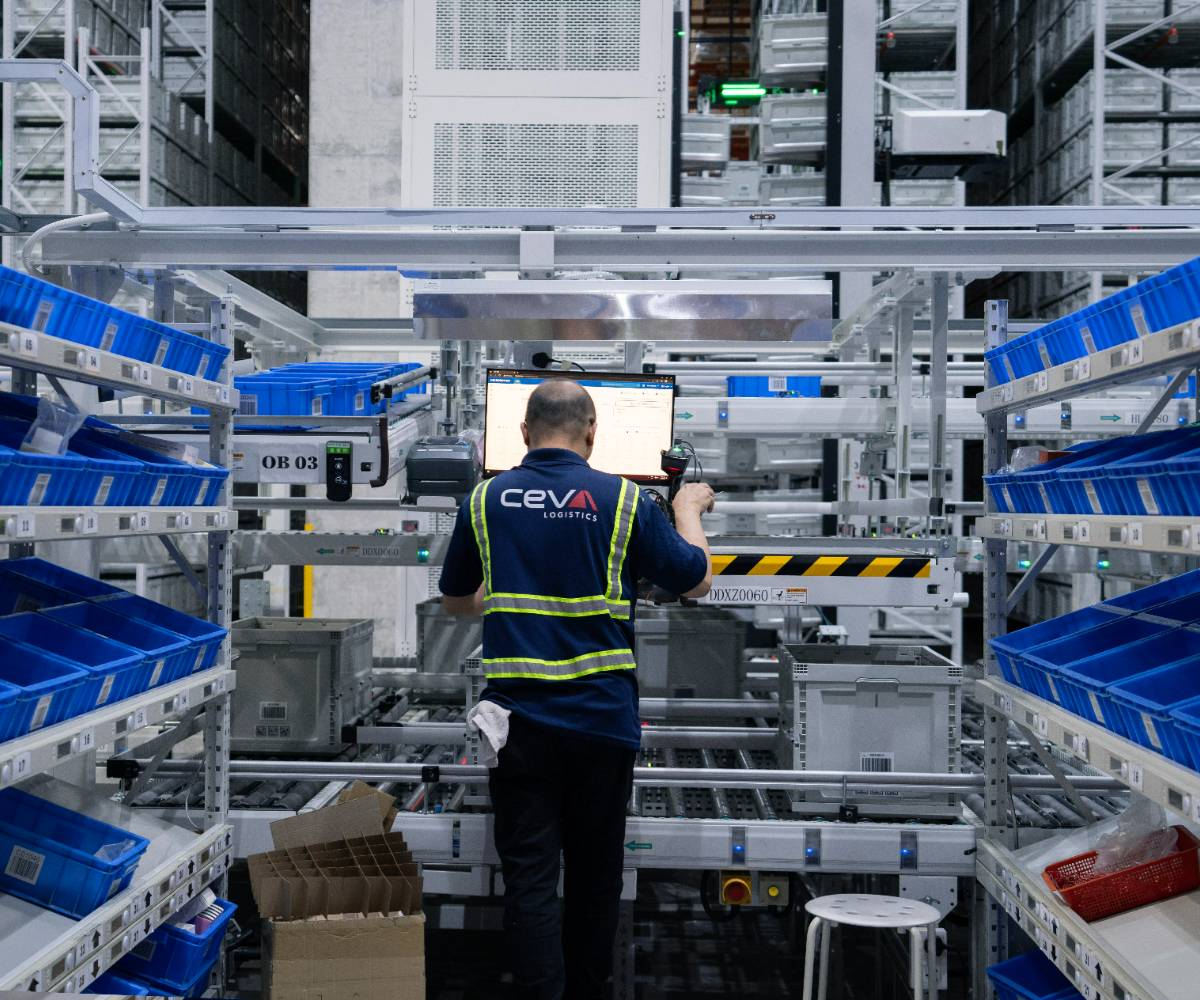
CEVA Logistics and the Singapore Institute of Technology (SIT) have opened a joint laboratory to develop warehouse automation for operations where product variety and small order quantities make conventional fixed systems difficult to use. The Intelligent Logistics & Autonomous Systems (ILAS) Lab, launched on 17 November, is the centre of a five-year collaboration covering robotics, artificial intelligence, machine vision, and connected automation.
Kitting, labelling, and packing are the initial research targets. CEVA performs these value-added services after or alongside storage and picking, assembling product combinations, applying customer-specific labels, and preparing saleable units. A packing station may receive the same product in different combinations and quantities throughout a shift. That variability limits machinery designed for a fixed item and a repeated handling cycle.
CEVA identifies its Blue Hub in Singapore as the intended operational destination for suitable developments. The company says value-added services account for approximately half of warehouse floor hours at the automated, multisector facility. That figure describes labour allocated to those activities, not a measured saving from the new laboratory. It helps explain the choice of research problem: even warehouses with substantial installed automation can retain labour-intensive work around product configuration and final preparation.
SIT will contribute expertise in robotics, AI vision systems, and connected automation, while CEVA supplies the operational processes and facilities against which the resulting systems can be assessed. The collaboration is intended to develop adaptable assembly arrangements rather than a single machine tied to one stock-keeping unit. Its programme covers laboratory validation, operational pilots, and field trials, with successive stages assessing technical performance as well as suitability for real warehouse conditions.
To pick the right component from a mixed batch, a vision-guided robot first needs reliable information about the item’s identity and position. A camera may identify packaging and orientation, but a usable handling instruction must also account for stock records, the shape of the item, and the available gripping surface. CEVA and SIT intend to investigate those functions; the partners have not reported production-scale accuracy for the proposed system.
A robotic gripper may encounter rigid cartons, flexible film, slippery surfaces, and products that cannot tolerate excessive pressure during the same shift. Each kit also has to contain the right components in the correct sequence, while labelling and packing require checks on orientation, position, and order accuracy. Exception handling will be important if a cell is to process irregular items without repeated manual intervention.
Connected automation also has to exchange accurate information with warehouse systems. An instruction to prepare a kit depends on the latest order definition, verified inventory, and the sequence in which materials reach the work area. Completion must then be recorded so that downstream packing, dispatch, and traceability processes reflect what was actually assembled. Software connectivity is therefore part of the physical process rather than a separate administrative improvement.
Laboratory work will be followed by operational pilots and field trials before CEVA selects applications for live use. The company expects suitable systems to be introduced at Blue Hub in one to two years, although neither partner has published validated throughput, labour savings, error-rate improvements, or installation costs. The five-year research partnership therefore covers a longer development period than the first anticipated deployment window.
Singapore’s Economic Development Board supports the initiative, while the National Robotics Programme backs its applied research. Gan Siow Huang, Singapore’s Minister of State for Energy, Trade and Industry, officiated at the opening. The collaboration includes workforce development and research participation: more than 130 SIT students and graduates have gained exposure to CEVA operations since 2023, and further students will be able to contribute to ILAS projects.
CEVA’s wider objective is to assess whether validated applications can be repeated across different customer sectors and its Asia-Pacific operations. That prospect depends on how readily each robotic cell accommodates differences in product size, packaging specifications, inventory data, and the equipment already installed at a site. Transferring a tested process between warehouses is less demanding when interfaces and tasks are standardised; high-mix operations are precisely where those conditions cannot be assumed.
CEVA has identified Blue Hub’s existing small-batch value-added work as the first prospective test environment. Before a robotic cell can take over those tasks, the partners will need to establish dependable product recognition, safe handling of varied packaging, and accurate reconciliation with warehouse records. The initial deployments remain an objective, with no confirmed production start or measured performance result.