IN Brief:
- Amazon will invest more than €10bn in European fulfilment robotics and automation.
- Proteus, STARK, and Vulcan are scheduled for wider European deployment.
- The programme links automation, workforce expansion, training, and faster fulfilment operations.
Amazon will invest more than €10bn in robotics and automation across its European fulfilment network, expanding the use of autonomous mobile robots, tote-handling systems, and touch-sensitive picking technology.
The programme was presented at the company’s Delivering the Future event in London and includes the next generation of Proteus, the STARK collaborative tote-handling system, and Vulcan, Amazon’s first robot with a sense of touch. The investment sits alongside plans to add 25,000 fulfilment centre roles across Europe over the coming years.
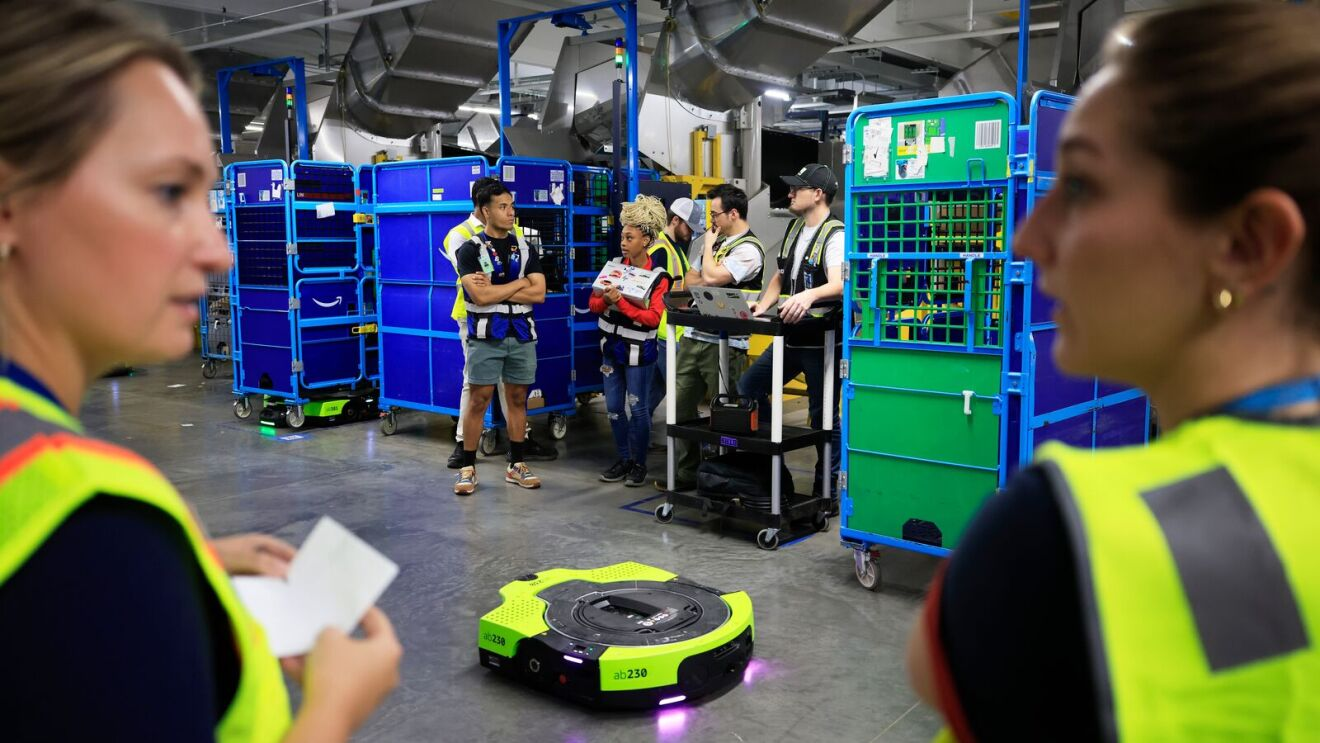
Proteus is being upgraded from a dock-area robot into a system that can operate more broadly across Amazon fulfilment sites. The next-generation version can receive plain-language prompts, identify priorities, plan routes, and move heavy carts across operational areas. It is currently being piloted in Amazon labs, with European deployment planned for the first half of 2027.
STARK, developed in Barcelona, is designed to pick full totes from conveyors and place them on carts while working alongside employees. Amazon plans to expand the system to 15 European sites by 2027. Vulcan will also be introduced more widely, adding touch-sensitive handling capability to a robotics portfolio that is moving beyond fixed automation and into more flexible physical workflows.
The investment also includes a global $1bn commitment to Career Choice by 2030, part of Amazon’s Future Ready 2030 programme. More than 300,000 employees have already participated globally, including 30,000 in the UK. The training programme covers areas including cybersecurity, software development, logistics, renewable energy, and mechatronics.
Warehouse robotics is moving into a different phase in Europe. Earlier automation programmes often centred on fixed conveyors, shuttle systems, automated storage, and goods-to-person picking. Newer deployments are increasingly focused on mobile robots that work around people, move across operational zones, and take over physically demanding movement without requiring a completely static warehouse layout.
That shift can be seen beyond Amazon. Locus Robotics’ European automation expansion in the Netherlands is supporting customer demonstrations, training, partner activity, warehouse operations, and robot lifecycle services from Logistics Campus Aalsmeer. The growth of that support infrastructure shows how warehouse robotics is becoming a deployed operating model rather than an experimental technology layer.
Fulfilment automation is also spreading across food, beverage, and consumer goods logistics. Paxon’s automated Lyon fulfilment hub for JDE Peet’s combines automated picking, packing, conveyors, racking, and right-sized packaging for branded coffee ecommerce. Those deployments differ in scale from Amazon’s network, but they reflect the same pressure to improve throughput, space use, packing accuracy, and labour allocation.
European fulfilment networks are being reshaped by labour availability, wage pressure, property constraints, shorter delivery promises, and more variable order profiles. Robotics programmes that reduce walking distance, heavy lifting, dock congestion, repetitive tote movement, and manual cart handling can improve flow without relying solely on larger buildings or larger teams.
The hardest part of the next phase will be integration. Robots need to work inside live fulfilment environments alongside existing warehouse management systems, safety processes, inventory controls, maintenance teams, and human supervisors. A mobile robot that moves efficiently in a controlled test area still has to handle seasonal peaks, exception handling, damaged goods, blocked routes, and changing shift patterns.
Amazon’s European programme gives the market another large-scale reference point for automation designed around mixed human and robotic workflows. The practical measure will be whether Proteus, STARK, and Vulcan improve flow, safety, and site productivity without adding complexity for warehouse teams already operating under tight delivery windows.