IN Brief:
- Dematic has invested almost US$50m in its Grand Rapids Solutions Center.
- The facility combines mobile robotics, picking, palletising, software, and data.
- Customers can examine integrated fulfilment workflows before live deployment.
Dematic has opened a nearly US$50 million warehouse automation centre at its Americas headquarters in Grand Rapids, Michigan, bringing robotics, software, storage, and operational data together within a working fulfilment environment.
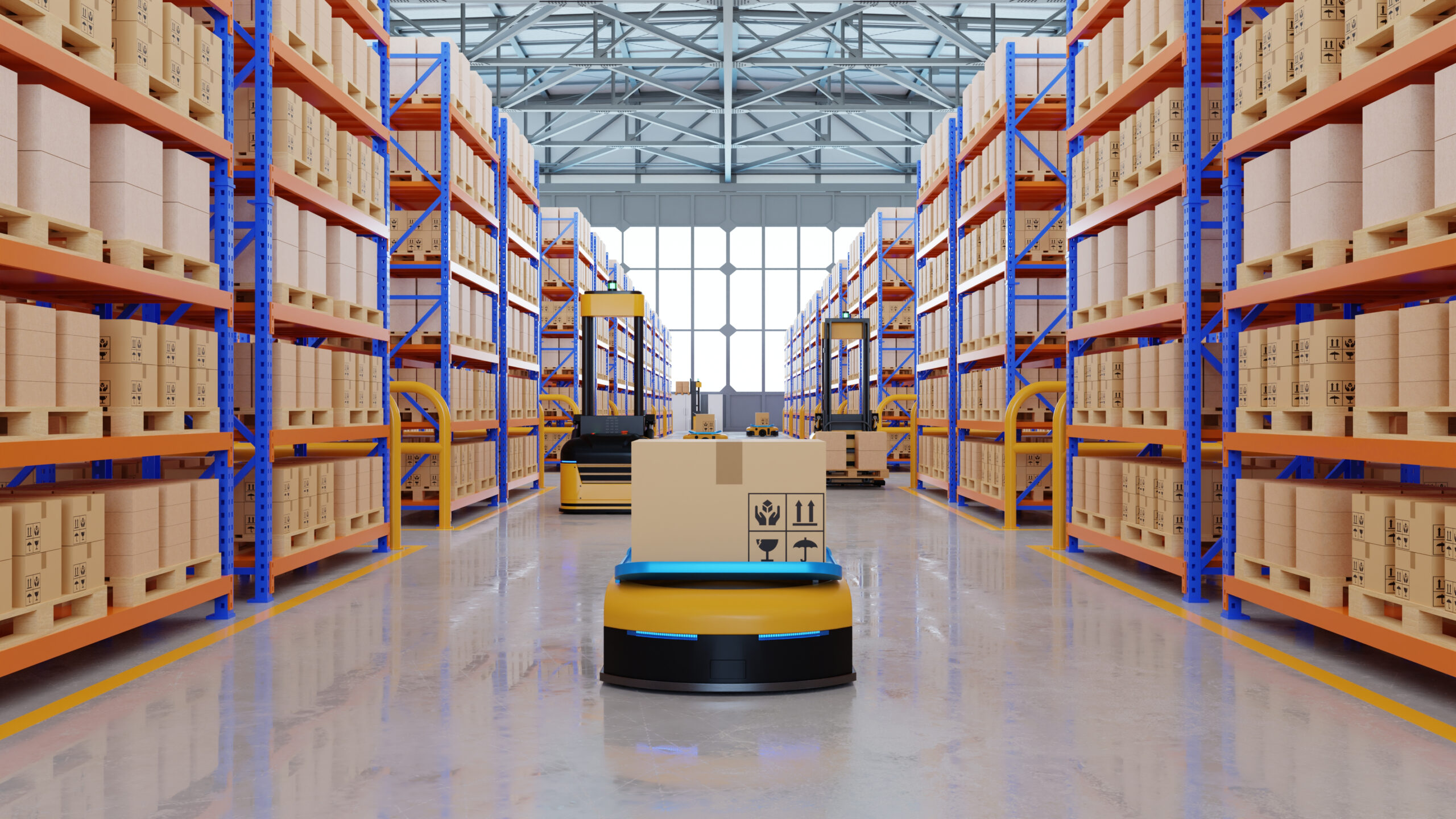
Dematic has developed the 40,000ft² Solutions Center as a functioning operation rather than a collection of isolated product displays.
The facility includes autonomous mobile robots, goods-to-person systems, robotic piece picking, palletising, conveyors, storage equipment, warehouse software, data tools, and lifecycle-service capabilities.
Customers can examine how the technologies interact across receiving, storage, order preparation, pallet handling, and outbound processes. The building will also support testing, training, workshops, and development work before comparable systems are installed in live distribution centres.
Individual machines can perform convincingly during controlled demonstrations, yet warehouse output depends on their interaction with upstream stock, downstream packing, software decisions, operators, and other automation. A working environment exposes those dependencies more clearly.
Product flow, robot traffic, exception handling, maintenance access, and control-system behaviour can be observed within one operation rather than through separate demonstrations built around ideal conditions.
Automation procurement shifts towards complete systems
Warehouse technology has expanded beyond fixed conveyors and high-speed sorters into a broader combination of mobile robots, automated storage, vision systems, robotic arms, and AI-supported software. Demand visible at Automate 2026 extended across warehouses, factories, parcel networks, food plants, and pharmaceutical logistics.
The wider choice creates more design options but increases integration risk. Mobile robots provide flexibility, automated storage offers density and predictable sequencing, and robotic picking reduces some manual handling, yet each technology performs differently across product shapes, packaging types, order profiles, and operating temperatures.
Most large projects therefore combine several systems. Goods-to-person equipment may feed robotic or manual workstations, while conveyors and sorters move completed orders towards packing and dispatch.
Warehouse-control, execution, and management software must coordinate those flows without releasing more work than the next process can absorb. Poorly balanced software logic can leave expensive equipment waiting while another area accumulates queues.
Dematic has placed software and data alongside the physical machinery so throughput decisions can be examined as part of the complete system. That approach reflects the growing influence of controls architecture on availability, scalability, and fault recovery.
Simulation and digital modelling help estimate performance before installation, although their output depends on accurate data for orders, inventory, labour, travel, and equipment. A physical test environment adds constraints such as acceleration, battery charging, tote quality, sensor alignment, and human behaviour.
Exception testing may provide more value than demonstrating normal flow. Warehouses contend with damaged cartons, unreadable labels, missing inventory, oversized products, urgent orders, blocked aisles, equipment alarms, and late inbound deliveries.
A design built primarily around the standard path can require extensive manual intervention after deployment. Testing recovery processes reveals whether operators receive useful information, whether work can be rerouted, and how quickly the system returns to normal throughput.
Automation assets also have long operating lives, during which product ranges, packaging, volumes, sales channels, and customer expectations may change substantially. Modular equipment can support phased expansion, but interfaces, data structures, and control architecture must be established early enough to avoid expensive later redesign.
Skills form an increasing share of the investment. Automated warehouses require technicians, controls engineers, data analysts, super-users, and maintenance planners alongside conventional receiving, picking, and dispatch roles.
Training within a test centre allows teams to learn recovery, diagnostics, and safe intervention without interrupting customer orders. Those capabilities are especially important during start-up, when operators and systems are learning each other’s limitations.
Lifecycle support affects output long after the acceptance test. A site may reach its contracted rate at handover but deteriorate if preventive maintenance, spare parts, software updates, and refresher training are not sustained.
Demonstrating service and diagnostic tools beside the equipment gives customers a clearer view of total ownership costs. Energy use, maintenance labour, component replacement, software licensing, and system downtime can outweigh differences in headline machine speed.
High-throughput food logistics illustrates the integration challenge. The £340 million M&S automated food-logistics development must combine speed with temperature control, product life, availability, seasonal peaks, and strict handling windows.
Comparable constraints apply in pharmaceutical, retail, manufacturing, and spare-parts operations, where accuracy and recovery can be more valuable than maximum theoretical throughput. Automation suppliers are increasingly expected to demonstrate labour productivity, resilience, scalability, and fault response rather than isolated machine performance.
The Grand Rapids centre cannot reproduce every building, product range, or operating profile, so detailed site-specific engineering remains necessary. It can, however, expose integration weaknesses before a customer commits live inventory and service performance to a design.
As warehouse systems become more interconnected and software-dependent, the ability to test the complete operating chain gains value. A small improvement in rated machine speed offers little return when the surrounding system cannot keep that machine supplied, clear its output, or recover quickly after a fault.