IN Brief:
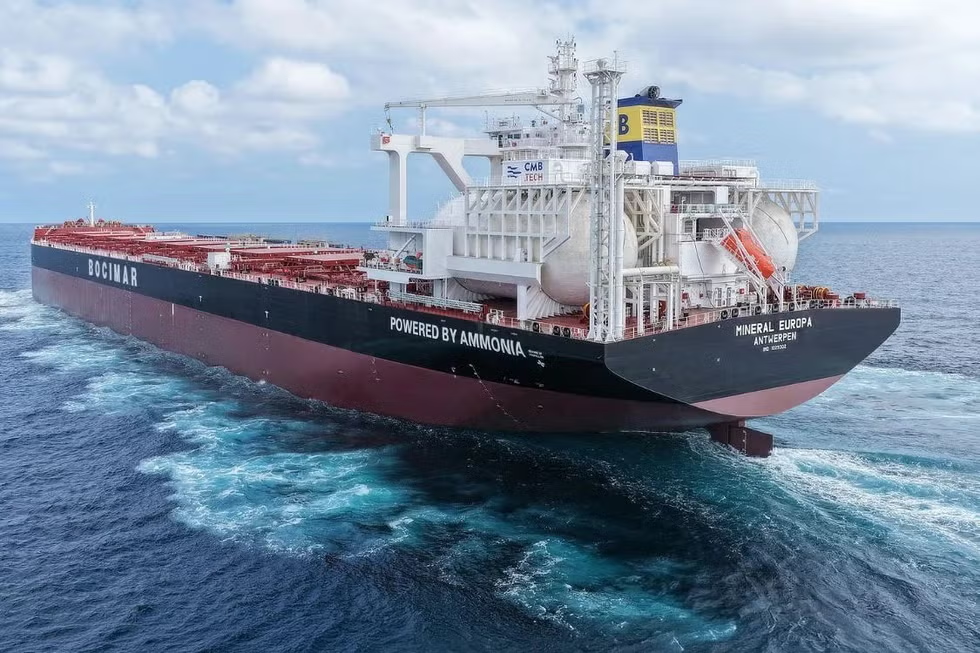
- Mineral Europa, a 210,000 dwt bulk carrier, began its maiden voyage to Australia in October.
- CMB.TECH describes the ship as the first ammonia-powered dry bulk carrier to enter service.
- The company expects 21 ammonia-powered vessels to be delivered through 2029.
CMB.TECH has sent Mineral Europa, a 210,000 deadweight-tonne dry bulk carrier equipped for ammonia propulsion, on its maiden voyage to Australia. The Belgian shipping group announced the sailing on 9 October and describes the vessel as the world’s first ammonia-powered dry bulk ship to enter service. The departure marks an operating milestone for the company, although the company has not provided verified emissions data covering the full voyage or verified emissions savings from the voyage.
The ship is part of a wider investment programme that CMB.TECH says will bring 21 ammonia-powered vessels into its fleet by 2029. Its announced delivery pipeline comprises 18 dry bulk carriers, one container ship and two chemical tankers. That spread of vessel types is relevant because their cargo handling arrangements, voyage patterns and refuelling requirements differ. A bulk carrier moving commodities on longer passages faces different port calls from a container service following a more regular rotation, and each operating model will need a dependable supply of an appropriate fuel.
Ammonia contains no carbon, which means that using it as an engine fuel does not create carbon dioxide through the direct oxidation of fuel carbon. This physical property is central to the shipping industry’s interest in it. It is not, however, the same as saying a complete ship voyage or the fuel’s production chain is free of greenhouse gas emissions. The manufacture of ammonia can be emissions intensive unless low-carbon production routes are used, while engine operation must address other environmental effects, including nitrogen oxides and potential nitrous oxide emissions.
Alternative marine fuels also introduce engineering requirements that are separate from the carbon content of the fuel itself. Ammonia is toxic, so storage, transfer and containment systems need to limit exposure risks for crew members and port workers. The vessel and its supporting infrastructure must accommodate suitable tanks, piping, detection equipment and procedures for handling leaks. Safety planning extends into bunkering operations, where a ship receiving fuel interacts with shore or bunker-vessel personnel. CMB.TECH’s announcement establishes entry into service, not a blanket claim that those operational challenges have disappeared.
Mineral Europa’s size makes the development relevant to industrial commodity transport. Deadweight tonnage is an indication of the mass a vessel can carry, including cargo, fuel, water, stores and other loads; it is not the mass of cargo that will necessarily be carried on any particular voyage. Large dry bulk carriers transport materials through supply chains in which ocean freight cost, port access and delivery timing influence procurement and production decisions. An alternative-fuel propulsion system must therefore perform within the practical requirements of long-distance shipping rather than only demonstrate that an engine can burn a different fuel under test conditions.
CMB.TECH and Fortescue have previously announced an agreement covering a series of ammonia bulk carriers. The latest maiden voyage follows that longer commercial programme, but does not by itself confirm the delivery of all planned ships or completion of any future ammonia bunkering network. Procurement decisions for new vessels involve years of construction and financing commitments, while fuel availability and pricing may change over the same period. Operators must assess both their ships and the infrastructure through which they expect to trade if the fuel is to become a reliable everyday option.
The company has described the introduction of ammonia propulsion in sweeping historical terms. The operational evidence needed to assess that ambition will come from actual voyage performance, bunkering arrangements, fuel consumption and emissions reporting. These measures would help distinguish the advantages associated with the fuel’s chemistry from what is achieved by a ship in commercial service. Independent verification is especially important when comparing alternative fuels, since production methods and system boundaries can yield materially different lifecycle outcomes even when two fuels produce similar emissions at the point of use.
For customers moving iron ore and other bulk commodities, the immediate change is the appearance of a large carrier designed to use an alternative propulsion fuel within real freight operations. Whether such vessels become widespread will depend on their reliability, the economics of low-emission ammonia supply, ports’ capacity to bunker them safely and the commercial terms available to charterers. Mineral Europa’s first voyage establishes that the programme has reached an operating stage; subsequent ship deliveries and recorded service performance will provide the stronger basis for assessing its scale and environmental results.