IN Brief:
- Armlogi's warehousing services revenue rose 21.9% to $77.1 million in fiscal 2026.
- Transportation revenue fell 14.5% as more customers used platform-bundled fulfilment and alternative outbound delivery arrangements.
- The company is targeting higher utilisation across an eleven-warehouse US network while assessing further automation investment.
Armlogi Holding Corp. increased warehousing services revenue by 21.9% to $77.1 million in fiscal 2026 as more customer activity shifted towards fulfilment programmes and warehouse-based services, even as lower transportation revenue pulled total group sales down 2.4%.
Warehousing accounted for 41.5% of revenue in the year to 30 June 2026, up from 33.2% a year earlier. Transportation services remained the larger business at $108.6 million, but revenue in that segment fell 14.5% from $127.0 million. Total revenue declined to $185.8 million from $190.4 million.
The figures show a business changing its revenue mix rather than simply expanding. Armlogi said a growing share of customers are using fulfilment programmes in which selling platforms bundle outbound delivery, reducing the amount of freight the company resells while leaving warehousing activity with Armlogi. Some customers are also moving inventory in bulk to Amazon facilities for Fulfilment by Amazon rather than buying individual parcel transportation through the logistics provider.
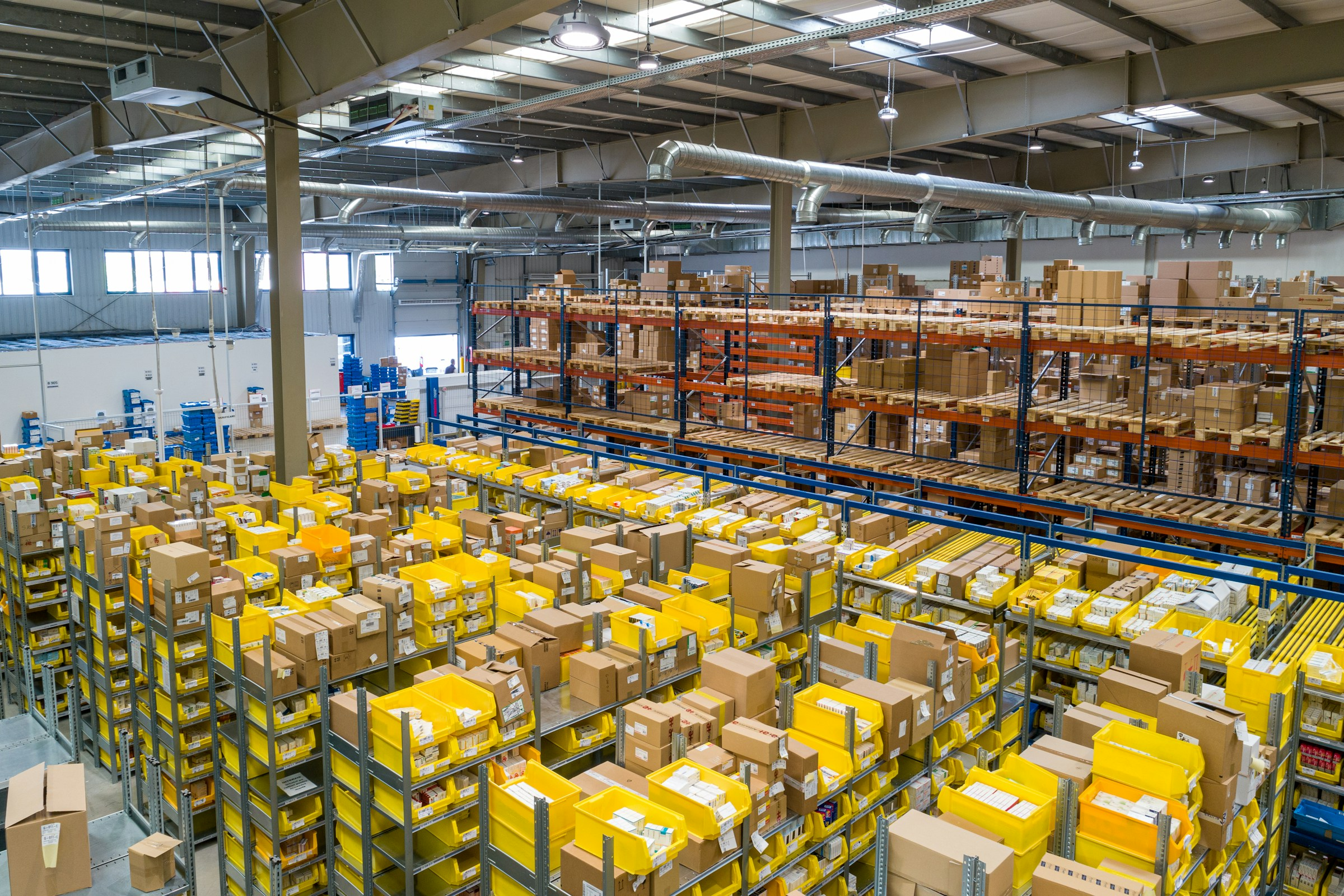
The shift has increased the relative importance of Armlogi’s warehouse network. Operations expanded in Texas and Illinois, while the Ontario, California facility that opened in fiscal 2025 became the primary California distribution point for several larger customers in December 2025. The company said Ontario finished fiscal 2026 as its third-highest revenue-generating warehouse in the state.
Growth in the Temu and TikTok customer segments also contributed to the change. Armlogi said these customers typically generate higher warehousing service charges per order than its traditional customer base, providing more revenue from storage and fulfilment activity even where the associated outbound transportation is arranged through another platform or provider.
The financial effect is mixed. Freight expenses fell by $18.2 million, or 16.1%, to $95.0 million as transport volume declined, helping total cost of service decrease to $185.4 million. Armlogi moved from a $3.0 million gross loss in fiscal 2025 to gross profit of $0.4 million in fiscal 2026, although the resulting gross margin was only 0.2%.
Operating costs show the other side of the warehouse expansion. General and administrative expenses increased 49.7% to $22.0 million, including an additional $6.2 million of rental expense linked to leased warehouse facilities that remained partly underutilised during ramp-up. Temporary labour expense also rose sharply as newer sites in Georgia, Illinois, and Ontario increased activity and the company reorganised inventory across its California network.
Armlogi therefore ended the year with a larger warehousing base but substantial spare capacity still to fill. The company reported a net loss of $20.9 million, compared with $15.3 million a year earlier, and used $5.1 million of cash in operating activities. Cash, cash equivalents, and restricted cash stood at $6.5 million at year end, down from $13.6 million.
The balance sheet improved in other areas. Armlogi settled its outstanding convertible notes during the year and reduced total liabilities by $22.4 million to $122.7 million. Much of the remaining obligation is linked to leases, which makes warehouse utilisation especially important because fixed occupancy commitments continue whether individual buildings are full or not.
That creates a straightforward operating priority for fiscal 2027. Armlogi says it intends to increase utilisation across its eleven-warehouse network, particularly in Georgia, Illinois, Texas, and Ontario, California, where facilities have been added or expanded over the past two fiscal years. The company also plans to broaden its customer base geographically, including Southeast Asia and Mexico, while pursuing higher-value warehousing relationships.
The network totals around 3.8 million square feet according to the company’s fiscal 2026 results. Armlogi’s model is built around cross-border e-commerce merchants that need US warehousing, order fulfilment, customs brokerage, and transport services. That leaves the business exposed to changes in how major e-commerce platforms structure delivery, but it also creates an opportunity when merchants still need domestic inventory positioned close to US customers even if the platform controls the final delivery leg.
The change in service mix illustrates how platform fulfilment can reallocate logistics revenue without removing the underlying physical workload. Inventory still has to be received, stored, counted, picked, and transferred, but the company performing those tasks may no longer control the parcel or transport leg. Warehousing providers therefore have to price labour, space, and handling accurately rather than relying on transport resale to support account economics.
Armlogi is also evaluating targeted investment in supply chain technology and warehouse automation, including conveyor systems, as it looks to lower unit costs. That work will have to be balanced against the immediate need to improve utilisation because automation produces its strongest economics when throughput is sufficient to absorb the capital and maintenance burden.
Fiscal 2026 leaves Armlogi with a clearer warehouse-led revenue profile but little room for complacency. Warehousing growth and lower freight expense improved gross performance, yet underused leased capacity, higher operating expenses, and a wider net loss show that adding facilities is only the first part of the equation. Fiscal 2027 will depend on converting that footprint into consistently occupied, productive space.