IN Brief:
- Bear Robotics and BOWE IQ are integrating Carti 100 AMRs with existing warehouse and enterprise platforms.
- APIs and event-driven workflows will connect robot tasks with WMS, ERP, and MES data.
- The companies are targeting deployment lead-time reductions of up to 40%, particularly at brownfield sites.
Bear Robotics and BOWE IQ have formed a UK and European partnership to connect Bear’s Carti 100 autonomous mobile robots more quickly with the software already controlling warehouse and manufacturing operations. The companies are targeting deployment lead-time reductions of up to 40% by using BOWE IQ’s integration layer to link robot fleets with warehouse management, enterprise resource planning, and manufacturing execution systems.
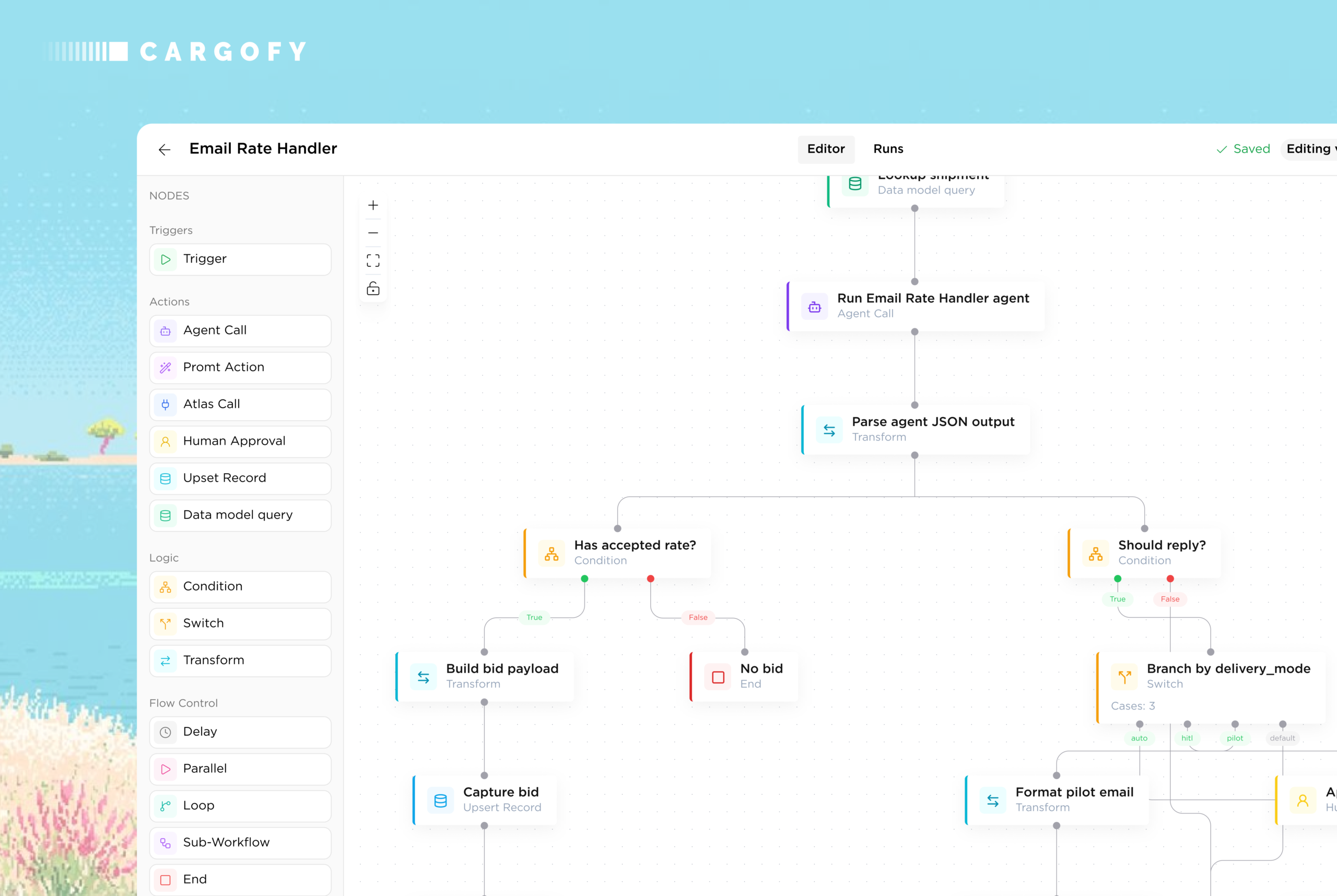
The proposed architecture uses APIs to connect existing platforms with the Carti fleet, while event-driven workflows allow tasks to be generated from live operational data rather than dispatched manually. Systems from SAP, Oracle, and Blue Yonder are among the environments cited by the partners, although the integration model is intended to work more broadly across existing WMS, ERP, and MES installations.
The focus is on a familiar weakness in warehouse automation projects. An AMR may be capable of mapping a facility and moving safely within hours, but useful work still depends on the robot knowing which load to collect, where it should go, when the destination is ready, and how that movement fits with inventory, production, or despatch priorities. Those instructions normally sit inside software installed long before the robot arrives.
Brownfield sites make that problem more acute because the existing technology estate is rarely uniform. A warehouse may combine an older WMS, newer conveyors, proprietary controls, manual workstations, customer interfaces, lifts, doors, and equipment installed during several separate investment cycles. Adding robots without coordinating those systems risks creating another automated island that still depends on people to bridge gaps in information.
BOWE IQ’s role is centred on those connections. Its systems integration business links warehouse software with conveyors, sorters, robots, packing equipment, and other controls, while its AMR software offers external APIs for connection with WMS and ERP platforms. The company also uses simulation and digital twin capabilities to test mobile robot logic before deployment.
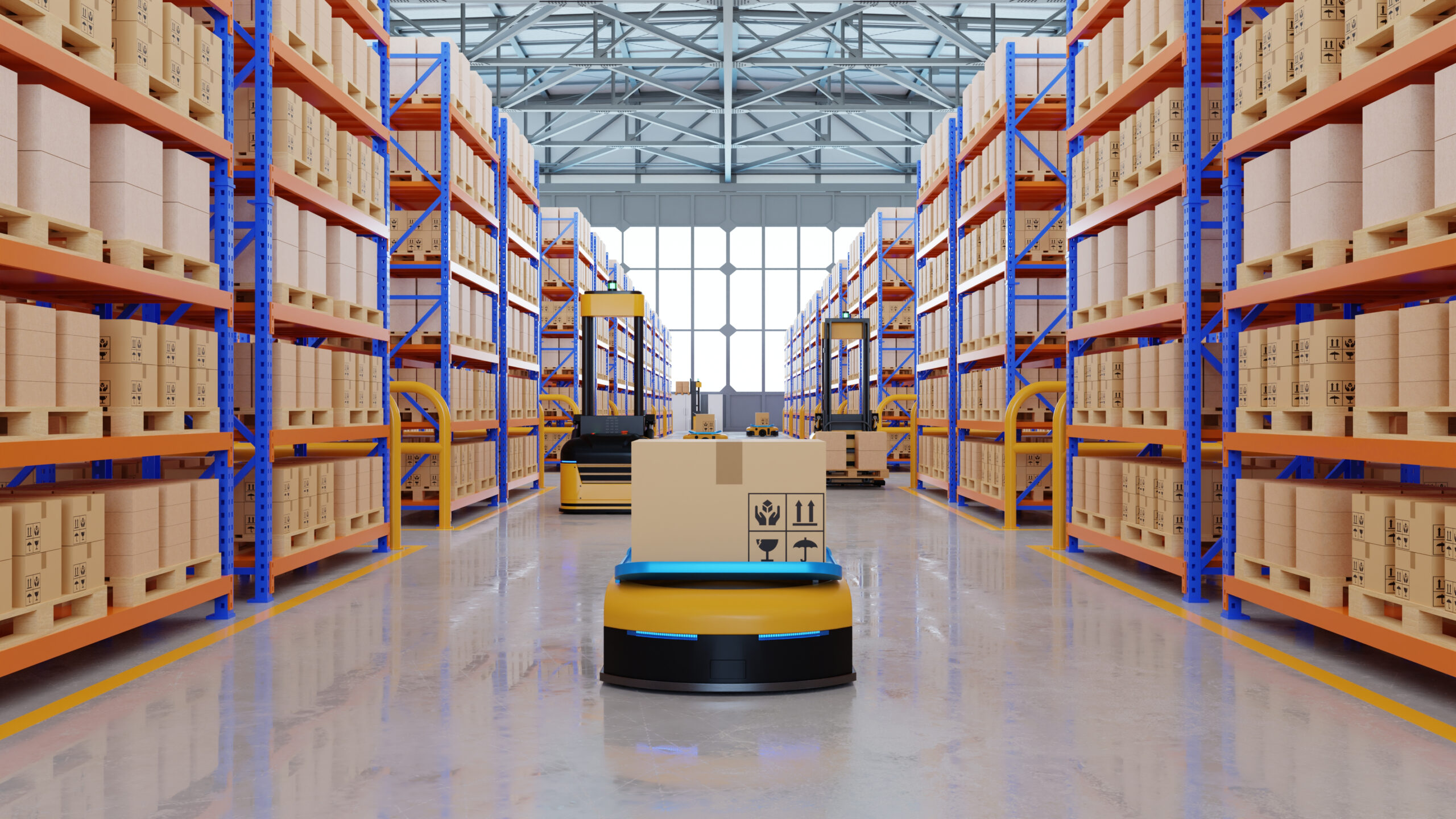
Bear’s Carti 100 is designed for lighter materials movement in warehouses and factories. It carries up to 100 kg, measures approximately 537 mm wide, 570 mm deep, and 1,507 mm high, and can be configured with adjustable shelves or conveyor modules. Bear states a battery life of nine to 11 hours depending on load and speed, with automatic charging available.
The robot’s central control system can coordinate multiple units and interface with warehouse systems and connected devices. In practice, that allows fleets to perform repeated movements between storage, picking, production, consolidation, or packing areas without following fixed rails or magnetic guidance. The flexibility is useful in buildings where routes change, although the operating logic still has to reflect what the wider warehouse is trying to achieve.
Task prioritisation is particularly important. A robot fleet can optimise travel distance perfectly and still reduce overall productivity if it repeatedly moves low-priority loads while production waits for components or despatch lanes run short of completed orders. Integration with the host WMS or MES provides the data needed to make those priorities visible to the automation layer.
Physical interfaces can be equally restrictive. Robots may need to call lifts, trigger doors, feed conveyors, wait for workers, or interact with charging systems, while mixed operations require safe coordination with forklifts and pedestrians. Each interface adds software, testing, and exception handling that has to be completed before a pilot becomes a dependable production system.
The partners are targeting 3PL, automotive manufacturing, and healthcare operations, sectors where existing facilities frequently need to automate without wholesale rebuilding. For 3PLs, the challenge is compounded by customer turnover because the same building may be reconfigured for different contracts during the life of the robot fleet. Hardware that can be moved is useful only if the software connections can be altered without another long integration project.
The claimed 40% reduction in deployment lead time is not presented as a guaranteed result for every site. Integration duration still depends on system age, API availability, data quality, cybersecurity requirements, testing, workflow complexity, and the amount of custom logic already embedded in the operation. A modern WMS with documented interfaces is a very different starting point from a heavily modified legacy installation.
That variation is precisely why integration has become a larger competitive issue as AMR hardware matures. Robots are increasingly straightforward to place into a building; connecting them to the decisions that make the building work remains the less glamorous engineering task. Bear and BOWE IQ are trying to compress that part of the project, which will be useful if the result is fewer months spent persuading old warehouse software to recognise new machinery.