IN Brief:
- Datalogic is using LogiMAT 2026 to launch new products spanning parcel identification, mobile computing, and intralogistics safety.
- The Matrix 830/930 targets high-speed conveyor scanning, while new Falcon and Skorpio devices extend warehouse mobility.
- The company is packaging identification, worker mobility, and automation safety as one connected execution layer for modern logistics sites.
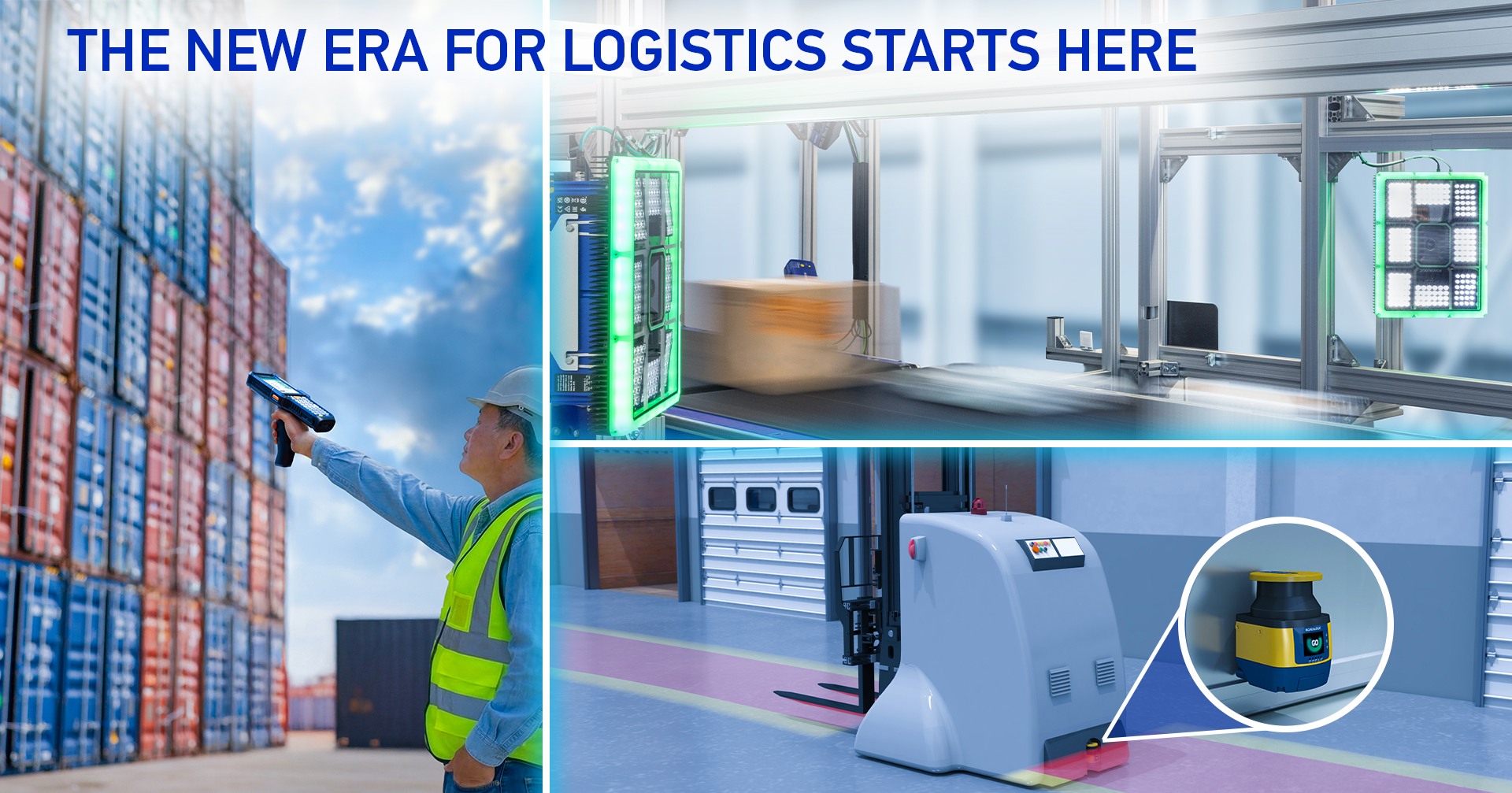
Datalogic is using LogiMAT 2026 to push a broader warehouse technology proposition, bringing parcel identification, mobile execution, and automation safety into a single product wave. The launch centres on four developments: the new Matrix 830/930 readers for high-speed conveyor environments, next-generation Falcon X60/X65 and Skorpio X40/X45 mobile computers, and the SLS 10m safety laser scanner through Datasensing.
The most immediate operational impact is likely to come from the Matrix 830/930 line. Datalogic says the Matrix 930 can cover conveyor belts up to one metre wide with a single reader, which would reduce the need for multi-camera arrangements, mirrors, and more complex scanning layouts in parcel sortation. The company also says the platform can handle conveyor speeds up to 3.5 m/s, while keeping the door open to AI-enabled use cases such as parcel classification and hazardous-material label recognition.
The mobile computing refresh points to the same underlying issue from a different angle. Warehouse automation still depends on a large number of scan, verify, replenish, and pick tasks that sit outside fully automated zones. The Falcon X60/X65 is aimed at rugged, scan-intensive environments and long-range data capture, while the Skorpio X40/X45 is pitched more toward ergonomic, high-frequency workflows where all-day usability matters as much as device performance.
The SLS 10m extends the package into safety-critical automation. Designed for pallet handling and intralogistics automation, it is intended to support conveyors, robotic cells, palletisers, and AGVs with detection coverage of up to 10 metres. That matters because as facilities add more autonomous or semi-autonomous movement, the safety layer becomes part of the throughput equation rather than a separate compliance add-on.
Seen together, the launch is less about individual hardware upgrades than about reducing the integration gap between manual operations, parcel automation, and mobile robotics. Warehouses no longer want disconnected point products if they can avoid them. They want fewer interfaces, less system complexity, and technology that can survive the awkward overlap between human workflows and automated ones.