IN Brief:
- Six UK grocery warehousing operations will transfer from GXO to DP World in September.
- The sites provide more than two million square feet of capacity and employ over 2,000 people.
- The transfer implements the CMA remedy imposed after GXO's acquisition of Wincanton, while GXO retains applicable transport operations.
DP World has agreed to take over six UK grocery logistics sites from GXO Logistics, adding more than two million square feet of warehouse capacity and over 2,000 employees to its contract-logistics network. The operations serve Asda, Sainsbury’s, and Co-op and are due to transfer in September.
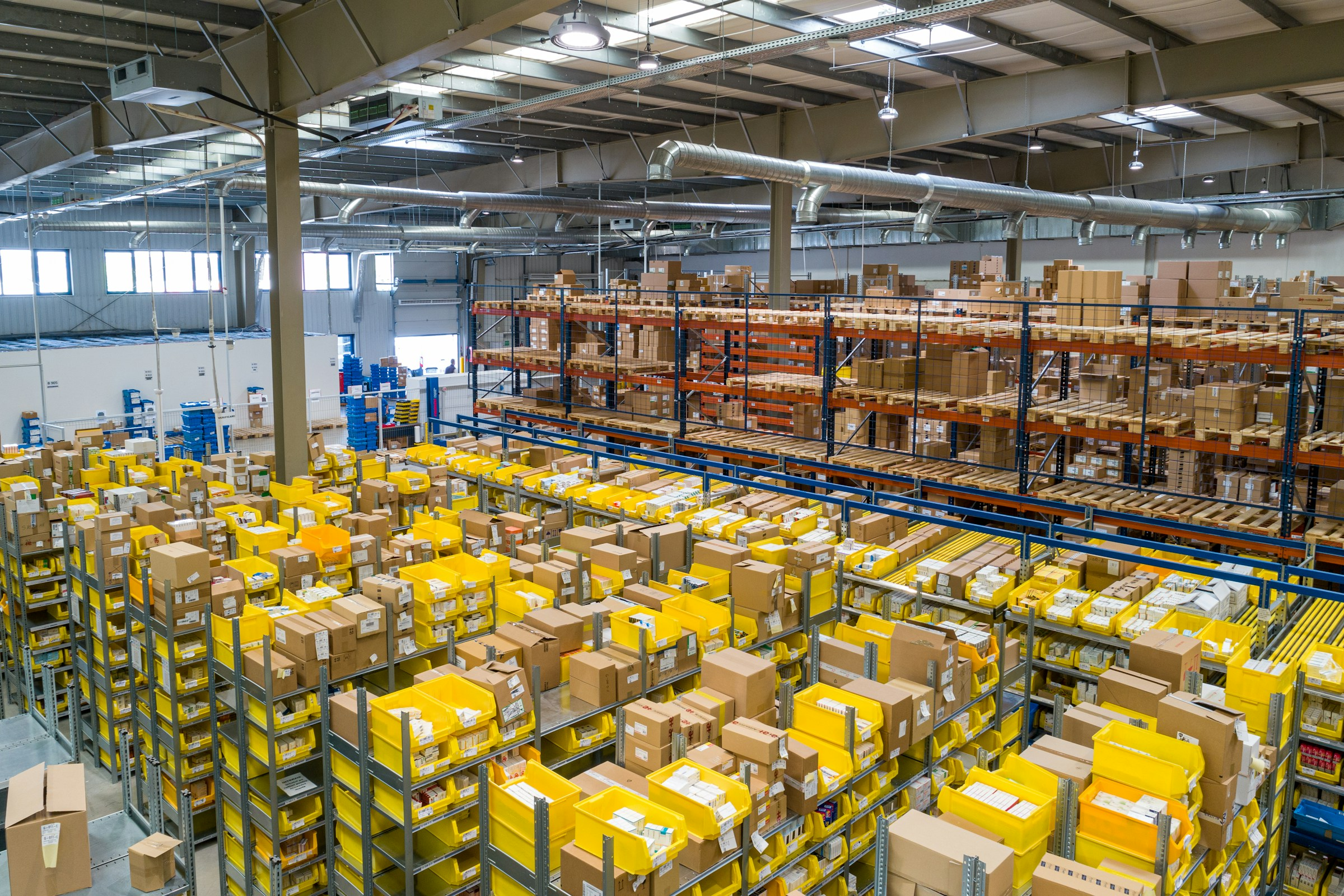
Five of the facilities are in England and one is in Northern Ireland. Together they provide ambient, chilled, frozen, and bonded storage and handle around 46,000 individual product lines, giving DP World an immediate position in large-scale grocery distribution rather than a portfolio of empty buildings awaiting customers.
The transaction is a regulatory divestment rather than a conventional acquisition programme. The Competition and Markets Authority required GXO to sell Wincanton’s dedicated grocery warehousing business after concluding that GXO’s acquisition of Wincanton would otherwise reduce competition in that part of the UK contract-logistics market.
The CMA cleared the wider merger subject to that structural remedy. Its investigation focused on dedicated warehousing supplied to grocery customers, where it found that removing Wincanton as an independent competitor could weaken customer choice and increase costs.
DP World’s role therefore has a competitive purpose as well as a strategic one. The buyer must inherit enough operational capability for the divested business to continue competing independently rather than simply transferring warehouse contracts into another large logistics group without the people and systems needed to operate them.
More than 2,000 employees will join DP World’s UK operations as part of the transfer. That workforce carries much of the practical knowledge required to keep the sites operating through the change, including customer processes, product handling, warehouse systems, health and safety procedures, and the daily exceptions that are difficult to capture fully in formal documentation.
Service continuity is particularly important in grocery logistics because the sites cannot be paused for integration. Stores continue to require replenishment throughout the transition, while chilled and frozen stock adds temperature controls and relatively narrow tolerance for delays.
The warehouses also support different customer operating models, from large out-of-town supermarkets to convenience and neighbourhood stores. That creates a wide mix of order sizes, picking profiles, delivery frequencies, and inventory characteristics inside the same overall grocery segment.
GXO will retain transport operations at applicable sites, meaning warehousing and road distribution will continue to cross a contractual boundary after the transfer. That makes the interface between the two providers one of the most important operational risks to manage.
A warehouse can complete an outbound order correctly and still fail the customer if the vehicle does not arrive, while transport planners depend on accurate information about when loads will be ready. Departure schedules, dock allocation, vehicle arrival data, loading priorities, and exception handling will therefore require close coordination between businesses that are simultaneously competitors elsewhere in the logistics market.
The separation also means DP World cannot improve warehouse performance in isolation. A change that appears efficient inside the building can create additional waiting time or complexity for the transport provider, and the reverse applies when vehicle schedules are altered without considering pick and loading sequences.
Technology integration will be another practical test. Grocery distribution centres depend on warehouse-management systems, labour planning, inventory records, customer interfaces, and transport information. Those systems must continue operating accurately while corporate ownership, user access, reporting, and support arrangements change.
The physical capacity is strategically useful for DP World because it expands the company’s UK logistics presence further inland. Its existing operations include London Gateway and Southampton alongside freight forwarding, warehousing, and other logistics activities, but dedicated grocery distribution exposes the business to a different set of service requirements from container-terminal handling.
Contract logistics is measured through detailed customer service levels rather than port throughput. Inventory accuracy, picking productivity, despatch timing, labour availability, shrinkage, temperature performance, and store availability can all matter more to the customer than headline warehouse square footage.
That makes the six-site transfer a substantial operating integration. Two million square feet and 2,000 employees provide immediate scale, but scale is useful only if customer performance survives the transition.
The regulatory background also makes continuity commercially significant. The purpose of the CMA remedy is to preserve competitive pressure in dedicated grocery warehousing, which means the divested operation has to remain credible to existing customers and future tender processes after the transfer.
DP World is consequently acquiring more than contracts and capacity. It is taking responsibility for an operating grocery logistics business that regulators specifically judged necessary to maintain competition in the market.
When the sites transfer in September, the early measure will be deliberately unremarkable: orders continuing to leave on time, inventory remaining accurate, and warehouse-to-transport interfaces functioning without disruption. The strategic benefits can be developed later; the remedy works only if the business continues to operate as a viable competitor from day one.