IN Brief:
- EPS has moved from retrofit to newbuild deployment as wind-assist technology gains traction in tanker operations.
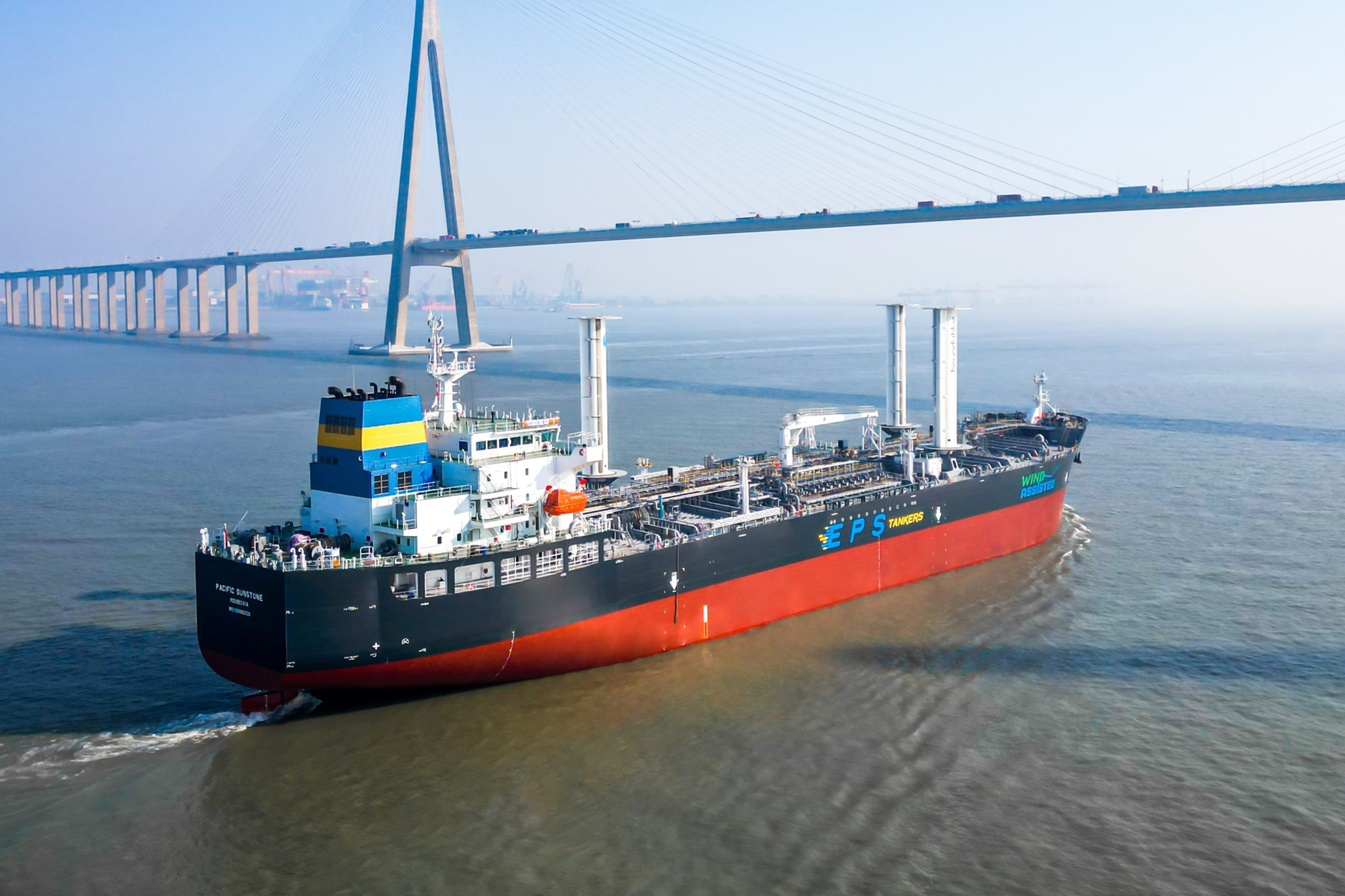
- Pacific Sunstone has been fitted with three 22-metre bound4blue eSAIL units at New Times Shipbuilding.
- The installation shows wind propulsion being built into yard schedules as operators pursue fuel savings and compliance gains.
Eastern Pacific Shipping has completed its second installation of bound4blue’s eSAIL wind-assist system, fitting three 22-metre units on the MR tanker Pacific Sunstone at New Times Shipbuilding in Jiangsu. Unlike the company’s earlier Pacific Sentinel project, this deployment was built into the vessel’s construction programme from the outset, making it EPS’s first newbuild installation of the technology.
That change in timing matters. Retrofit projects remain important, but newbuild integration is where wind-assist systems start to move from pilot status into repeatable fleet planning. In this case, the sail foundations and electrical connections were incorporated during construction, and the units were then shipped from Spain for final connection in China, reducing the structural and scheduling friction that often slows adoption.
The background from Pacific Sentinel also gives the project more weight than a purely theoretical fuel-saving claim. EPS and the Global Centre for Maritime Decarbonisation said a six-month study of the earlier installation found an average 8% net power reduction and 5.5% net fuel savings, with peaks above 20% in favourable winds. bound4blue says the technology is designed to help operators cut engine load, lower operating costs, and improve compliance under frameworks including CII, EU ETS, EEDI, EEXI, and FuelEU Maritime.
The tanker segment has become one of the more closely watched proving grounds for wind propulsion because deck layouts, hazardous-area rules, and operational constraints leave less room for bulky or mechanically complex solutions. bound4blue is pitching eSAILs as a smaller-footprint option that does not require tilting systems or affect operational airdraft, and the company’s DNV type approval has helped bring the technology further into mainstream fleet evaluations. With installations now spreading across retrofit and newbuild programmes, the sector is starting to treat wind-assist less as a showcase technology and more as another lever in the economics of compliance.