IN Brief:
- Europa Worldwide Group continues to build its UK-Europe road freight model around delivered duty paid movement.
- The model places customs, duty, VAT, and clearance responsibility with the UK exporter rather than the EU importer.
- The approach is designed to reduce importer friction and create a cleaner customer experience for UK exporters selling into Europe.
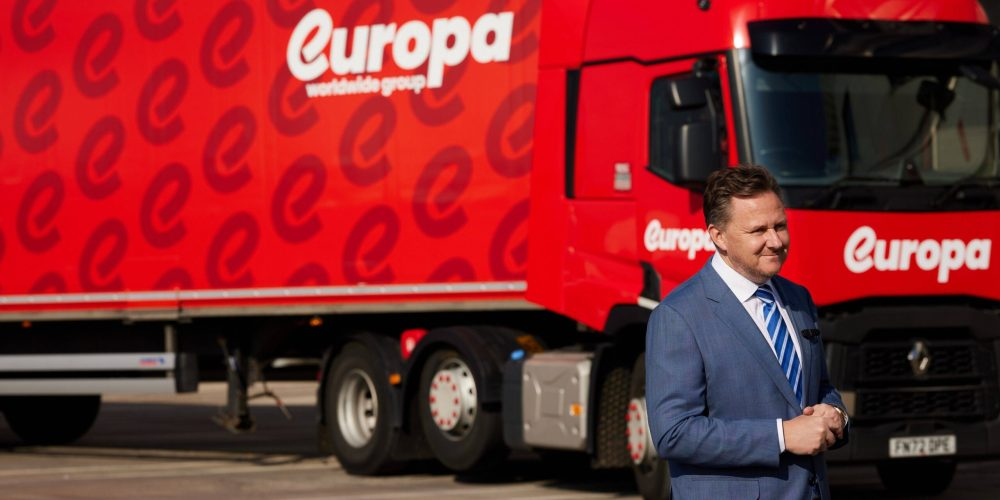
Europa Worldwide Group is continuing to build its UK-Europe road freight model around delivered duty paid movement, using customs control as a core part of its post-Brexit export service.
The model shifts responsibility for duty, VAT, clearance, and customs paperwork away from the importer and onto the UK exporter. Europa clears continental European goods through France, with French-destined shipments cleared in Belgium, using a structure designed to reduce disruption for the receiving customer.
Since the UK left the EU customs union, UK-Europe road freight has carried a permanent layer of data, tax, and compliance work. Export and import declarations, commodity codes, valuation, origin, incoterms, and importer details now shape delivery performance alongside trailer availability, route planning, depot flow, and final-mile service.
Delivered duty unpaid terms can leave the EU customer responsible for unexpected clearance charges, duty, VAT, and administrative work. Delivered duty paid movement changes that experience by allowing the UK exporter to manage the import process before goods reach the customer. The approach gives exporters more responsibility, but also more control over service quality.
The issue sits inside a wider UK logistics resilience debate. Freight networks depend on infrastructure, labour, customs capability, and public investment moving together, with transport funding concerns already raising questions about long-term freight performance. Customs processes may appear less visible than rail capacity or port investment, but weak documentation and unpredictable clearance can damage trade just as effectively as a physical bottleneck.
Europa’s model reflects a wider shift in logistics procurement. Customers are buying process certainty as much as vehicle movement. The carrier or forwarder that can absorb customs complexity, standardise paperwork, and reduce importer workload offers a stronger commercial proposition than one that simply moves freight from depot to depot.
The operational burden is substantial. DDP services require accurate classification, tax treatment, shipment routing, documentation, customer onboarding, and broker coordination. Errors can create cost exposure, delay, or compliance risk. The model only works when customs expertise is embedded into the freight process rather than treated as a separate administrative step.
Smaller exporters may see the greatest benefit because they often lack the internal customs teams and systems available to larger businesses. A structured DDP service gives them a route to European customers without asking every buyer to become more involved in British export paperwork. That can help protect sales relationships where administrative friction would otherwise make the transaction less attractive.
Importer experience remains decisive. Even where goods ultimately clear, an unexpected request for fees, documents, or tax registration can damage customer confidence. A cleaner receiving process helps preserve the commercial relationship and reduces the chance that a European buyer shifts to a supplier inside the single market purely to avoid friction.
The model also highlights how Brexit has changed the competitive basis of UK-Europe road freight. Before 2021, the lane was largely a question of network density, linehaul performance, consolidation, transit time, and price. Those factors still count, but customs capability is now part of the product. Providers that integrate clearance, tax treatment, and delivery planning can differentiate in a market where the border is no longer invisible.
Technology will increasingly shape that advantage. Customs data has to move cleanly between shipper systems, transport management platforms, brokers, authorities, depots, drivers, and customers. Manual fixes can support exceptional shipments, but repeatable trade requires reliable data capture and validation before the freight reaches the border.
Europa’s continued focus on DDP shows that post-Brexit adaptation has moved from temporary workaround to permanent service design. UK-Europe trade will remain viable, but the cost of administrative weakness is now higher. The operators that make customs complexity feel routine will define the quality of the lane as much as those with the largest trailer fleets.