IN Brief:
- Hershey expects decision intelligence initiatives to cut inventory by $100m over two years.
- The company has also linked technology deployment to a $50m productivity opportunity.
- Consumer goods manufacturers are pushing supply chain systems harder as volatility, complexity, and service pressure continue.
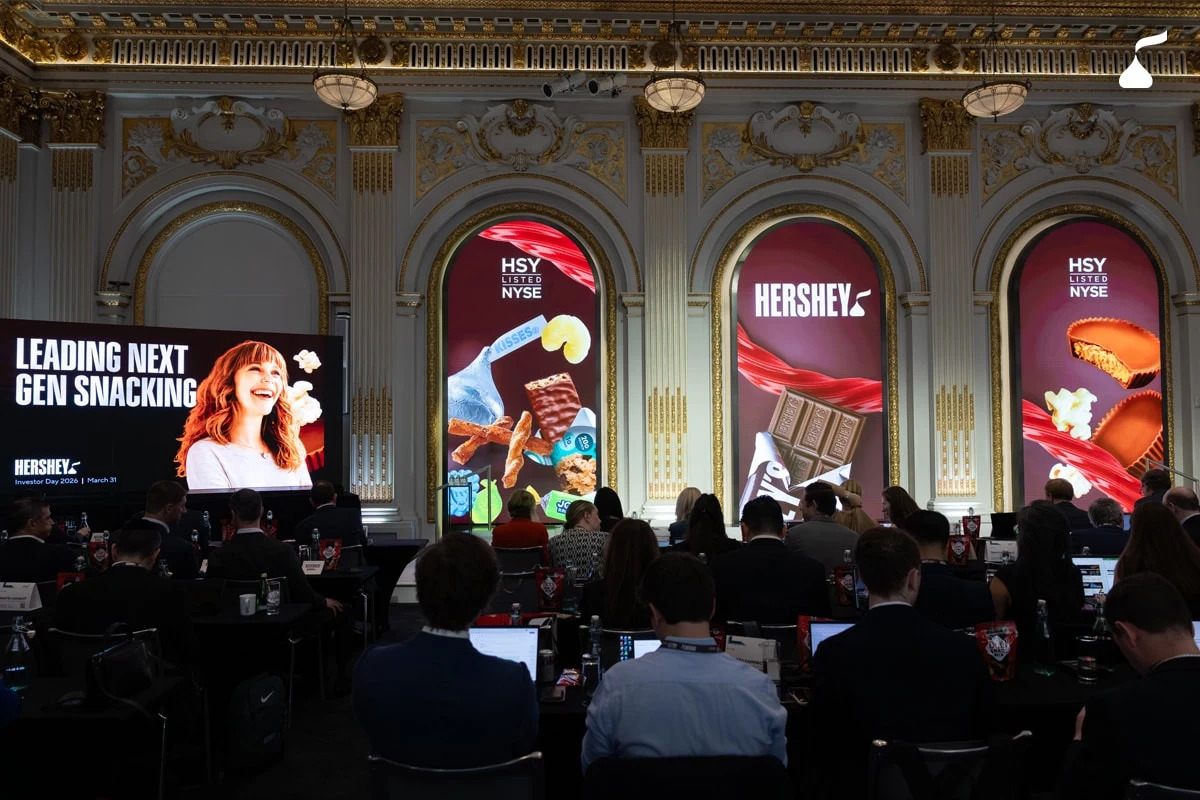
The Hershey Company is targeting a $100m reduction in inventory over the next two years as it expands its use of decision intelligence and wider supply chain technology across the business.
The confectionery and snacks manufacturer said the same programme is expected to deliver a further $50m in productivity gains. The targets were presented as part of a broader effort to use data, digital systems, and network modernisation to make supply chain execution more responsive, with planning, factory operations, and inventory management increasingly tied together rather than treated as separate improvement tracks.
Hershey has been building that capability over time. The company has highlighted work on digital lean systems, a more integrated data backbone, and investment in digitally connected manufacturing assets, including a new chocolate processing facility designed to operate with a higher degree of end-to-end visibility. That matters because inventory reduction at this scale rarely comes from a single forecasting tool. It usually depends on a chain of decisions improving together — demand signals, production scheduling, inventory positioning, and network flow.
For consumer goods manufacturers, that challenge has become harder, not easier. Product ranges are more complex, promotion cycles move faster, and service expectations have not become any more forgiving. At the same time, ingredient volatility, transport fluctuations, and periodic supply constraints make it risky to strip too much stock out of the system without improving the quality of planning underneath it. Companies therefore need technology that does more than automate reports. It has to improve the timing and confidence of operational choices.
That is why decision intelligence is attracting attention. Used properly, it can help planners compare scenarios, flag weak signals earlier, and weigh trade-offs between service, cost, and inventory with greater precision. In a category such as confectionery, where seasonality, promotional timing, and demand spikes are central to performance, the payoff from better inventory decisions can be large. Excess stock ties up cash and raises obsolescence risk, but thin inventory raises the likelihood of missed sales and more expensive recovery moves.
Hershey’s targets also point to a broader shift in the market. Consumer goods supply chains are moving away from isolated planning upgrades and towards multi-layered operating models in which factory systems, decision tools, and network design work together. That does not guarantee leaner inventory by itself, but it does create the conditions for it. The harder task is cultural rather than technical: trusting the system enough to act earlier, with less buffer, and without rebuilding cost somewhere else in the network.