IN Brief:
- More than 50 enterprises participated in HKPC's LogTech Expo 2026, demonstrating industrial logistics technologies.
- Exhibits included RFID inspection robots, robotic labelling, automated storage, mobile charging and safety monitoring systems.
- Industry discussions identified data quality, cybersecurity and the gap between expected and realised investment returns as barriers to wider adoption.
The Hong Kong Productivity Council has brought together more than 50 enterprises to demonstrate technologies for warehouse automation, industrial logistics and supply chain management. LogTech Expo 2026, held at the InnoCentre in Kowloon Tong on 29 October, featured robotic inventory inspection, automated labelling, mobile charging equipment and systems designed to monitor safety conditions in warehouses and logistics facilities.
The technologies covered different stages of moving and managing goods, from identifying products in storage to handling them during packaging and preparing shipments for onward distribution. Autonomous mobile robots and automated storage equipment were presented alongside radio-frequency identification systems and digital platforms for coordinating warehouse and transport operations. Several demonstrations focused on reducing repetitive physical tasks, while others addressed the information required to manage those tasks accurately.
Summation Solutions demonstrated an RFID inventory robot capable of scanning warehouse racks up to 2.8 metres high. Rather than requiring workers to examine each item label visually, RFID technology uses radio-frequency signals to read information stored on compatible tags. A mobile scanning system can collect that information while travelling through designated warehouse aisles, providing a method of checking physical stock against the records held in inventory management software.
The accuracy of those checks depends on the characteristics of the storage environment. Metal surfaces, liquids and the orientation of tags can affect radio-frequency communication, while the arrangement of racking determines the positions from which items can be scanned. The robot must therefore be configured for the warehouse layout, with the readings reconciled against existing inventory records to identify missing items, unexpected stock movements or discrepancies in recorded locations.
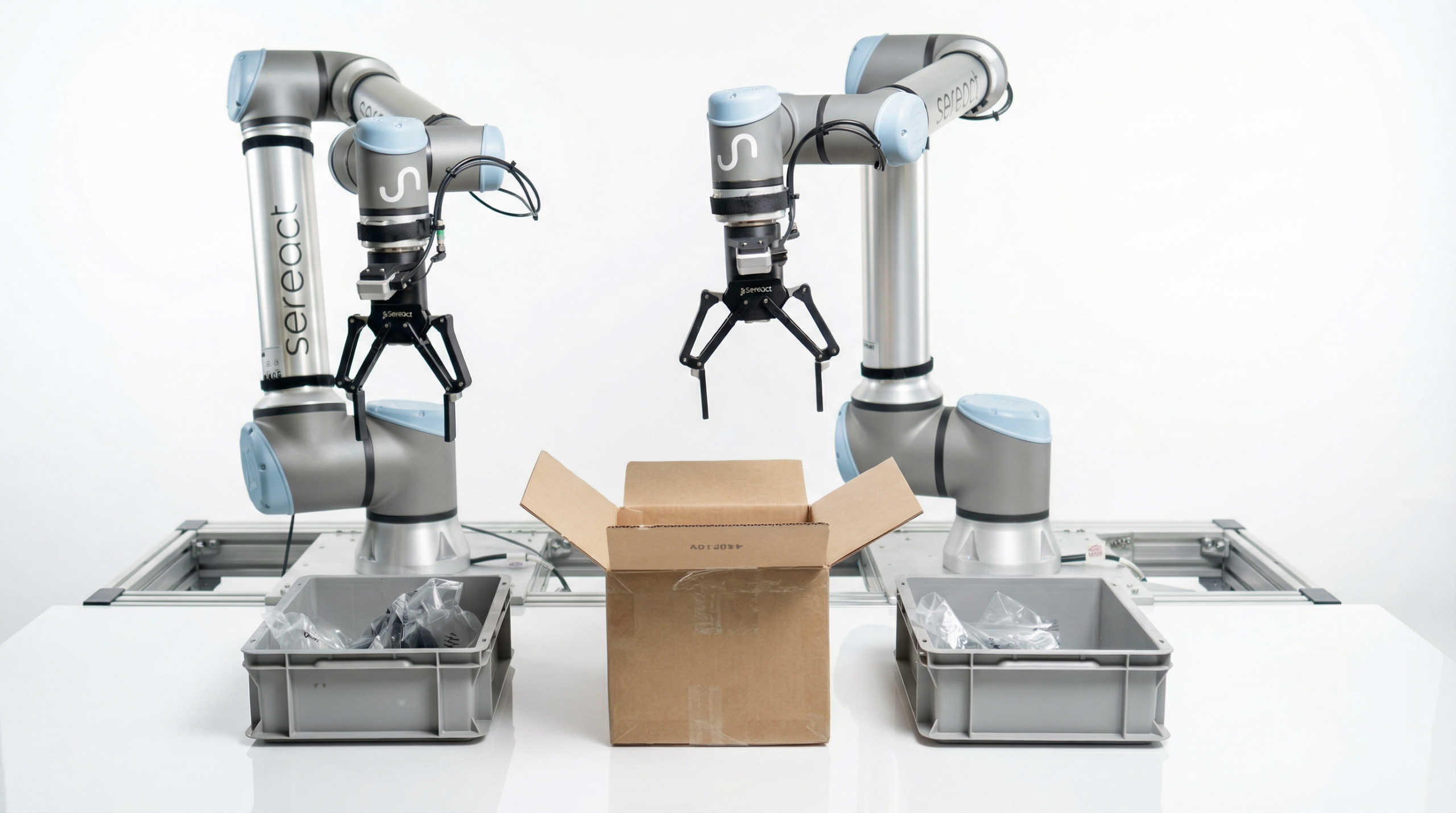
Accurate identification also supports the packaging and dispatch activities that follow storage. Million Tech Development presented an automated labelling system using robotic arms to handle products of different shapes, allowing items to be positioned for label application without relying on the same manual handling sequence for every product. The equipment is intended to accommodate variation in product presentation while maintaining consistent placement of identification information.
That information must remain associated with the correct item as goods move through subsequent handling stages. Barcodes and other identifiers are used to connect physical products with storage locations, order records and shipment instructions. Errors in labelling can affect picking, sorting and dispatch, so automated equipment must coordinate gripping and positioning with the information being applied. The performance of a robotic labelling system consequently depends on both mechanical handling and the accuracy of the associated data.
While the inventory and labelling demonstrations addressed stock identification, other exhibitors concentrated on the conditions under which goods and equipment are handled. Axis Communications presented an edge AI monitoring system combining video analytics with temperature sensing and gas detection. The system is intended to identify potentially hazardous conditions and issue alerts, bringing information from separate monitoring technologies into a coordinated warehouse safety application.
Each sensing method provides different information about the operating environment. Video analytics can examine visible activity within a camera’s field of view, while temperature and gas sensors measure conditions that may not be apparent from images alone. Combining the readings can support the investigation of possible incidents, although reliable detection depends on sensor placement, configuration and the conditions in which the equipment operates.
BPS Logistics Technology demonstrated a quadruped inspection robot equipped with infrared sensing for use in potentially hazardous areas. Its proposed applications include logistics facilities and construction sites, where mobile inspection equipment could collect information without requiring personnel to enter every location during routine checks. The robot’s ability to travel through the environment and position its sensors will determine which areas it can inspect effectively.
Unlike fixed monitoring equipment, a mobile inspection robot must negotiate the physical conditions encountered along its route. Uneven surfaces, restricted access and obstacles can affect movement, while the location and characteristics of a potential hazard influence the measurements that can be collected. The quadruped arrangement provides a different means of moving through complex spaces from conventional wheeled warehouse equipment, with suitability determined by the inspection task and site conditions.
Those site conditions also influence the infrastructure required to operate mobile industrial equipment. HSM Industrial Solution presented a charging robot intended for facilities where the existing electrical installation does not provide convenient access to additional three-phase charging points. By bringing charging equipment to vehicles or industrial machines, the system offers an alternative arrangement for sites considering how to support electrically powered fleets within established buildings or yards.
Mobile charging changes where energy can be supplied, but the equipment still needs access to an electrical source capable of replenishing its own stored energy. Its useful capacity depends on the charging requirements of the connected vehicles, the available electrical supply and the arrangements for positioning the charger safely. These constraints make charging infrastructure part of the wider planning required when warehouses introduce electrically powered handling equipment.
Other demonstrations examined how mobile robots could perform physical handling and delivery tasks. A humanoid robot developed through the Embodied AI International Applications Hub under the Hong Kong Industrial Artificial Intelligence and Robotics Centre was presented for small-parcel sorting. The system is being developed for continuous operation, although its proposed 24-hour working capability should not be treated as evidence of a completed installation achieving uninterrupted autonomous service.
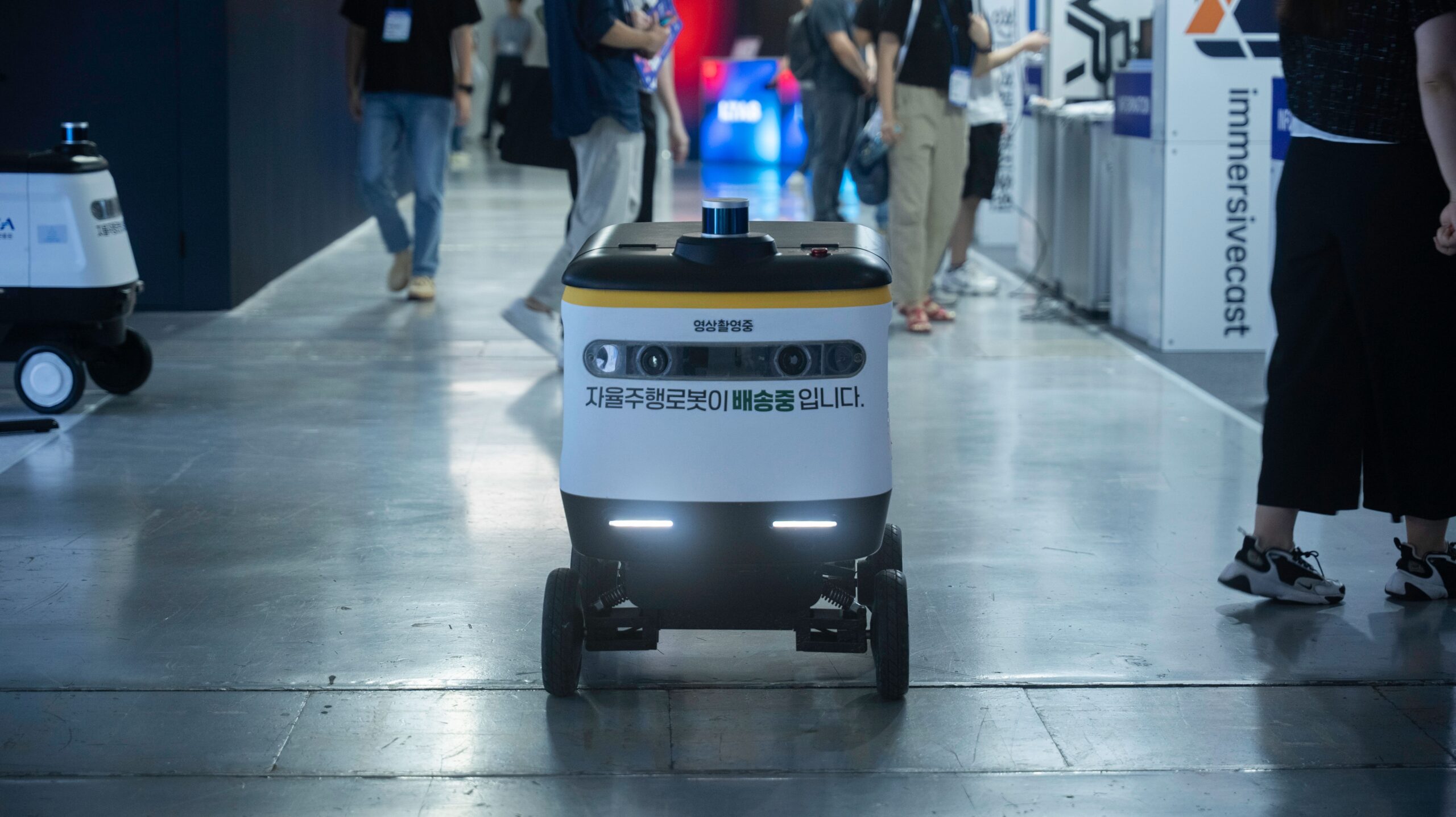
HKPC’s Centre of Advanced Power and Autonomous Systems also presented electrically powered mobile robots and delivery vehicles incorporating obstacle-avoidance functions. These systems use information about their surroundings to support movement along designated routes and respond to obstacles detected during operation. Their suitability depends on the layout, traffic arrangements and safety procedures of the facility or delivery environment in which they are introduced.
Both parcel-handling robots and autonomous delivery equipment require reliable coordination with the processes around them. A sorting robot must receive items, identify the required handling action and place goods into the correct destination flow, while a mobile delivery system must navigate between locations without disrupting other activity. The information required to perform those tasks connects physical automation with the warehouse management and transport systems demonstrated elsewhere at the exhibition.
Warehouse management software coordinates stock records, storage locations and work instructions, while transport management platforms support shipment planning and vehicle movements. Digital twins and supply chain visibility tools provide additional methods of representing equipment, goods and operating conditions. Linking these systems with automated handling equipment can allow information about completed tasks and changing conditions to be exchanged more directly, provided that the different platforms use compatible and sufficiently accurate data.
Those integration requirements were reflected in the technical discussions accompanying the demonstrations. Participants identified data quality, cybersecurity and the difference between expected and realised returns on technology investment among the challenges affecting wider adoption. New equipment may need to operate alongside older warehouse machinery or software designed for manual processes, requiring changes to interfaces, working procedures and the information used to control individual tasks.
More than ten forums and technical sessions examined artificial intelligence, digital twins, logistics visibility, sustainability and cross-border transport. Supported by over 20 industry organisations and funded through Hong Kong’s Logistics Promotion Funding Scheme, the event brought together established industrial applications and equipment still undergoing development. Their eventual operating performance will depend on how the technologies are integrated with individual facilities, the quality of their data and the practical requirements of the work they are intended to perform.