IN Brief:
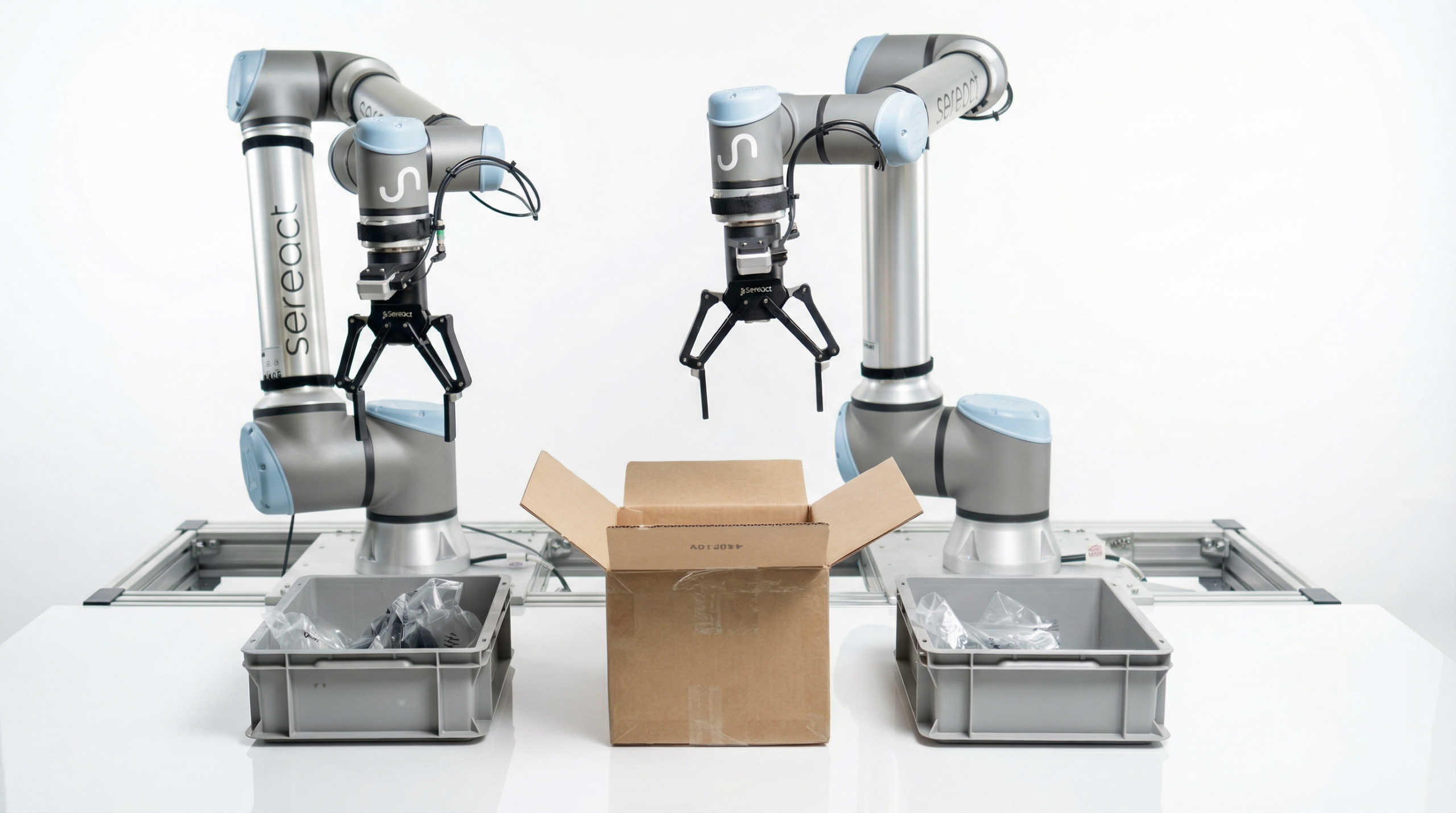
- Otto Group and Sereact will initially deploy ten AI-controlled dual-arm systems at a logistics centre in Poland.
- A second phase could add 15 robotic arms, subject to the performance of the initial installation.
- Sereact's Cortex platform supports AI-based object recognition and handling, with operation and maintenance provided through a Robotics-as-a-Service arrangement.
Otto Group will introduce artificial intelligence-controlled robots at a logistics centre in Poland as part of a project with Sereact to automate the inspection and sorting of returned products. The first phase will involve ten dual-arm robotic systems, with additional equipment planned if the initial installation meets the companies’ operational requirements.
The robots will operate using Sereact’s Cortex physical AI platform, which is designed to identify, grasp and handle products without requiring separate programming for every stock-keeping unit. The partners intend to develop the technology throughout the installation, using information gathered from actual handling operations to refine how the systems respond to unfamiliar products and changing presentation conditions.
Returned merchandise presents a more variable handling task than conventional warehouse picking. Products may arrive folded, crumpled, repackaged or positioned unpredictably inside parcels, while the range of items changes continuously. Conventional picking automation often depends on a known product catalogue and relatively consistent positioning, allowing the handling sequence to be established before a robot encounters an item.
Those assumptions are difficult to maintain when goods have already passed through customers’ hands. A garment can return in a different shape from its original packaging, while damaged or incomplete packaging may alter the surfaces available for gripping. Even products with the same catalogue reference can present different handling conditions, requiring the robot to recognise the item and determine an appropriate movement from the information available at that moment.
Cortex is intended to address this variation through AI models that interpret unfamiliar objects and select handling actions without relying exclusively on predefined gripping positions. The system will support the identification, assessment and sorting of returns, connecting the physical movement of an item with the decision about its subsequent handling. The success of that process will depend on whether the robot can execute its selected movement consistently and recognise when a product requires additional attention.
The initial ten dual-arm systems will provide the first operational test of those capabilities at the Polish facility. A further 15 robotic arms are planned for the second phase, subject to results from the initial deployment. Sereact describes the wider programme as potentially reaching 25 AI-controlled robots, with the configuration of the additional equipment to be determined as the project develops.
The partners will introduce the equipment in stages, assessing its performance as handling tasks are transferred into the automated process. Each stage will generate information about successful picks, difficult products and cases requiring further intervention. Those observations can guide changes to the control software while helping the companies establish whether the equipment can meet the quality and reliability requirements of a larger returns operation.
To reproduce the difficulties encountered during handling, Sereact uses NVIDIA Isaac Sim and Isaac Lab to develop simulated versions of physical picking tasks. Information from actual operations can be converted into multiple test cases, allowing the software to encounter changes in product position, material behaviour and packaging. These variations provide a means of evaluating how the system responds to objects that do not appear in the same condition every time.
NVIDIA Cosmos models add further visual variations involving garment condition, lighting and packaging materials. New control policies are trained using NVIDIA Blackwell computing infrastructure and assessed against separate test cases before being introduced into operational equipment. Sereact intends to use this process to return tested improvements to robots within days rather than weeks, shortening the development cycle when the software encounters an unfamiliar handling problem.
Whether those improvements translate into reliable warehouse operation will depend on how closely the simulated cases reproduce real handling conditions. A control policy may recognise an object and select an appropriate action but still encounter difficulties if the item moves unexpectedly or the available gripping surface differs from the training examples. Testing therefore needs to assess the physical execution of each movement as well as the accuracy of the recognition system.
A successful grasp must also lead to the correct subsequent handling decision. Returned goods may require inspection before they can be routed towards resale, further processing or another destination, and uncertainty about an item’s condition can prevent an automatic decision. The automated system must be able to recognise cases that require assistance rather than continuing with an unsuitable handling sequence.
Employees will consequently retain responsibility for supervising the process, resolving exceptions and making final quality decisions as repetitive grasping and lifting tasks are transferred to the robots. Their intervention will be required when products cannot be handled reliably or when the appropriate treatment of a return cannot be established from the information available to the system. The frequency and complexity of these cases will influence how much manual work remains within the operation.
Sereact’s Robotics-as-a-Service arrangement will connect that operational feedback with continuing technical support. The supplier will operate and maintain the robotic systems, allowing difficulties identified during live processing to inform software development and maintenance activity. Recurring failures involving object recognition or movement planning may require changes to control policies, while mechanical problems will need to be addressed through equipment inspection and servicing.
Those responsibilities must be coordinated because a problem encountered during picking may have more than one possible cause. An unsuccessful movement could reflect incorrect object identification, unsuitable gripping behaviour or a physical equipment issue. Operational records and staff observations can help distinguish these conditions so that the appropriate team can investigate them. The companies have not disclosed the financial terms or detailed service-level commitments governing the arrangement.
Otto Group will use the results of the initial deployment and any subsequent expansion to evaluate the technology’s suitability for other logistics facilities. The company has an established programme of investment in robotics and has committed €350 million to technology and AI over the medium term. That figure relates to its wider technology activities rather than the budget for the Polish Sereact project.
Broader deployment will depend on whether the equipment can process varied returns consistently while maintaining the required quality and operating reliability. The Polish installation will provide information about handling accuracy, exception rates and performance across changing product types, with the second phase conditional on the initial results. Otto Group will then be able to assess whether the approach is suitable for other parts of its logistics network.