IN Brief:
- India’s two dedicated freight corridors averaged 438 trains per day in August, more than 91% of their stated combined train capacity.
- Double-stack and longer freight formations can increase cargo throughput without requiring a proportional increase in scarce train paths.
- Direct access to JNPA and the proposed East–West corridor are extending dedicated rail infrastructure across India’s industrial logistics network.
Dedicated Freight Corridor Corporation of India Ltd (DFCCIL) is operating India’s two freight corridors close to their stated train capacity, with August traffic averaging 438 trains per day across the network. That represents more than 91% of the combined 480-train daily capacity quoted for the Eastern and Western corridors, while traffic was almost 15% higher than a year earlier.
The Western Dedicated Freight Corridor averaged 210.4 trains per day during August, equivalent to 87.7% of its stated 240-train capacity. The Eastern corridor averaged 227.6 trains, or 94.8%, while combined traffic across the first five months of the financial year reached an average 435.5 trains per day, around 13% above the comparable period last year.
Those figures put the dedicated network firmly inside India’s mainstream freight system. The Eastern and Western corridors extend for a combined 2,843km, separating heavy cargo flows from passenger-dominated routes while linking inland production centres, consumption markets, and ports. Rising use is now shifting the operating question from whether freight can be attracted to the corridors towards how much more cargo can be carried as available train paths diminish.
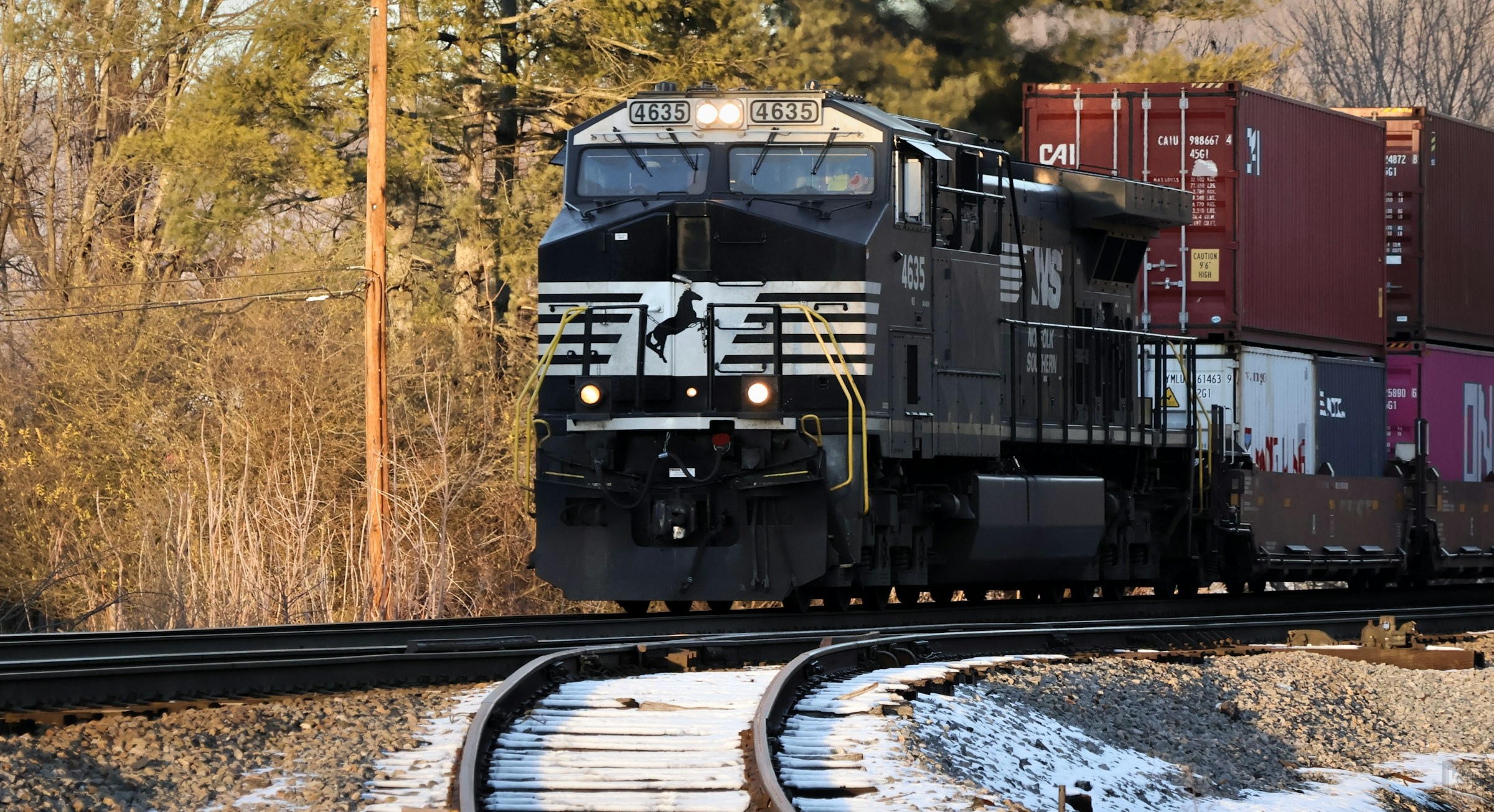
The Western corridor has an important productivity advantage through double-stack container operations, where infrastructure permits two containers to be carried vertically on the same wagon. Longer formations and higher axle loads can provide a similar gain by moving more cargo within each train path, allowing throughput to rise faster than the number of services.
That approach is already visible around Jawaharlal Nehru Port, where a recently introduced 360-TEU double-stack DFC service demonstrated the volume that can be concentrated into a single departure. Completion of the Saphale–JNPA section has also provided a direct dedicated route between Dadri and the port, removing the need for trains to transfer onto Western Railway infrastructure for the final leg.
Eliminating that interface removes a timetable and operational dependency as well as a physical handover. Transfers between railway systems can add pathing constraints and delay even where the distance involved is limited, while a continuous dedicated route allows port-to-inland movements to be planned with fewer network hand-offs.
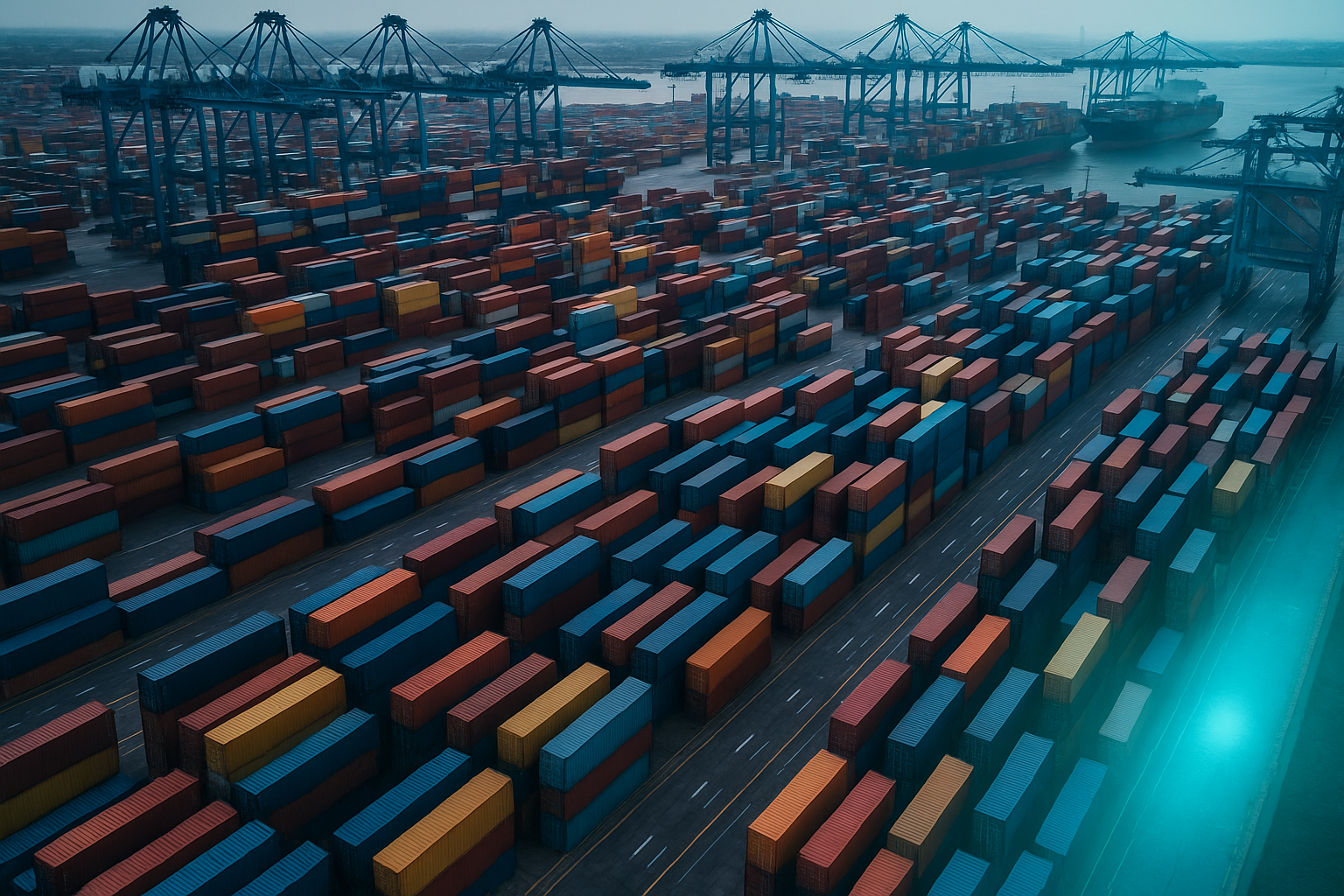
Greater line-haul productivity, however, transfers more pressure to terminals. A double-stack train can carry significantly more containers along the railway, but the capacity gain is weakened if cranes, sidings, customs processes, or inland depots cannot turn the larger formation quickly enough. Track capacity and terminal productivity therefore have to increase together if the network is to sustain the current growth rate.
The distinction between headline capacity and reliable operating capacity also becomes more important above 90% utilisation. Maintenance windows, terminal dwell, locomotive availability, imbalanced directional flows, and junction performance all consume room within a timetable, leaving less resilience when disruption occurs. A corridor can remain below its theoretical ceiling while already becoming operationally tight at busy locations or times of day.
India’s wider freight strategy is extending beyond the two completed corridors. The 2026 Union Budget announced a proposed 2,052km East–West Dedicated Freight Corridor between Dankuni and Surat, with detailed project work being taken forward. If developed, it would add another major industrial axis to a dedicated system currently concentrated on the eastern and western routes.
The immediate challenge sits on infrastructure already in service. With daily train movements 13% to 15% above last year and the Eastern corridor particularly close to its stated capacity, further cargo growth will increasingly depend on heavier trains, double-stack operation, faster terminal turns, and tighter timetable management.
That is a different stage of development from constructing the original corridors. The railway has demonstrated that dedicated freight infrastructure can draw substantial volumes away from the mixed network; August’s figures show that operators must now extract more productivity from each available path if those volumes continue to grow.