IN Brief:
- KEITH Manufacturing will show its Freight Runner Dock to Trailer system at MODEX 2026 in Atlanta.
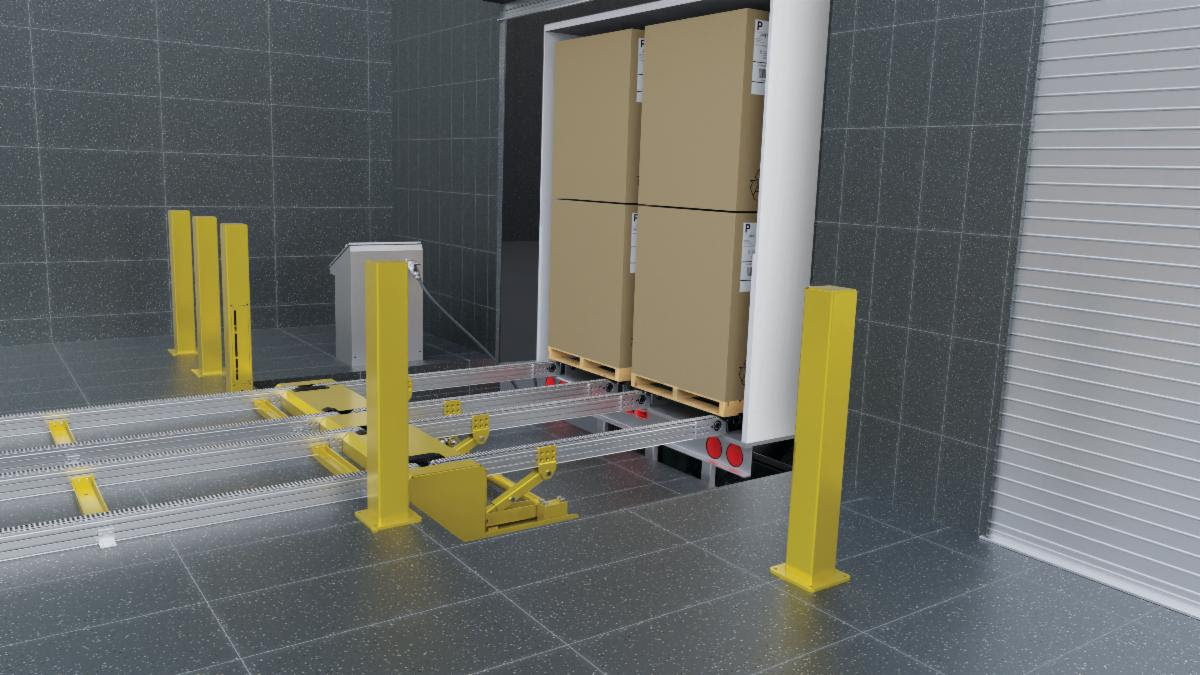
- The system is designed to automate pallet transfer between dock and trailer, reducing the need for forklifts and staff inside trailers.
- The focus is on a bottleneck that many operators still handle manually, even as the rest of the warehouse becomes increasingly automated.
KEITH Manufacturing Co. is taking a pointed view of warehouse automation at MODEX 2026, putting its Freight Runner Dock to Trailer system in front of a market that has spent years automating picking, sortation, and storage while often leaving the trailer interface stubbornly manual. The company will demonstrate the system at Booth C12990 in Atlanta, framing dock-to-trailer transfer as a safety and throughput problem that still deserves more engineering attention than it usually gets.
The Freight Runner system is designed to automate pallet movement between dock and trailer, replacing the traditional process in which forklifts and personnel repeatedly cross the trailer threshold. In practical terms, that shifts one of the most awkward transitions in the building from a labour-intensive handling task to a controlled conveying process. For operators under pressure to reduce turnaround times and cut product damage, that is a more serious proposition than it may first appear.
KEITH says the system can load or unload in less than five minutes, depending on the application, and its design is intended to fit into existing infrastructure without major reconstruction. That retrofit angle matters. A great deal of warehouse automation still stalls at the point where operators are told they need a substantial building overhaul before they can touch a bottleneck. Systems that can be dropped into existing dock environments have a much easier route into live projects.
The broader appeal is that dock automation sits at the intersection of labour scarcity, safety management, trailer utilisation, and network velocity. Every minute saved at the trailer door ripples back into driver waiting time, staging pressure, shift planning, and yard flow. As more operators look for gains at the edges of the warehouse rather than only inside it, the dock is becoming a more realistic target for automation spend.
MODEX is likely to put that question into sharper focus. If the industry’s current automation phase is about squeezing latency out of every handoff, the dock plate is no longer a peripheral detail. It is one of the remaining friction points that can still drag an otherwise automated operation back into slow, manual handling.