IN Brief:
- KDS is automating a 760,000 sq ft Savannah facility to support rising direct-to-consumer parcel volumes.
- Exotec’s system is expected to lift throughput by up to 50% and storage density by 30%.
- The project underlines how East Coast fulfilment hubs are blending port access with modular robotics and warehouse execution software.
Exotec is moving deeper into large-scale U.S. fulfilment with a new deployment at Komar Distribution Services’ 760,000 sq ft facility in Savannah, Georgia, where the 3PL is preparing for another step up in direct-to-consumer volume.
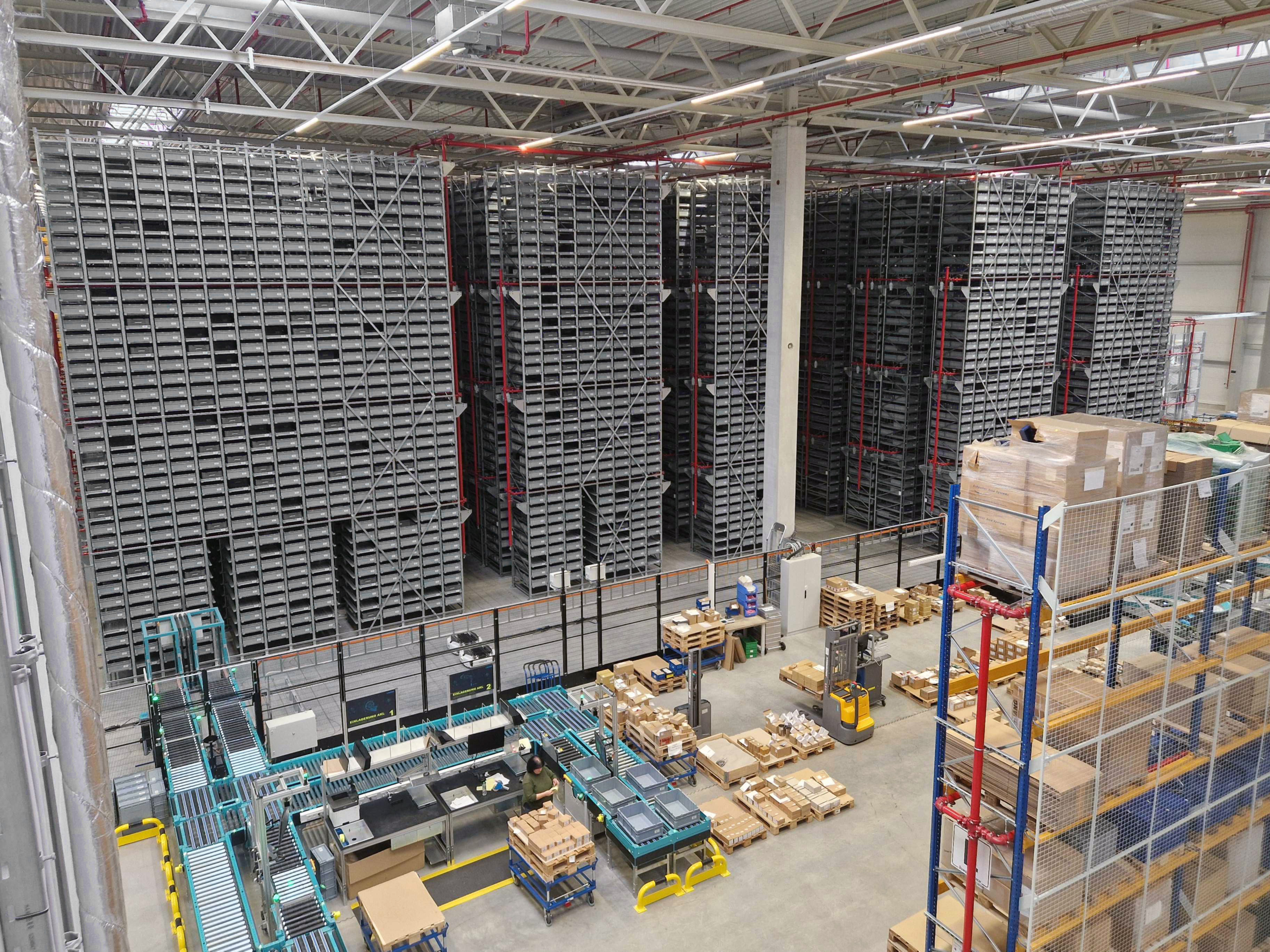
The project will equip the site with Exotec’s Skypod robotic system alongside conveyors, carton sealing, inbound and outbound scanning, and Deepsky warehouse execution software. KDS said the system is expected to increase throughput by up to 50% and raise storage density by 30%, while allowing both each-picking and case-picking within the same operation. Full automation is scheduled for early 2027, with the site already onboarding new client programmes.
The move comes as logistics operators try to balance faster order cut-offs and shorter delivery windows against labour shortages and patchy demand visibility. KDS said some clients are already handling more than 100,000 parcels a month, and the company expects parcel volumes to rise strongly again over the next year. In that environment, fulfilment design is shifting away from fixed, multi-year automation layouts and toward systems that can expand in stages.
That is where Savannah matters. Georgia Ports says Savannah handled its second busiest year on record in 2025, serving 1,669 container ships and offering 39 weekly container services to global destinations. The port’s role as a multi-state logistics hub gives import-heavy retail and consumer brands a strong case for pushing more fulfilment capacity closer to East Coast gateways rather than relying on longer inland replenishment paths.
Tyler Harris, president at KDS, said: “Our customers are growing fast and expect us to grow with them. We needed a scalable solution built for speed, density, and adaptability. Exotec gives us the ability to process orders in minutes, maximize our footprint, and operate efficiently even in an unpredictable environment.”
KDS’ own model reflects that operational mix. Komar says its distribution arm provides end-to-end logistics services through strategically located warehouses and advanced material handling equipment, while Exotec has been building out the next generation of Skypod as a denser, more modular platform for multichannel warehousing. The company says the redesigned system combines a more compact robot, robot-to-robot picking workstations, a higher-throughput exchanger, and software features that improve responsiveness inside the warehouse.
For 3PLs serving apparel, home goods, and consumer products brands, the attraction is not only labour substitution. It is the ability to compress storage, accelerate picking, and keep peak handling flexible without rebuilding an entire site each time demand steps up. That becomes more valuable when promotions, seasonal spikes, and import timing can all move faster than legacy automation programmes are designed to handle.
The Savannah deployment points to a broader pattern across U.S. warehousing: port-adjacent sites are no longer just overflow space for inbound inventory. They are being rebuilt as higher-density fulfilment engines expected to turn imports into parcel-ready orders with far less slack in the system.