IN Brief:
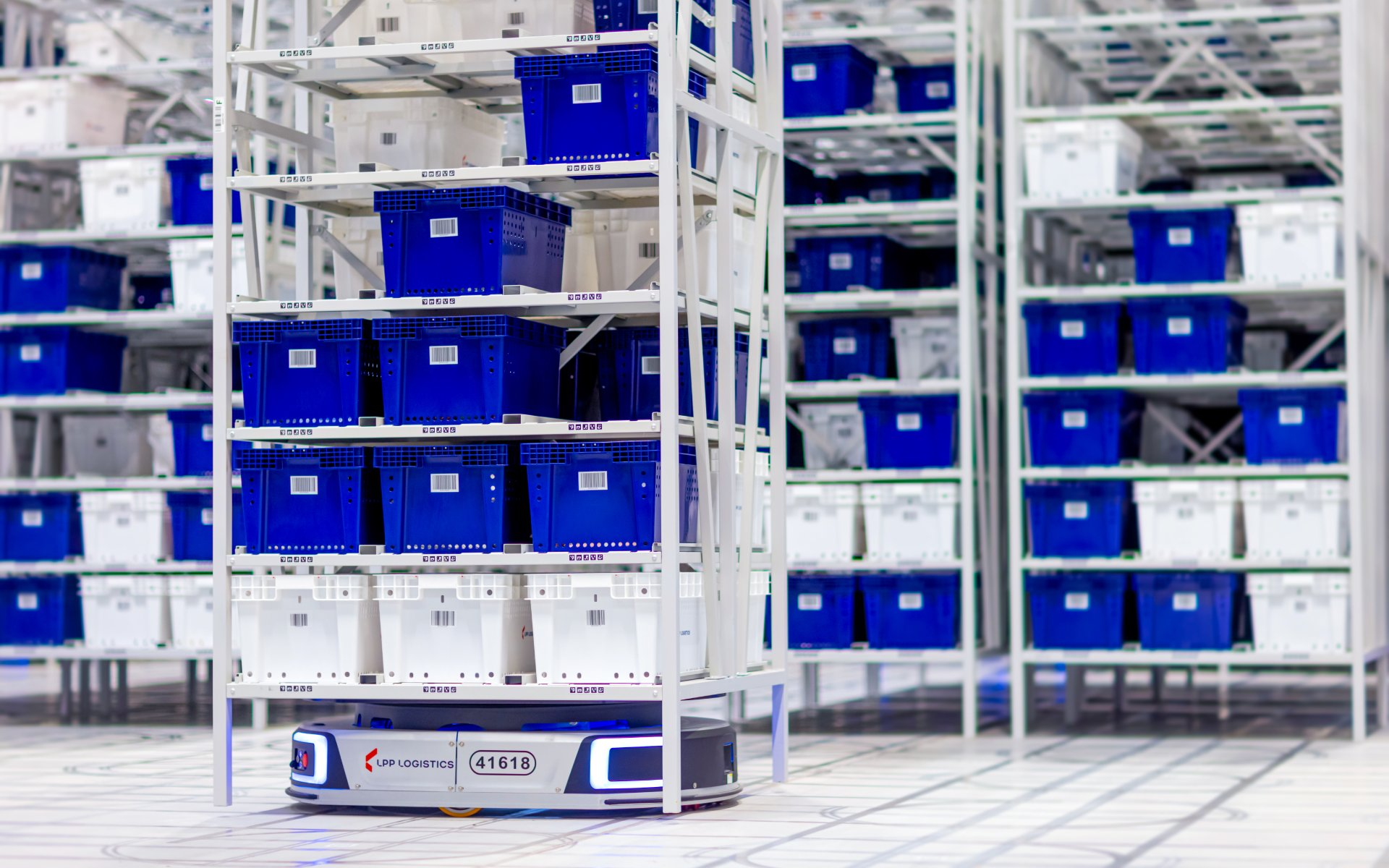
- LPP Logistics has increased its warehouse robot fleet from 555 to more than 3,500 units across Poland and Romania.
- The operator is using tote-to-person workflows to accelerate picking and sorting while materially increasing storage density.
- At this scale, the competitive advantage shifts from isolated robot deployments to network-wide orchestration and fulfilment design.
LPP Logistics has pushed its warehouse robot fleet past 3,500 autonomous units, turning what had been a large automation programme into one of the region’s most aggressive multi-site fulfilment roll-outs. The expansion spans facilities in Poland, including sites near Bydgoszcz and in the Podkarpacie region, as well as operations in Romania, and it marks a sharp jump from the 555 robots the business was running in earlier phases of its automation build-out.
The operating logic is based on tote-to-person handling, with goods delivered automatically to workstation positions rather than workers travelling long distances across the warehouse. LPP says that has increased picking speed by up to four to five times, with similar gains in sorting performance. The density effect is just as important. Where conventional storage layouts may hold around 60 items per square metre, the company says automated systems can raise that figure to as much as 250 items per square metre.
For a fashion supply chain, those gains matter because throughput volatility is built into the model. Peak periods, promotional swings, fast replenishment cycles, and high SKU counts all punish slow internal transport and weak slotting logic. LPP’s automation programme is therefore doing more than cutting labour steps. It is compressing travel, increasing available storage inside the same footprint, and improving the consistency of order flow across a wider regional network. Between January and December 2025, the company says its e-commerce warehouses processed 60 million orders.
The scale of that shift suggests the next constraint will not be robot count alone, but how well the network is orchestrated. Once automated fleets are measured in the thousands, performance depends on software integration, replenishment logic, maintenance discipline, and how quickly operators can rebalance inventory between facilities and markets. In other words, the centre of gravity moves from the robot as a machine to the warehouse as a coordinated system, which is where large retail logistics programmes are increasingly being won or lost.