IN Brief:
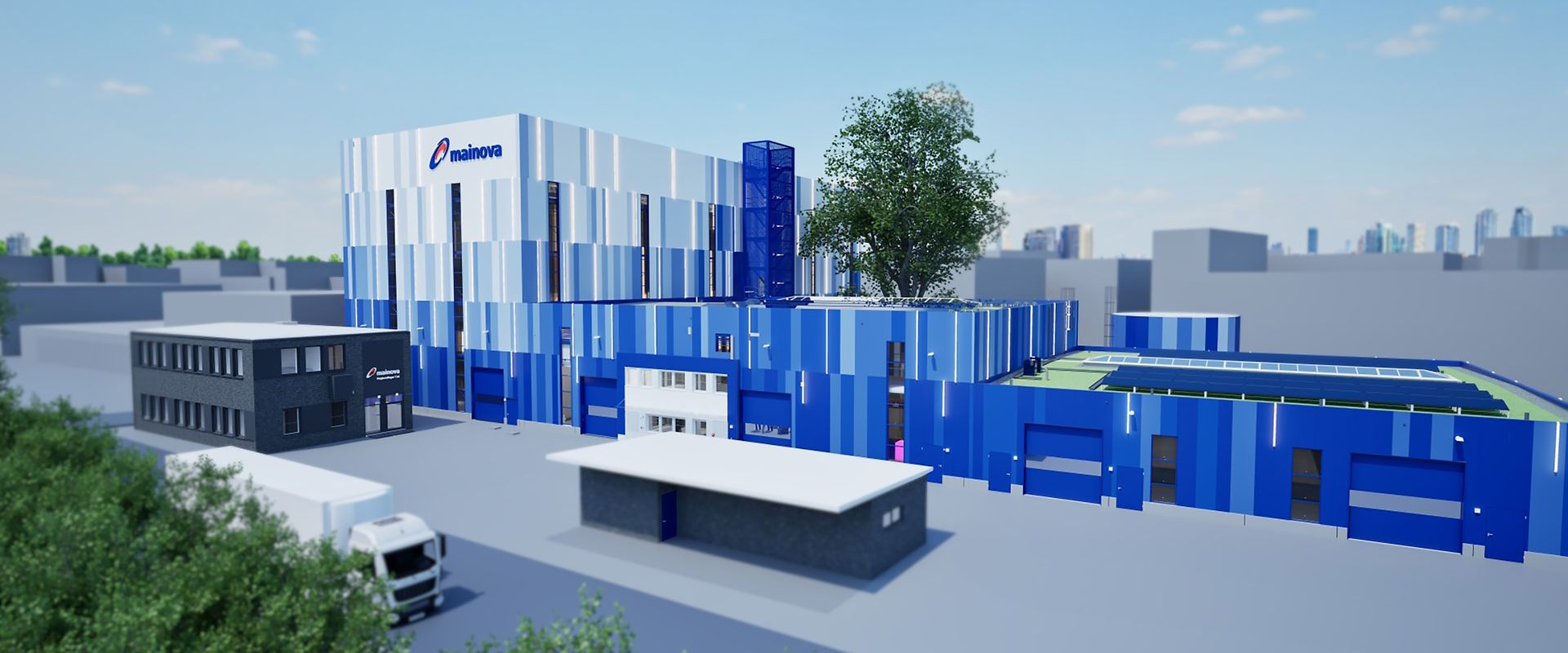
- Mainova is building a new Regional Warehouse East in Frankfurt for spare parts supply.
- The site centres on a narrow-aisle warehouse with about 6,200 pallet locations and 17.1-metre racking.
- Consolidation should improve parts availability, stock control, and response capability across utility operations.
Mainova is consolidating spare parts logistics for its technical infrastructure into a new Regional Warehouse East in Frankfurt am Main, with Jungheinrich delivering the warehouse solution and handling equipment.
At the centre of the project is a narrow-aisle warehouse with around 6,200 pallet locations and a rack height of up to 17.1 metres. Jungheinrich said two EKX 516 trilateral trucks will handle storage and retrieval, with the equipment selected for high positioning accuracy and efficient operation at height. For a utility business supplying electricity, gas, heat, and water to more than one million people, the design priority is availability rather than speed for its own sake.
The warehouse will centralise stock that supports Mainova’s technical infrastructure, giving the company tighter control over parts storage and retrieval for maintenance and repair activity. That matters in utility operations, where the value of the warehouse lies less in retail-style throughput than in dependable access to a wide range of critical components.
By consolidating inventory into a modern high-bay operation, Mainova should be able to reduce stock fragmentation across smaller locations while improving oversight of service parts tied to essential infrastructure. The narrow-aisle format is well suited to that kind of operation because it increases storage density without losing selectivity, and does so within a footprint that remains workable in an urban utility environment.
Jungheinrich said the EKX 516 trucks chosen for the site would enable economical storage and retrieval at height, supported by accurate positioning and energy-efficient drive technology. In practice, the value of that specification lies in making dense storage usable rather than merely impressive on paper. Spare parts operations depend on consistency and retrieval accuracy, especially when downtime elsewhere in the system raises the cost of delay.
The project also reflects a broader change in how infrastructure operators are treating intralogistics. Warehousing has moved closer to the centre of operational resilience as maintenance cycles tighten, asset replacement lead times remain uneven, and expectations around service continuity rise. In that context, a spare parts warehouse is not simply a support function. It becomes part of the infrastructure response itself.
Mainova’s new facility underlines that point. Spare parts may sit still for long periods, but when they move, they tend to matter quickly, and businesses responsible for essential networks are paying closer attention to how, where, and under what level of control that stock is held.