IN Brief:
- MEDLOG and SEMURG will develop Sarzha Logistics around Kazakhstan's Kuryk Port and wider Caspian infrastructure.
- Planned capacity across the Sarzha cluster reaches five million tonnes annually, including up to 110,000 TEU.
- The partnership targets container and multimodal links between Central Asia, the Caspian, Türkiye and Europe.
MEDLOG and Kazakhstan infrastructure developer SEMURG INVEST have formed a strategic logistics partnership centred on the Sarzha development at Kuryk Port, adding port, rail and inland capacity to the Trans-Caspian Middle Corridor.
The partners plan to develop Sarzha Logistics as a platform for container flows serving Kazakhstan, Uzbekistan, Kyrgyzstan and Tajikistan. The programme will combine SEMURG’s Caspian infrastructure with MEDLOG’s international logistics network across off-dock terminals, dry ports, rail and intermodal facilities.
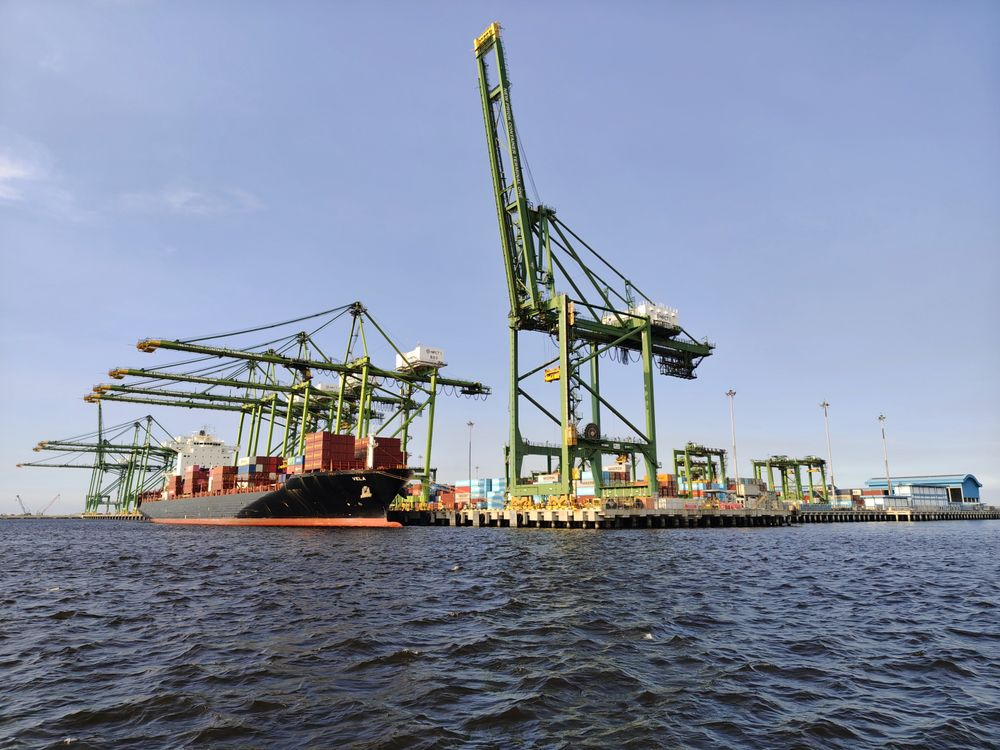
The project is based around SEMURG’s assets at Kuryk on Kazakhstan’s Caspian coast. Plans for the wider Sarzha cluster envisage up to five million tonnes of additional cargo handling capacity annually, including container throughput of as much as 110,000 TEU.
MEDLOG operates inland logistics activities within MSC Group and has a presence across more than 90 countries. Its network includes warehouses, container yards, rail and barge terminals, trucking operations and other inland facilities, connecting the Kazakhstan partnership with a wider international transport system.
Mukhran Dekanadze, Managing Director of MEDLOG Poti, said: “Kazakhstan is gaining importance in supply chains between East and West and in regional logistics.” The company intends to develop container and multimodal services linking Central Asia across the Caspian and through Georgia towards Türkiye, Europe and the wider MSC network.
Trans-Caspian freight requires several transport modes to work as one service. A container moving between Central Asia and Europe may pass through rail networks, terminals, Caspian shipping, customs processes and onward rail or road links controlled by different organisations.
Each transfer introduces another dependency on schedules, documentation and available equipment. New port capacity can reduce one constraint without improving the complete journey if rail slots, vessels or terminal handovers remain poorly coordinated.
The MEDLOG and SEMURG structure gives the partners assets on more than one part of that chain. SEMURG provides a physical development platform at Kuryk, while MEDLOG brings inland transport and terminal experience together with connections into MSC Group’s broader logistics network.
China and Azerbaijan have also expanded cooperation around Trans-Caspian trains, terminals and cargo information, adding to a wider programme of investment along the corridor.
Kazakhstan’s position gives Kuryk a role beyond domestic port traffic. Landlocked exporters and importers in Kazakhstan and neighbouring Central Asian markets rely on coordinated inland and maritime connections to reach European and Mediterranean markets without routing every shipment through a single corridor.
More container capacity at the Caspian gateway can widen those options, although additional infrastructure does not automatically create regular services. Freight corridors need sufficient cargo in both directions to support dependable schedules and avoid excessive repositioning of empty containers.
Equipment availability can become particularly important as container volumes increase. A route with enough physical terminal capacity can still struggle if suitable boxes are not available where exporters need them or if empties accumulate at the wrong end of the network.
MEDLOG’s wider container and inland logistics network creates more scope to coordinate equipment with rail, road and ocean movements. The benefit will depend on the specific services introduced through Sarzha and whether they produce predictable transit times for shippers rather than simply another sequence of available transport legs.
The proposed five-million-tonne capacity increase also needs corresponding landside performance. Rail access, terminal productivity, customs processing and vessel frequency will determine how much cargo the cluster can handle without transferring congestion from the quay to another point in the journey.
SEMURG has been developing Sarzha as a logistics and industrial platform at Kuryk, and the MEDLOG agreement adds an operating partner with a much larger international network. The next milestones will be service launches, terminal construction and customer commitments rather than further expressions of strategic interest.
Those operating steps will show whether the partnership can turn the corridor’s growing infrastructure base into more regular container flows. Sarzha has the planned capacity to become a larger Central Asian gateway, but its value will be determined by how smoothly cargo can move from inland origin through the Caspian handover and into the next transport network.