IN Brief:
- Nippon Express Vietnam has secured an air cargo CFS licence for its Quang Minh Logistics Center in Hanoi.
- The site is positioned as an off-airport response to congestion at Noi Bai International Airport.
- The move strengthens direct cargo control, consolidation, and bonded transport in northern Vietnam.
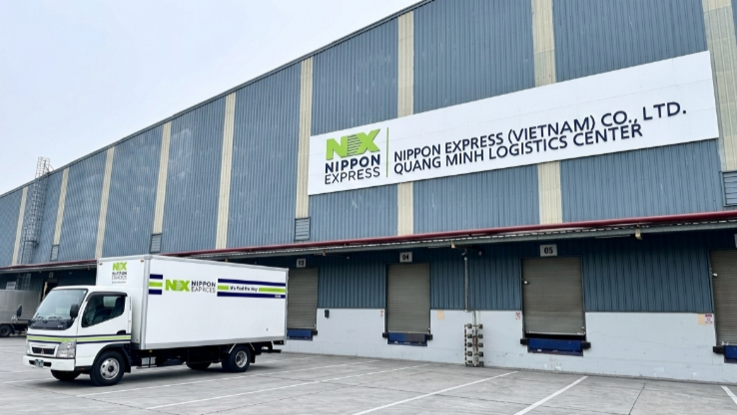
Nippon Express has strengthened its air cargo position in northern Vietnam after its local operation obtained an air cargo CFS licence for the Quang Minh Logistics Center in Hanoi. The approval makes the facility the first off-airport cargo freight station of its kind held by a Japanese forwarder in the city, giving the business the ability to carry out air cargo consolidation, packing, temporary storage, bonded transport procedures, and related handling under its own control.
The facility opened in April in Quang Minh Industrial Park and sits roughly 15 minutes from Hanoi Noi Bai International Airport. Within the site, a new 1,000m² CFS area has been fitted with high-rise racks, security cameras, and lockable secure areas to support export-ready cargo flows. Nippon Express is positioning the operation as a way to reduce dependence on already stretched airport-side infrastructure, where rising freight demand has pushed congestion into the everyday operating picture.
That is a practical shift rather than a branding exercise. Off-airport cargo control can shorten lead times, smooth loading schedules, and give forwarders more flexibility over when and how cargo is delivered into the airport system. It also allows more handling steps to be standardised inside one facility, reducing the handoff risk that builds up when export freight is moved between multiple outside operators. For shippers, the benefit is often less about headline speed than about predictability — especially where cargo must meet flight cut-offs, customs procedures, and bonded transport requirements without absorbing extra dwell.
Northern Vietnam has become a more demanding logistics market as manufacturing investment broadens and exporters push for more reliable international connections. In that environment, air cargo infrastructure is no longer just an airport story. Operators are trying to build control points outside the terminal perimeter, where land is more flexible and process design is easier to shape around customer requirements. That creates a different kind of competitive edge: not simply access to uplift, but access to a controlled pre-airport workflow.
Nippon Express’s move also speaks to a wider supply chain pattern in Southeast Asia. As production footprints deepen, forwarders are under pressure to provide more than booking capability and truck coordination. They are being asked to manage security, bonded flow, consolidation quality, and cut-off discipline from inside dedicated facilities. A licensed off-airport CFS is one answer to that pressure. In Hanoi, where cargo growth and terminal congestion are colliding more often, it is likely to become a more important one.