IN Brief:
- NX Automotive Logistics USA has opened Warehouse No. 4 at its East Liberty, Ohio head office site.
- The 16,762m² facility expands storage, export packaging, and warehouse operations for automotive customers.
- The investment responds to rising parts complexity and logistics demand linked partly to EV production.
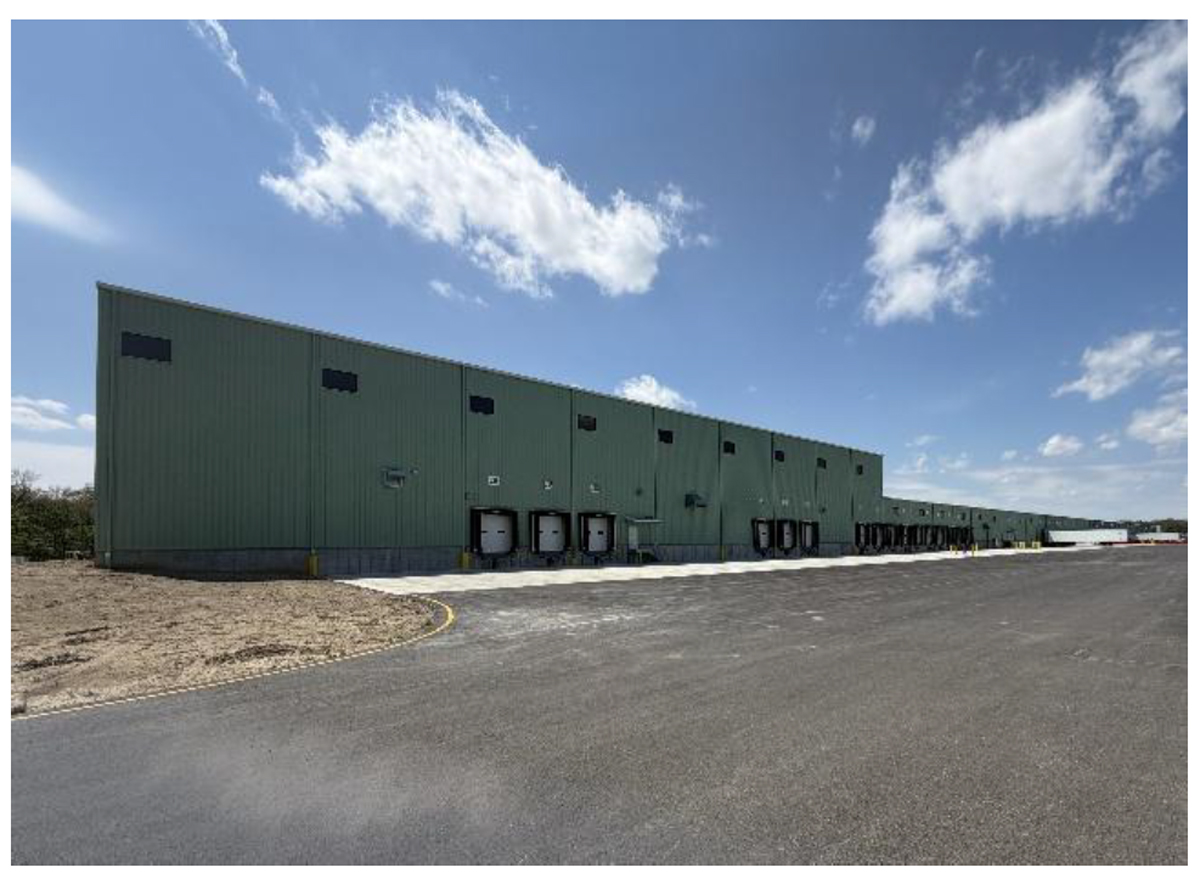
NX Group subsidiary NX Automotive Logistics USA has opened a new warehouse in East Liberty, Ohio, expanding storage, export packaging, and warehouse operations for automotive customers in the US Midwest.
Warehouse No. 4 has been built on the grounds of NXAL’s head office and covers 16,762m². A completion ceremony was held on 15 April, and the facility now adds in-house warehousing space close to production sites in one of North America’s most important automotive manufacturing regions.
The site is designed to support stable automotive logistics operations as the number of parts handled by the US automotive sector continues to increase. EV production is contributing to that complexity, with different component profiles, supplier requirements, packaging needs, and inventory characteristics moving through established plant logistics networks.
Storage and export packaging capacity are central to the facility’s role. Export packaging is not simply a downstream handling function; it helps protect parts quality, control international movement, manage customs requirements, and reduce damage risk across long-distance supply lines.
Proximity remains important in automotive logistics, even as production networks become more global. Plant-side performance is local, time-sensitive, and highly exposed to disruption. Warehousing capacity close to production sites can support faster response, lower transfer time, stronger contingency planning, and better control over sequencing or export preparation.
NXAL’s investment reflects a wider recalibration in industrial logistics. Automotive supply chains are dealing with electrification, higher electronics content, changing model cycles, battery-related handling requirements, and continued uncertainty around sourcing geography. Warehousing decisions have to support that complexity without adding unnecessary stock or slowing material flow.
The new Ohio warehouse fits a broader North American pattern of automotive logistics providers adding capacity, improving automation readiness, and positioning facilities around manufacturing corridors. Continental’s automated Mount Vernon warehouse shows a similar focus on placing modern logistics capacity close to industrial demand, with the Illinois site being developed to support tyre storage and distribution.
Manufacturing logistics is becoming more asset-intensive again, but the investment is more targeted than the broad capacity build-outs seen in some earlier cycles. Companies are placing space where it can improve service levels, reduce handling risk, protect production, or support specific customer networks. In automotive, where disruption can quickly become expensive, that discipline is essential.
Automation will shape the next stage of facilities like this. NX’s new site adds capacity first, but automotive warehousing is increasingly moving towards stronger inventory visibility, electric materials handling equipment, autonomous mobile robots, and tighter integration with transport execution systems. The aftermarket sector is moving in the same direction, with Brightpick’s robotics programme with NAPA distribution centres showing how parts networks are using automation to handle growing SKU complexity and service expectations.
NX’s Ohio expansion strengthens a specialised automotive logistics base at a point when customers need more than conventional storage. The requirement is for sites that can support variable parts flows, export preparation, service reliability, and production-adjacent responsiveness. Warehouse No. 4 adds capacity, but its value will be measured by how well it reduces friction between suppliers, plants, and outbound markets.