IN Brief:
- The service carries trailers between Rotterdam and Munich on the Bayern Express.
- Four trailers currently move in each direction every week.
- The partners plan to expand volume and accommodate non-craneable equipment.
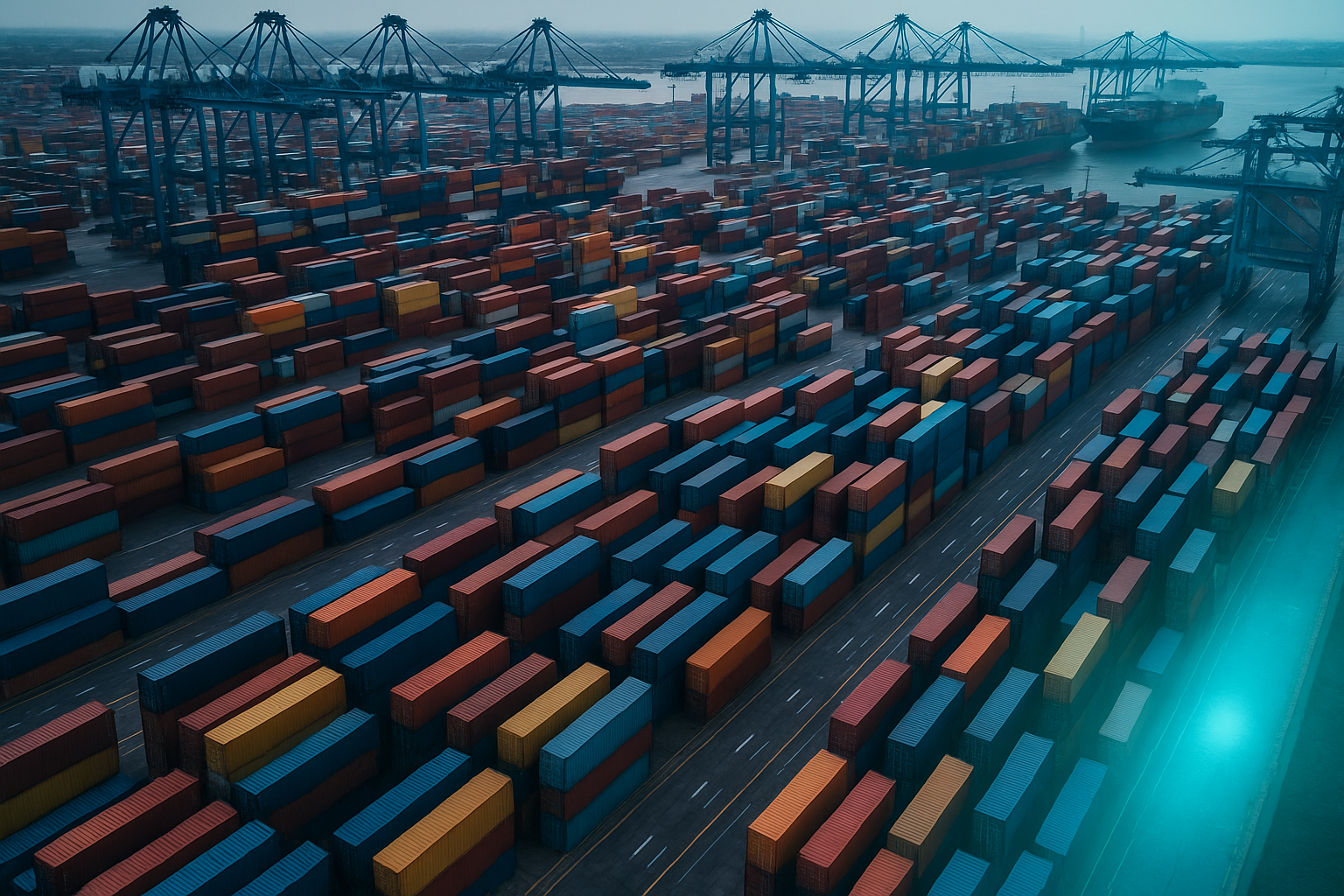
A group of Dutch and German logistics partners has begun moving trailers between Rotterdam and Munich by rail, replacing the long-distance road leg while retaining trucks for collection and final delivery.
Outdoor Life Group is working with Bos Dynamics, Hutchison Port Europe Intermodal, and Rail Service Center Rotterdam on the operation, which entered service in May.
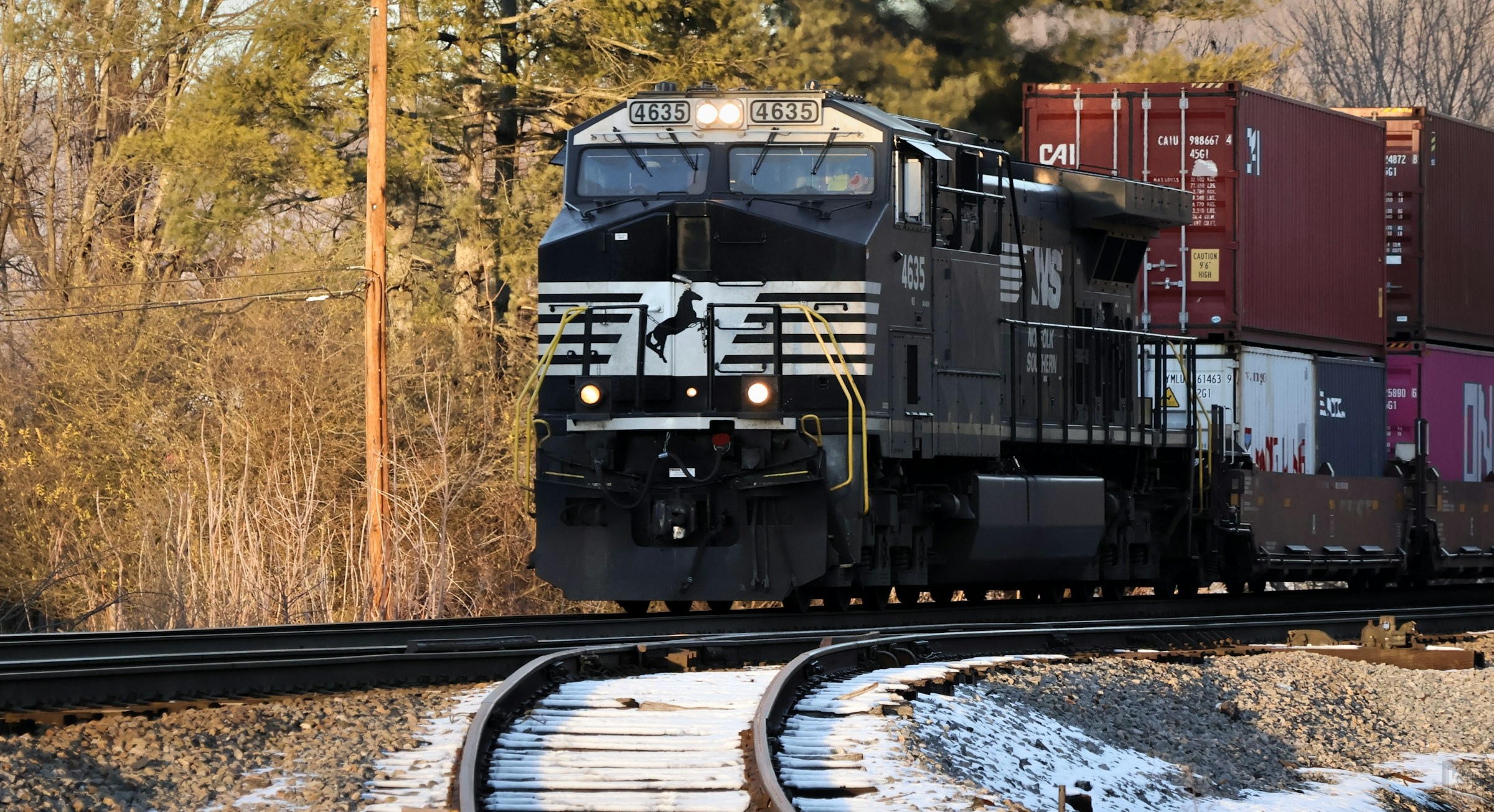
Loaded trailers are collected by road and delivered to Rail Service Center Rotterdam, where they transfer onto the Bayern Express rail connection. After reaching Munich, they return to the road network for delivery across southern Germany and Austria.
Return cargo follows the same route in reverse, creating a two-way flow rather than a one-directional demonstration. The operation currently uses ten trailers, with four moving in each direction every week.
The existing equipment is craneable, with reinforced lifting points that allow standard terminal cranes to transfer the trailers between road and rail. The partners are examining options for non-craneable units, which still account for a large share of Europe’s road-trailer fleet.
Existing terminals and rail services support the project, avoiding the need for a dedicated new line or terminal. The Joint Corridors Off-Road programme in South Holland has provided support for the modal shift.
Reliable execution will decide whether volumes grow
Rail can reduce fuel consumption, long-distance road mileage, driver requirements, and exposure to motorway congestion. The commercial case strengthens on longer corridors because terminal handling and local drayage represent a smaller proportion of the complete journey.
Rotterdam to Munich provides sufficient distance while connecting one of Europe’s largest port and distribution regions with southern Germany and Austria. Retail, manufacturing, food, chemicals, automotive, and construction cargo all move through the corridor.
Road transport remains essential within the model, but its role is concentrated on shorter journeys where flexibility provides the greatest advantage. Drivers collect and deliver locally rather than spending several days on an international trunk movement.
Terminal coordination becomes more demanding because several companies control different stages of one shipment. Collection appointments, loading documents, trailer condition, train departure, and final delivery must remain aligned even though operational responsibility changes repeatedly.
A missed train can remove much of the time and cost benefit. Rail departures are less frequent than road options, and a delayed trailer may wait until the next suitable service unless an alternative path or emergency road movement is available.
Network disruption must also be built into planning. Engineering work affecting rail routes between Ligurian ports and inland terminals has already forced freight operators to use diversions and longer transit times, illustrating how infrastructure closures can alter intermodal performance across an entire corridor.
The Rotterdam–Munich service will require similar contingency arrangements for cancelled paths, terminal disruption, or equipment faults. Operators must decide whether to hold a trailer, transfer it to another departure, or move it by road, with each option changing cost, timing, and reported emissions.
Craneability places a separate limit on expansion. Conventional road trailers cannot be handled by standard terminal cranes, while specialist lifting systems, pocket wagons, or horizontal-transfer equipment introduce additional cost and infrastructure requirements.
Opening the service to non-craneable equipment would broaden the available customer and carrier base considerably. It would also reduce the need for shippers to maintain a separate trailer fleet solely for intermodal movements.
Balanced cargo flows will determine the utilisation of both trailers and rail capacity. The current return operation provides an important foundation, but expansion may require additional customers whose volumes and schedules complement Outdoor Life Group’s traffic.
Higher frequency would make the route more resilient because a missed departure would cause a shorter delay. Securing that frequency, however, requires sufficient committed volume to justify train paths, terminal slots, wagons, and operating crews.
Driver availability may strengthen the economics as road-haulage labour remains constrained across Europe. Rail allows drivers to remain closer to local depots, reducing nights away and using available hours on collection and delivery work that cannot be transferred to another mode.
Shipment-level emissions reporting will need to include road drayage, terminal activity, rail traction, empty repositioning, and final delivery. Comparing rail traction alone with an end-to-end road journey would overstate the saving and weaken the credibility of customer reporting.
The current volume is modest beside the freight moving between the Netherlands and southern Germany, yet the operation establishes a repeatable commercial process using live cargo and existing infrastructure. Its development now depends on equipment access, reliability, balanced flows, and enough frequency to compete with the simplicity of an all-road movement.
Intermodal growth usually advances corridor by corridor rather than through one Europe-wide shift. Rotterdam–Munich has placed the companies, assets, and timetable into an operating chain; scaling that chain will determine whether the route becomes routine rather than remaining a limited programme.