IN Brief:
- RWG has completed its largest financing to date for continued expansion at Maasvlakte 2.
- The final €500 million development phase includes five quay cranes, 22 automated stacking cranes, and 24 AGVs.
- A fourth deep-sea berth and additional terminal infrastructure are due to enter service before 2030.
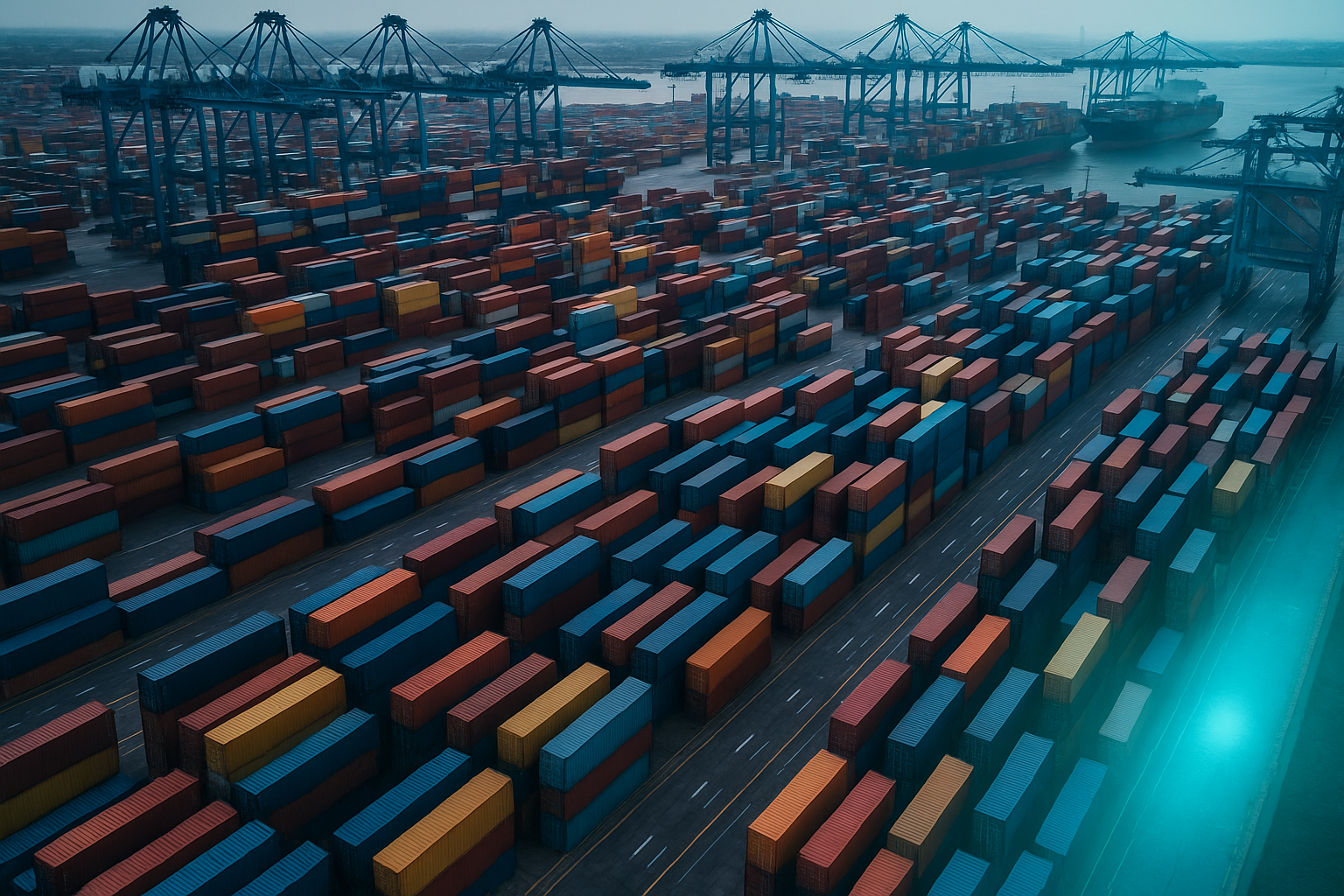
Rotterdam World Gateway has completed the largest financing in its history to support the continued expansion of its automated container terminal at Maasvlakte 2, including a fourth and final deep-sea berth and another substantial increase in handling infrastructure.
The financing comprises a senior US private placement alongside a subordinated private-credit tranche. Société Générale acted as financial adviser and sole private placement agent, while Clifford Chance advised RWG on a transaction intended to provide the company and its shareholders with funding flexibility for the next phase of development.
RWG is owned by DP World, CMA CGM through Terminal Link, HMM, and Ocean Network Express. Its current terminal has capacity of about 2.6 million TEU and already operates with extensive automation across quay, yard, and horizontal container movements.
The financing supports an expansion programme whose final physical phase is valued at approximately €500 million. RWG plans to add a fourth berth capable of handling the largest deep-sea container vessels, completing the quay allocation available to the terminal at Maasvlakte 2.
Five new quay cranes will be installed alongside 11 storage modules equipped with 22 automated stacking cranes and 24 automated guided vehicles. RWG is also examining a BoxBay high-bay storage system capable of holding around 30,000 TEU of empty containers.
The programme extends beyond berth and yard machinery. Charging capacity for electric terminal equipment is being increased, while gate capacity, maintenance facilities, office space, and storage for non-standard cargo are also being expanded.
Those landside investments are significant because deep-sea terminal capacity is not determined by quay length alone. Larger vessels concentrate thousands of container moves into relatively short port calls, and additional cranes only increase usable throughput if boxes can continue through the yard, gate, barge, rail, and truck interfaces without creating another queue further along the system.
RWG is developing the fourth berth alongside a third-berth expansion announced in 2023. The third berth is expected to enter commercial operation in 2027, while the additional capacity associated with the final phase is scheduled to become operational before 2030.
That phased approach allows the operator to increase capacity without waiting for one final commissioning date, but it also means construction and equipment installation must take place beside a live automated terminal. Civil works, crane installation, yard changes, and software integration have to be managed without undermining existing vessel and inland transport schedules.
Congestion remains part of the commercial backdrop to the investment. Rotterdam has faced repeated periods of pressure involving vessel bunching, yard density, inland connections, and industrial action, demonstrating how quickly nominal terminal capacity can become constrained when several parts of the logistics network are disrupted at the same time.
Automation gives RWG another way to increase throughput without relying on a corresponding rise in manually operated equipment. Automated stacking cranes and AGVs can be planned as part of one integrated terminal system, although their value still depends on software reliability, charging capacity, maintenance availability, and the ability of external transport operators to collect and deliver boxes predictably.
The financing structure is also notable for its use of institutional debt outside a conventional bank-only model. The combination of a senior US private placement and subordinated private credit gives RWG access to different pools of capital and risk appetite within one transaction, while supporting an asset whose development timetable stretches across several years.
The amount raised has not been publicly disclosed, but Clifford Chance describes the transaction as RWG’s largest financing to date. Société Générale says the structure is intended to support increased handling capacity and address persistent congestion pressure at the port.
For shipping lines and cargo owners, the eventual benefit will be measured through berth availability and predictable container flows rather than the financing structure itself. Additional deep-sea capacity can shorten waiting and provide more room for large vessel exchanges, but only when the yard and inland network are capable of clearing the resulting volume.
The fourth-berth programme attempts to expand those elements together. More quay cranes increase ship-to-shore capability, new stacking modules enlarge yard capacity, additional AGVs handle horizontal movements, and expanded gates create more room for landside transactions.
RWG says total investment in the terminal’s development will reach approximately €2 billion once the final phase is included. With the third berth due in 2027 and further capacity following before 2030, the operator is committing to several years of staged growth at a time when North European container terminals are under pressure to absorb larger vessel exchanges without transferring congestion into the hinterland.
The financing closes one part of that programme. The next test is delivery — bringing new cranes, vehicles, storage modules, gates, and berth space into a live automated operation quickly enough for the extra capital to translate into dependable handling capacity.