IN Brief:
- Satair’s Singapore facility now stores around 80% of small and medium-sized aerospace spare parts in an AutoStore system.
- The Swisslog-deployed system uses 23 robots and 60,000 bins within the existing warehouse footprint.
- The project strengthens Singapore’s role as a high-density aerospace logistics hub for South East Asia.
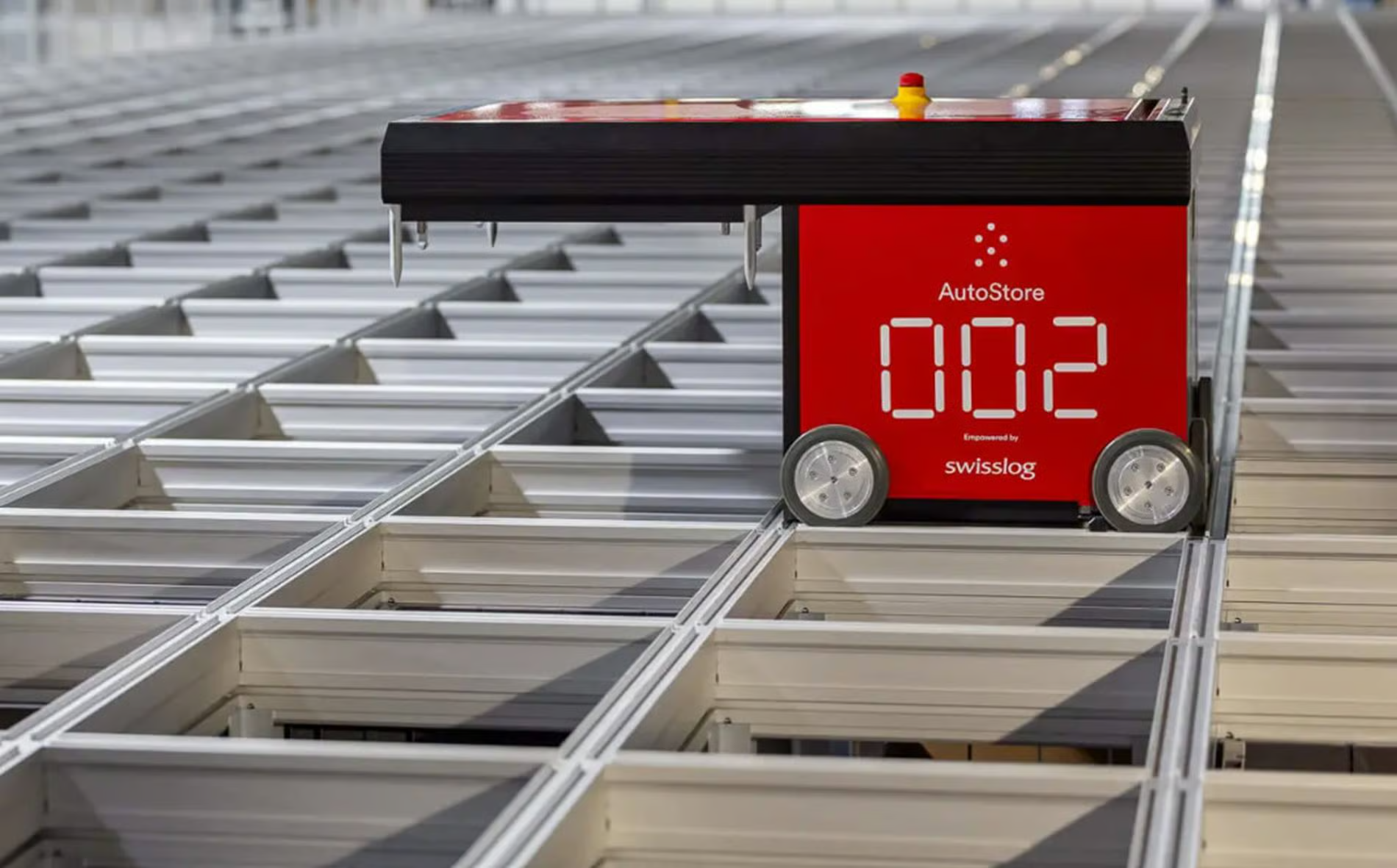
Satair has automated a major part of its Singapore aerospace spare parts operation with an AutoStore automated storage and retrieval system deployed by Swisslog.
The system manages around 80% of small and medium-sized aerospace spare parts at the site, using 23 robots and 60,000 bins within the facility’s existing 1,000m² footprint. The goods-to-person installation has been designed to improve order processing speed, operational consistency, and inventory control across a high-value spare parts environment.
The deployment supports Satair’s logistics capability across South East Asia, where aerospace aftermarket operations depend on rapid access to components, predictable fulfilment, and high stock accuracy. Singapore’s role as a regional aviation and maintenance hub gives the site strategic weight beyond local distribution, particularly as airlines, MRO providers, and aerospace manufacturers continue to manage complex part availability across global networks.
By automating within the existing warehouse footprint, Satair can increase usable capacity without relying on a larger physical site. That makes space utilisation as important as labour productivity, especially in established logistics hubs where expansion land is expensive and operational disruption during site moves can be difficult to justify.
Aerospace spare-parts logistics has a different operating profile from high-volume consumer fulfilment. Demand can be irregular, individual parts can carry high operational importance, and delays can affect aircraft availability, maintenance schedules, and service reliability. The value of automation in this setting is measured through accuracy, retrieval speed, stock visibility, and dependable execution under service-level pressure.
The use of AutoStore also shows how dense storage automation is moving further into specialist industrial supply chains. Systems once associated mainly with e-commerce and retail fulfilment are now being adapted for spare parts, repair loops, and time-critical industrial inventory. That shift is being driven by tighter stockholding strategies, higher service expectations, and a need to protect scarce warehouse capacity.
For aerospace logistics, automation also supports stronger process discipline. Parts need to be stored, retrieved, and dispatched with clear traceability, and operators need confidence that inventory is available when aircraft maintenance programmes require it. Goods-to-person automation reduces manual travel and handling variation while creating a more controlled flow between storage and fulfilment.
The Singapore project adds to a wider pattern of automation investment across APAC logistics sites, particularly in sectors where part availability and labour resilience are central to operational performance. As aircraft fleets expand and aftermarket demand grows, regional logistics hubs will need to combine higher density, faster retrieval, and stronger inventory control within existing facilities.