IN Brief:
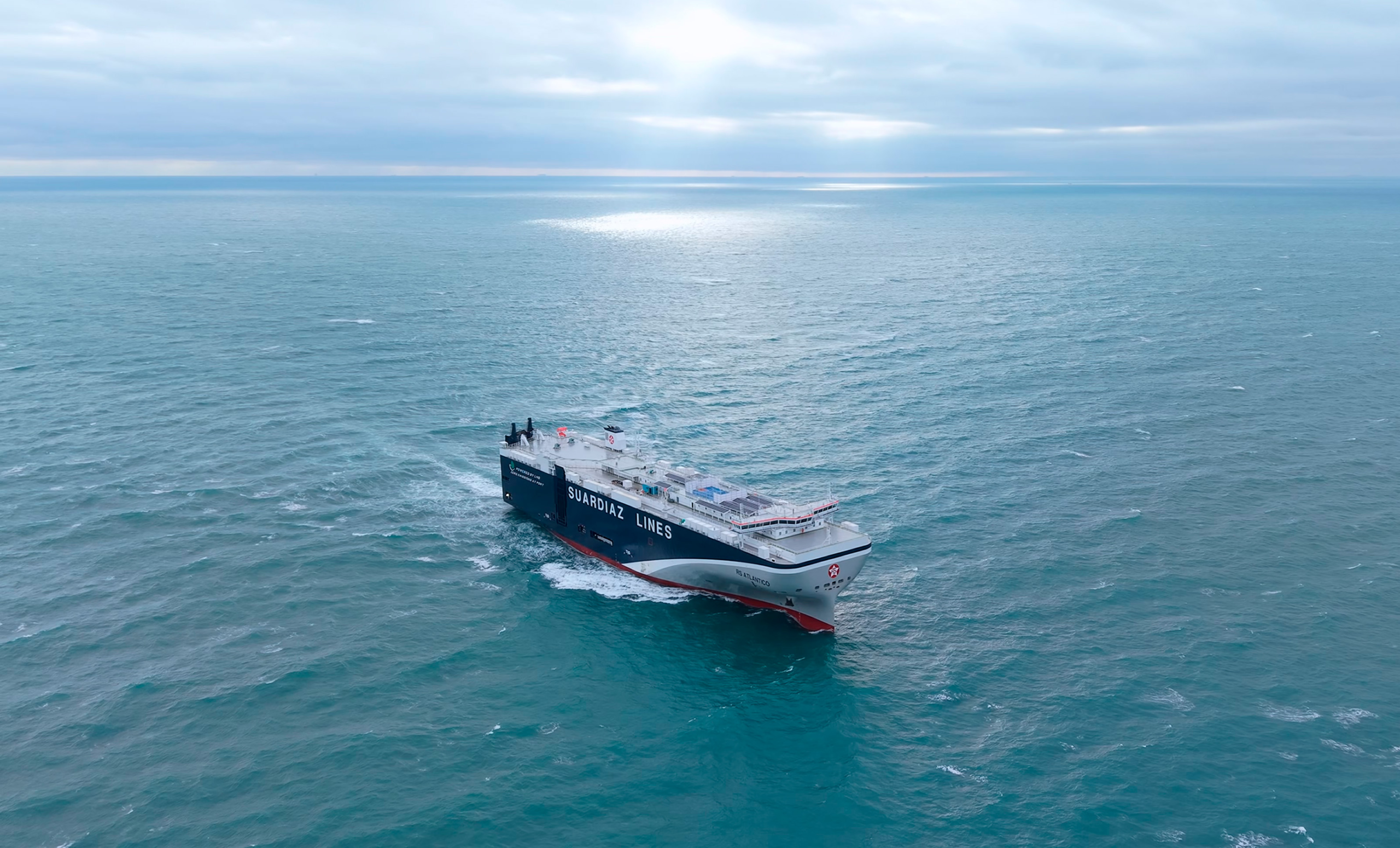
- RS Atlantico is a 190-metre, 55,000 GT PCTC with capacity for approximately 5,500 cars.
- The LNG dual-fuel vessel has departed China for Europe, with a second ship due in mid-2027.
- SUARDIAZ has invested more than €360 million over six years across fleet, infrastructure and multimodal logistics capacity.
SUARDIAZ Group has added RS Atlantico, a 5,500-car pure car and truck carrier that has departed China for Europe as the first of two new dual-fuel vessels joining the company’s automotive shipping fleet.
The vessel is approximately 190 metres long, measures around 55,000 GT and is designed to carry passenger vehicles, machinery and High & Heavy cargo. SUARDIAZ expects RS Atlantico to arrive in Europe during the final quarter of 2026, while a second vessel is scheduled to join the fleet in mid-2027.
RS Atlantico is the largest class of ship operated in SUARDIAZ’s history and uses dual-fuel engines capable of operating on liquefied natural gas. The company says its arrival makes SUARDIAZ the first Spanish shipowner with an LNG-powered vessel in the car carrier segment.
The delivery sits within an investment programme worth more than €360 million over the past six years. Spending has covered fleet renewal, international expansion, logistics infrastructure and specialist capabilities for industrial and energy customers, alongside services that combine maritime, road and rail transport with forwarding, industrial logistics, port operations and offshore projects.
Juan Riva, chief executive officer of SUARDIAZ Group, said: “International logistics is undergoing a period of profound transformation, and the industry needs reliable partners capable of offering increasingly sophisticated solutions that are prepared to address new challenges. Control over logistics chains is becoming a fundamental asset for the global economy, and this is where SUARDIAZ, through its investment plan, is positioning itself as an essential player for our customers.”
The additional PCTC capacity expands the group’s ability to handle finished vehicles and other rolling cargo on established routes. A vessel configured for approximately 5,500 cars can carry significant automotive volumes on each sailing, while decks capable of accommodating High & Heavy cargo broaden the potential load mix beyond passenger vehicles to machinery and other wheeled equipment.
That cargo mix helps car carrier operators manage uneven trade flows. Vehicle exports are rarely balanced in both directions, so machinery and other rolling cargo can provide additional utilisation where passenger car demand alone would leave deck capacity unused. SUARDIAZ says the new vessel is intended to increase capacity for existing automotive customers and strengthen current routes rather than create a separate shipping network.
Finished vehicle logistics also depends on infrastructure well beyond the ship. Factory compounds, inland transport, ports, vehicle terminals and inspection processes all have to handle rising volumes efficiently if additional ocean capacity is to be fully used. Chan May Port recently opened a new finished-vehicle RoRo route in central Vietnam, illustrating how manufacturers and carriers are adding specialised port options alongside investment in vessel capacity.
SUARDIAZ has expanded beyond its origins as a shipowner into a wider logistics group covering maritime transportation, multimodal services, logistics infrastructure, industrial services and other specialist activities. The company operates an international network of offices and logistics centres and employs more than 1,000 people.
The broader investment programme includes several vessel types rather than automotive carriers alone. Earlier in 2026, SUARDIAZ announced the acquisition of RS Onza, an IMO2 chemical tanker capable of carrying methanol and operating for energy company Moeve. The group is therefore renewing capacity across specialist maritime markets while developing its inland and multimodal logistics operations in parallel.
LNG propulsion gives RS Atlantico an additional fuel option as shipping companies respond to tightening emissions requirements. SUARDIAZ describes LNG as a transitional technology, reflecting the uncertainty around which fuels will dominate deep-sea shipping over the full operating life of vessels entering service today.
That distinction avoids presenting LNG as a complete decarbonisation solution. The emissions profile varies with engine performance and the production and handling of the fuel, while regulatory requirements will continue to tighten during the ship’s service life. Dual-fuel capability provides near-term operating flexibility while shipowners assess longer-term fuel pathways.
RS Atlantico nevertheless represents an immediate increase in physical automotive logistics capacity. The first vessel is now moving from the construction and delivery phase towards European service, with the second due in mid-2027. Together, the ships will give SUARDIAZ additional capacity for vehicles, machinery and High & Heavy cargo while the rest of its investment programme continues across maritime, terminal and multimodal operations.