IN Brief:
- Revenue increased 29% to €1.37bn in the year ending 30 June 2026.
- Order intake reached €1.75bn, while EBIT rose to €54.4m.
- TGW is expanding engineering and software capacity through a Pune office.
TGW Logistics reported a 29 per cent rise in revenue to €1.37 billion for its 2025/26 financial year, highlighting the scale of demand for large automated warehouse systems. Its 9 October 2026 announcement covers the year from 1 July 2025 to 30 June 2026 and gives an order intake of €1.75 billion, a company record. The results represent signed and delivered business over the accounting period, not a forecast that every new order has already been installed or brought into operational service.
The Austrian intralogistics specialist also reported earnings before interest and taxes of €54.4 million. Headcount increased by around 400 to 5,063 employees. These figures help distinguish top-line growth from the broader requirements of delivering integrated automation projects, which involve equipment design, software engineering, installation, commissioning and long-term service. Revenue growth by itself does not indicate comparable increases in profit margin, throughput for customers or the speed at which individual facilities can be commissioned.
TGW designs and implements warehouse automation for grocery, fashion, healthcare, industrial and consumer-goods customers. Its projects can combine conveyor networks, shuttle systems, goods-to-person stations, robotics and control software. The company cited customers including Marks & Spencer, dm drogerie markt, Bausch + Lomb and Galaxus among businesses selecting its solutions in the financial year. Mentioning those customers does not establish that the systems are all complete: contracts and project deliveries usually follow different timetables.
The order-intake figure is particularly relevant to an engineering-led integrator, because it indicates contracted demand potentially underpinning future revenue. It is not equivalent to revenue recognised in the reporting year. A warehouse automation project may go through specification, detailed mechanical and software design, assembly, transport to site and integration with the customer’s existing estate before formal acceptance. The timing of those milestones determines when capacity becomes available to the operator and when the supplier can recognise portions of a project financially.
TGW is also opening an office in Pune, India, during October, with a focus on engineering and software development. The move adds a geographical dimension to its growth programme. Engineering resources distributed across markets can support design work and software delivery for internationally located projects, but the company did not provide a Pune recruitment target or specify which customer installations will be allocated there. It would therefore be premature to attach a quantified additional design capacity to the announcement.
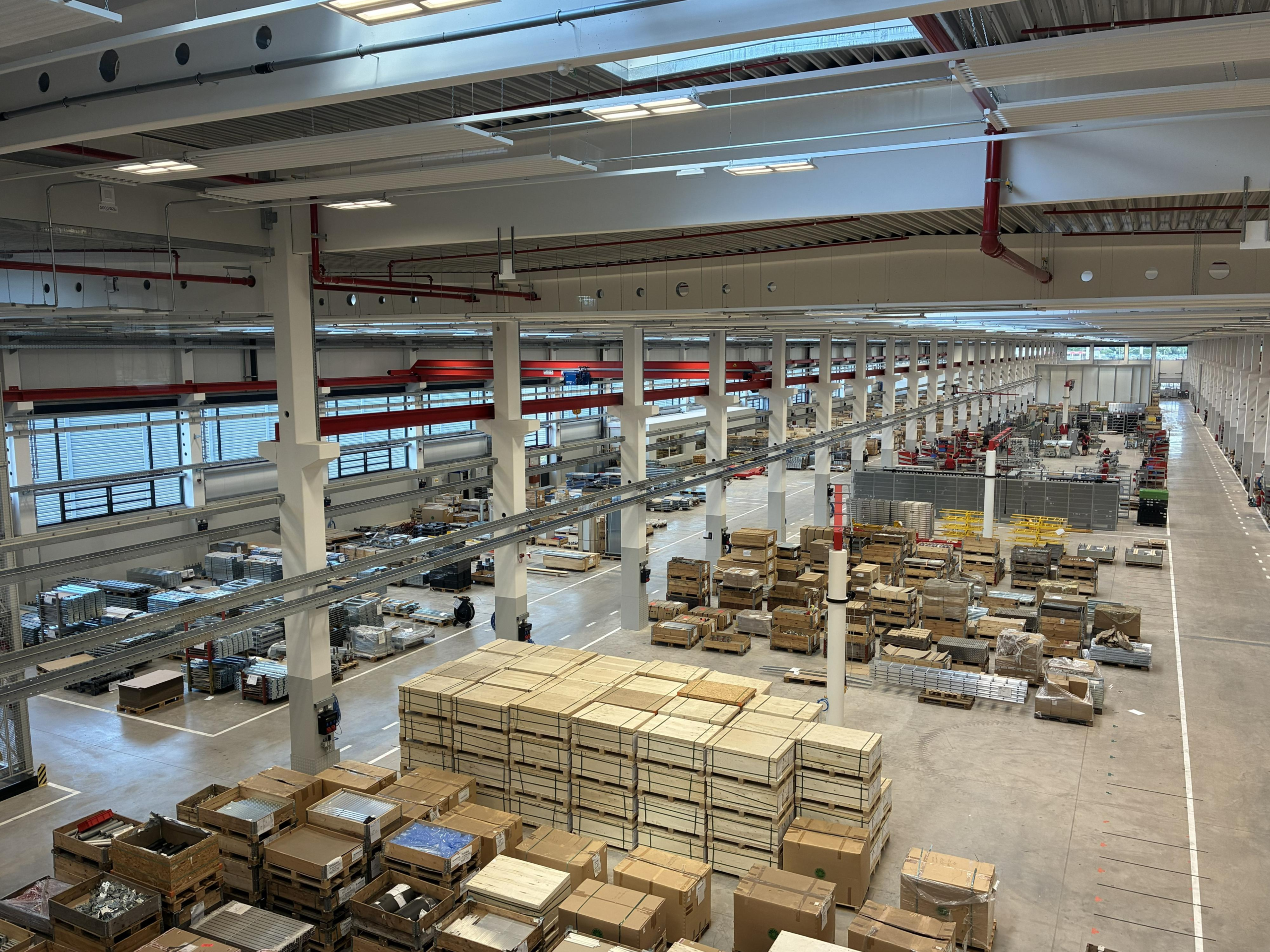
TGW continues investing at its Marchtrenk headquarters, including previously announced manufacturing and automation capabilities. The latest release is materially different from announcements about an individual production building or customer contract: it provides consolidated financial performance and a new engineering-location decision. For readers following warehouse automation supply chains, the combination provides a clearer sense of the supplier’s business scale and the commitments associated with its project pipeline.
TGW highlighted its SmartPocket pocket-sorter platform, which received a German Innovation Award in 2026. The recognition is an element of the company’s product narrative, rather than a measured independent assessment of installations under the current reporting period. The release does not supply a customer-by-customer breakdown of product revenue, system performance or completed deployments involving SmartPocket. Technology claims and awards should therefore be understood separately from the independently stated financial totals.
The company has a stated ambition to reach €2 billion in revenue by 2030. That figure is a management objective and not guidance that can be guaranteed on the strength of one strong financial year. Achieving it will depend on contract execution, global customer capital spending, labour and component availability and TGW’s ability to keep complex deployment schedules on track. None of those constraints is quantified in the October results statement, and no specific forecast of annual growth is warranted beyond the disclosed target.
For procurement teams and warehouse operators, the new figures are a useful indicator of the size of the automation integrator’s business and its forward order book. They cannot determine whether a proposed system is suitable for an individual facility. Such decisions depend on product mix, throughput requirements, software integration, operating flexibility and aftercare. TGW’s 2025/26 result establishes record revenue and orders; the practical delivery outcomes will appear as customer projects are commissioned in later periods. The announced figures do not identify the proportion of orders arising from new sites rather than expansion of existing warehouses, a distinction that would matter for interpreting long-term demand across the industry.