IN Brief:
- Thule is building an automated warehouse in Krzyż Wielkopolski, Poland.
- The facility will stand 42 metres high, hold nearly 40,000 pallets, and connect with existing warehousing and production operations.
- Easy WMS, stacker cranes, conveyor systems, and an electric monorail will underpin the new logistics setup.
Thule is pressing ahead with a major warehouse automation project in Poland as it reshapes the way products move through its European distribution network. The company is building a high-bay automated warehouse in Krzyż Wielkopolski that will centralise stock for Europe while also serving selected international markets, creating a more concentrated logistics model around one heavily automated site.
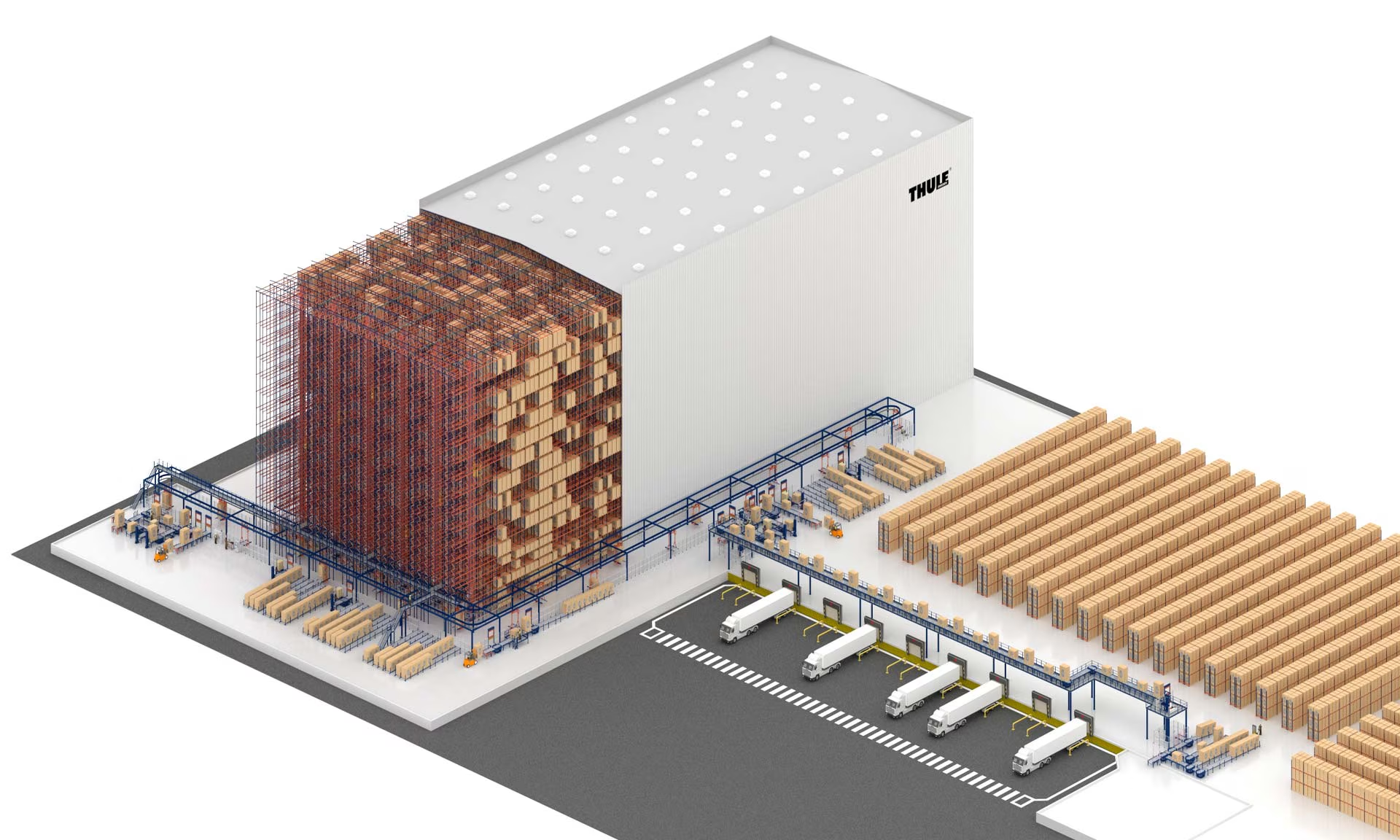
The new facility will feature racking measuring 51 metres wide, 135 metres long, and 42 metres high, with capacity for nearly 40,000 pallets. According to project details released by warehouse specialist Mecalux, six double-deep automated stacker cranes will operate inside the structure, while conveyor systems, a pallet lift, and a floor-mounted electric monorail will link the automated warehouse to the existing manual warehouse, dock area, and production hall.
The site is also designed around tighter product control. Thule said the warehouse will support higher throughput, better use of storage space, and improved product traceability, with warehouse management software assigning storage locations by product category and turnover. Temperature and humidity controls are also planned, pointing to a logistics environment built for stability as much as raw storage density.
The project reflects a wider shift in European warehousing, where centralisation is increasingly being paired with automation rather than simply with larger building footprints. When labour markets remain tight, inventories stay uneven, and service expectations keep rising, operators are under pressure to reduce unnecessary touches, shorten internal travel paths, and create cleaner links between production, storage, and dispatch. Automated high-bay systems are not new, but they are being used more often as the backbone of regional distribution design rather than as isolated islands of mechanisation.
There is also a network effect here. A central European warehouse only works if slotting, replenishment, dock flow, and order release are reliable enough to prevent one site from becoming a bottleneck. That is why the software layer matters as much as the steel and machinery. Warehouse execution is increasingly about how quickly a site can translate demand changes into replenishment, storage decisions, and outbound sequencing without losing visibility.
For manufacturers and brand owners with pan-European distribution footprints, the Thule project is a familiar response to a harder operating environment: fewer, larger, and more technically capable nodes, with higher automation and tighter control over stock movement. The trade-off is concentration risk, but the commercial attraction is obvious when a network needs more speed, better traceability, and fewer manual interventions at scale.