IN Brief:
- Wipotec’s TQS platform combines checkweighing, labelling, printing, camera inspection, and real-time quality control.
- The system supports high-resolution 2D codes, serialised data, batch information, and automated verification.
- The platform is designed for complex bottles and canisters, with MES and ERP integration through standardised protocols.
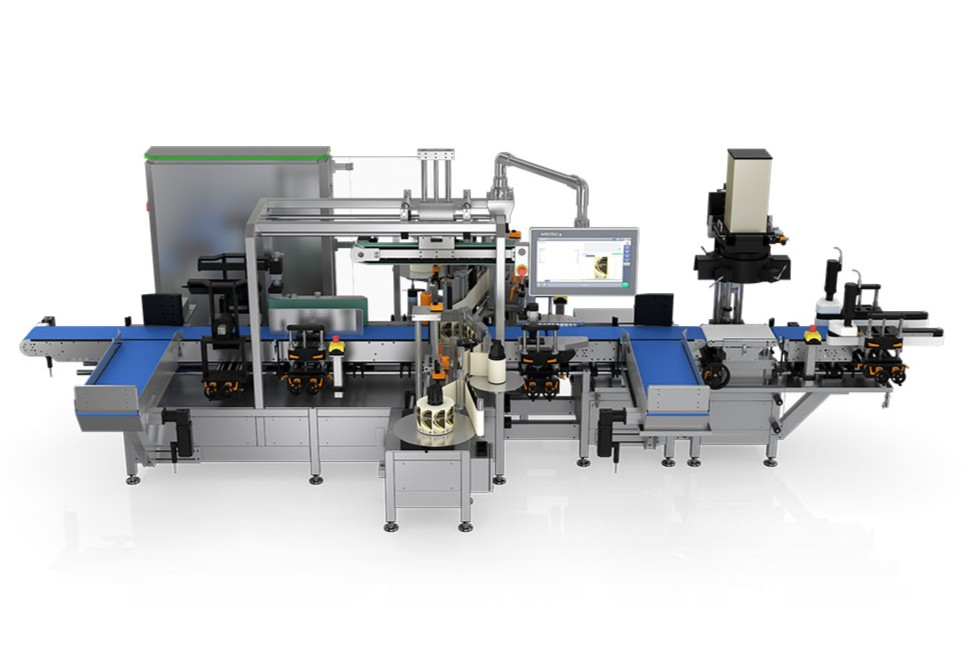
Wipotec has developed an integrated TQS platform for shaped bottles and canisters, combining checkweighing, labelling, printing, inspection, and traceability in a single production-line system.
The TQS, or Track & Quality System, is designed for manufacturers handling packaging formats with more complex geometries, including round bottles, square canisters, shaped containers, and different materials and sizes. It consolidates several quality and identification steps that are often handled by separate machines or interfaces.
The system includes high-precision dynamic checkweighing, front and back labelling, thermal transfer overprinting, integrated camera-based inspection, and real-time quality verification. By bringing these functions into one centrally controlled unit, the platform is designed to reduce system complexity, simplify operator interaction, and improve production uptime.
The integrated thermal transfer overprinter can apply high-resolution 2D codes including Data Matrix and QR codes, as well as batch-specific data, serialised information, and variable production details. Each printed label is checked by an integrated vision inspection system to verify readability and data accuracy.
The traceability function allows each container to carry unique data such as batch number, production date and time, product identification, and quality or process information. The data supports track-and-trace requirements, anti-counterfeiting strategies, and digital production records across regulated and high-value supply chains.
The TQS platform also checks cap presence and placement, material and colour, label presence and position, print quality, and code validity. Combining inspection functions at line speed helps reduce rework, prevent defective products leaving the line, and create a stronger record of compliance.
The system is controlled through a rotating multitouch HMI that can be accessed from both the front and rear of the machine. It can also connect with higher-level MES and ERP systems through standardised communication protocols including OPC UA, enabling automatic parameter loading, centralised data management, and real-time production monitoring.
The platform sits at the intersection of packaging, production quality, and supply chain traceability. Manufacturers in pharmaceuticals, chemicals, personal care, food, and industrial products face rising pressure to prove what was made, when it was made, how it was inspected, and where it moved afterwards. Regulation, customer requirements, and anti-counterfeiting controls are all pushing product-level data deeper into the production line.
Integrated systems reduce the number of handover points between weighing, marking, labelling, and inspection. Each additional interface on a line can create a source of error, downtime, validation burden, or data mismatch. A single-platform approach can simplify changeovers and improve repeatability, particularly in plants handling frequent product variations or smaller production batches.
Daniel Anders, Product Manager at Wipotec, said: “We expect strong interest when presenting this solution at interpack 2026, as it demonstrates the integration capability of our TQS platform.”
The system’s commercial value will rest on its ability to support format flexibility without compromising speed, validation, or inspection accuracy. As shaped bottles and canisters become more common across regulated and branded products, integrated inspection and traceability systems are moving from specialist line equipment into core supply chain assurance.