IN Brief:
- General-purpose humanoid platform aimed at industrial task execution and rapid integration.
- Open interfaces support common integration protocols, including ROS2, MQTT, and TCP/IP.
- Open-source releases span datasets, robot descriptions, control software, and training toolchains.
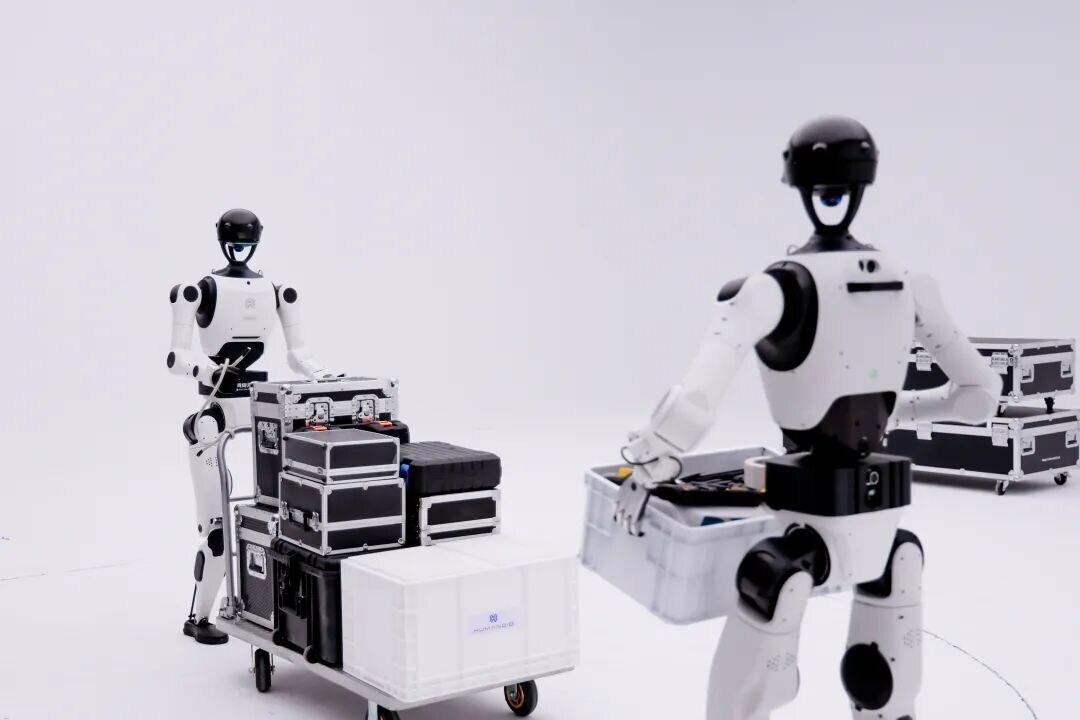
The Beijing Innovation Center of Humanoid Robotics has released Embodied Tien Kung 3.0 as a general-purpose humanoid platform designed for complex industrial work, with a design emphasis on making deployments less brittle for system integrators operating across heterogeneous warehouse and manufacturing environments.
The platform is presented as an “embodied” base system, tying hardware, motion control, and higher-level AI components into a stack intended to be adapted for specific tasks such as handling, inspection, replenishment, and line-side servicing. In practical terms, the value proposition is less about a single showcase task and more about the integration layer — the point at which robots collide with real facilities, real safety constraints, and real software estates.
X-Humanoid is leaning hard on openness as the differentiator. Alongside the platform launch, the organisation has expanded its open-source footprint across robot development assets and training resources. Its RoboMIND dataset line is framed as a mechanism to accelerate embodied AI development with real-world demonstrations: RoboMIND V1.0 is described as covering 107,000 demonstration trajectories across 479 tasks and 96 object classes, while RoboMIND V2.0 adds more than 300,000 bimanual manipulation trajectories and broadens coverage across multiple robot embodiments, including Tien Kung. An accompanying asset library, ArtVIP, is positioned as a digital-twin object set intended to reduce the time spent building and validating manipulation scenarios.
For industrial deployments, the open tooling matters as much as the robot body. X-Humanoid has published robot description assets (including URDF and mesh files) intended for ROS and simulation workflows, plus ROS-based low-level software modules for hardware control and communications. A training toolchain is also available to support adaptation of Tien Kung robots and the RoboMIND datasets within widely used open-source learning frameworks, giving integrators a route from data to model to deployment without rewriting everything from scratch.
The launch makes repeated reference to the problems that slow deployments in warehouses and plants: mismatched interfaces between robot controllers and site systems, fragmented software stacks across vendors, and the difficulty of taking a pilot environment and turning it into a repeatable rollout. By standardising around common integration patterns and publishing core assets openly, the platform is clearly targeting the middle of the market — organisations that need robotics to work with existing WMS, MES, and safety infrastructure, rather than accepting a fully bespoke, closed deployment.
The near-term question is how quickly integrators can translate the open stack into certified, supportable deployments, particularly in facilities where safety cases, uptime guarantees, and change control are non-negotiable. The longer-term test will be whether an open, modular humanoid platform can meaningfully reduce the cost and time of scaling from one site to many, especially as warehouses and factories push for higher flexibility without taking on unbounded integration risk.