IN Brief:
- LogiMAT 2026 in Stuttgart will again be a focal point for intralogistics automation.
- IDS is bringing 3D ToF depth sensing, edge streaming cameras, and event-based vision for high-dynamics scenes.
- The common thread is pushing perception closer to the process, with less data movement and faster decisions.
IDS Imaging Development Systems will use LogiMAT 2026 to push a familiar message to warehouse automation teams: perception is now part of the flow, not an add-on. The company is exhibiting at the EMVA member booth in Hall 2, Booth 2C14, from 24 to 26 March, with a mix of depth cameras, monitoring models, and event-based sensors positioned for intralogistics deployments.
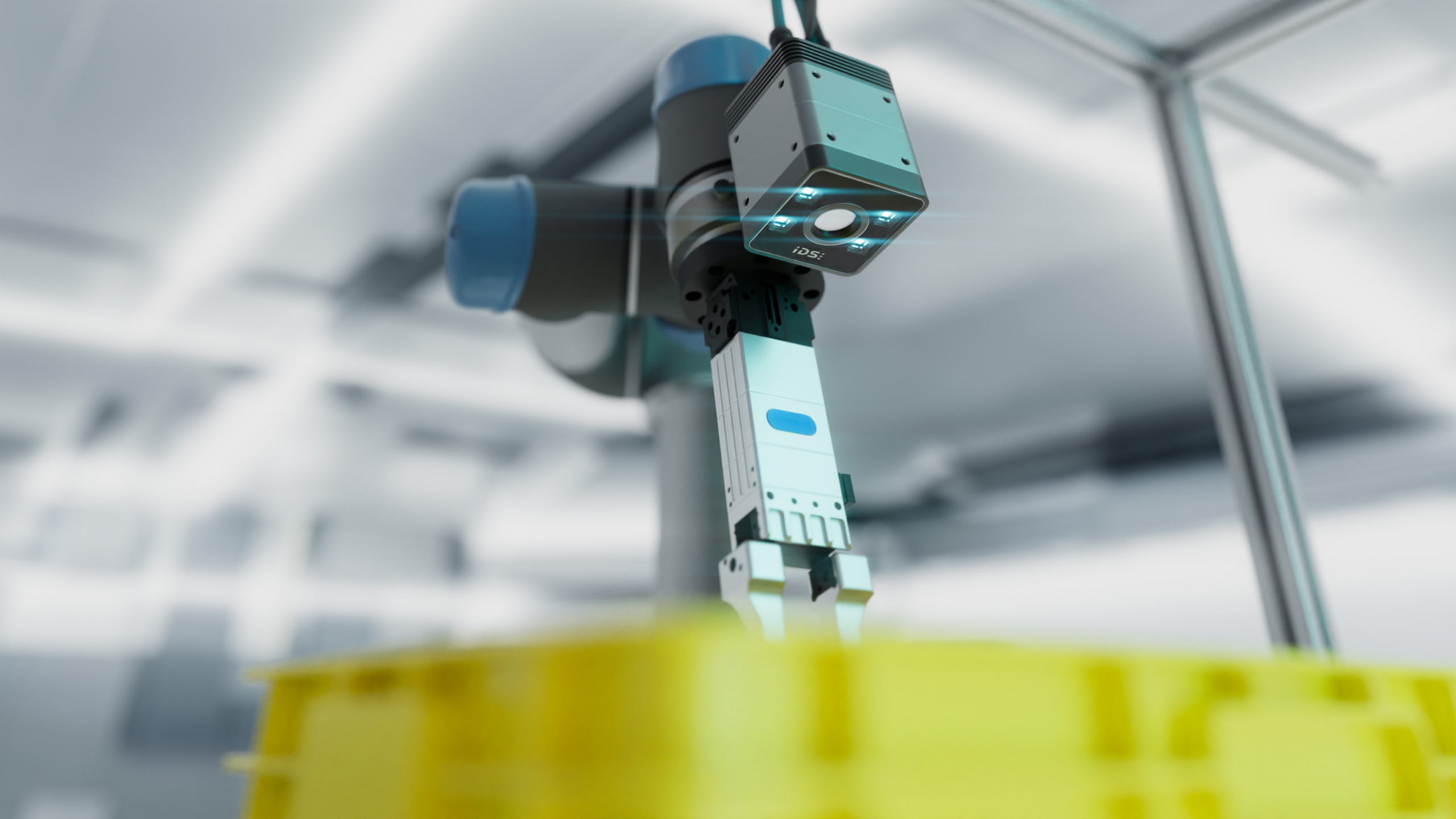
The headline product is Nion, IDS’s 3D time-of-flight camera aimed at tasks where “good enough” depth has a habit of becoming the bottleneck. IDS is positioning it for volume measurement, depalletising, conveyor applications, and mobile robotics, with a focus on stable depth capture under difficult lighting. The camera combines 1.2 MP depth capture with an IP67 enclosure for use in industrial environments, and IDS is explicitly calling out performance in full sunlight — a common pain point for ToF deployments around dock doors, yard-facing openings, and mixed indoor-outdoor workflows.
That push for more dependable depth data sits alongside a second theme: visual transparency for day-to-day operations. IDS’s uEye Live series is designed for monitoring and process control via live streaming, with configuration handled through a web interface rather than a bespoke application stack. The premise is simple: plants and distribution centres want a “live view” of what actually happened when the line jammed, when a tote went missing, or when a robot stopped where it should not have stopped. Standalone streaming cameras are increasingly being used as a lightweight layer for fault reconstruction and remote support, particularly where installing and maintaining a full PC-based vision system adds operational overhead.
The third strand is event-based imaging, where the sensor captures only pixel-level changes rather than full frames. In intralogistics terms, that maps neatly to high-speed motion analysis — fast objects, quick direction changes, and short-lived events that are easy to miss when bandwidth, storage, or latency constraints force compromises. IDS is positioning its EVS camera options for scenarios where conventional frame-based capture either wastes data on static background or struggles to keep up without turning the system into a logging exercise.
The LogiMAT line-up reflects where warehouse automation is heading: more sensing at the edge, more usable data per bit transmitted, and fewer “black boxes” in the process chain when something goes wrong.