IN Brief:
- DP World’s Novi Sad terminal now has a scheduled rail link to Herne, giving Serbia its first regular intermodal rail connection to Western Europe.
- Operated by LKW Walter, the service runs three times a week, with a reported 45-hour journey and up to 80 percent lower emissions than all-road transport.
- The launch arrives as road freight faces tighter border processing and driver mobility rules, increasing the value of fixed-rail alternatives.
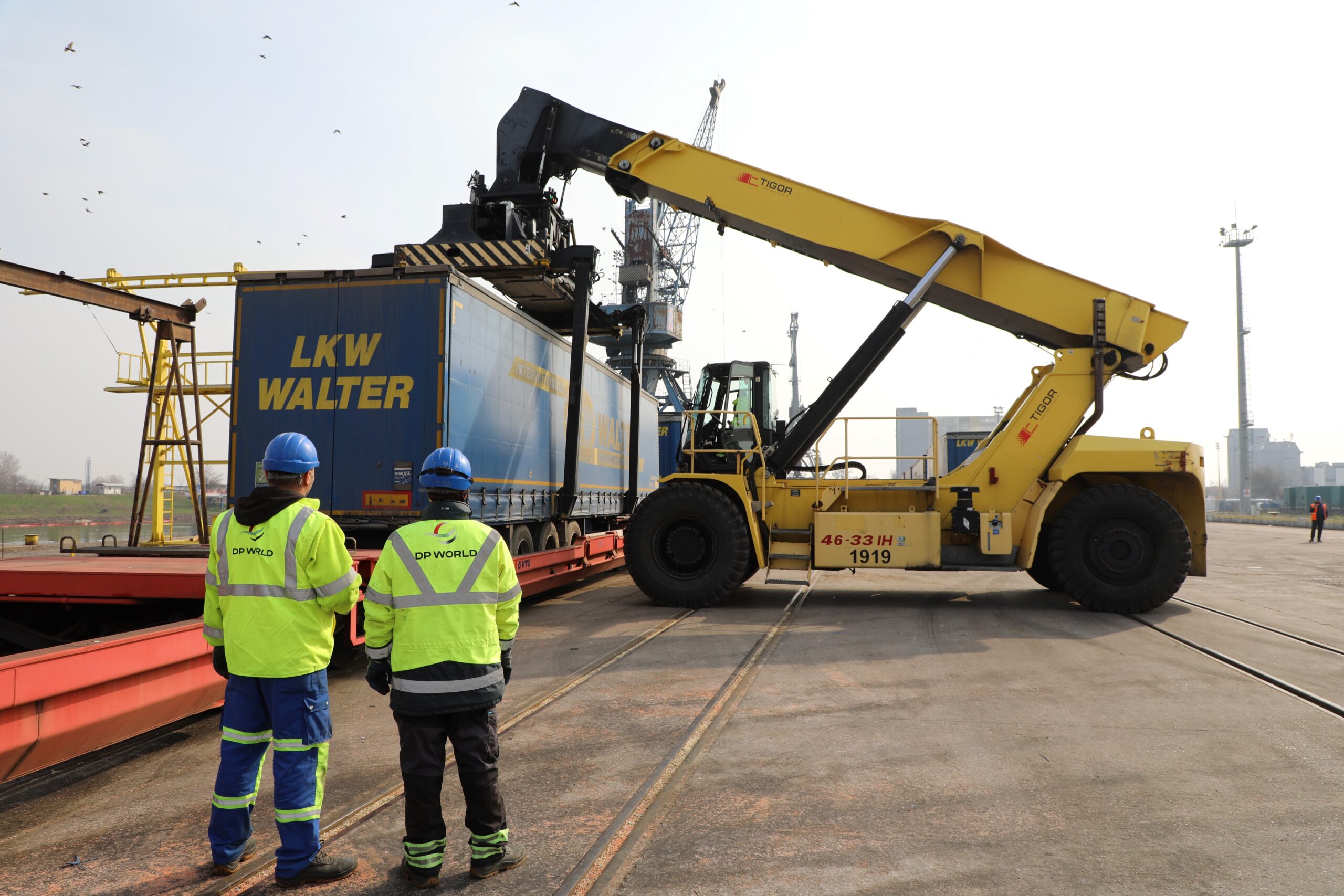
DP World has launched a scheduled intermodal rail service between Novi Sad in Serbia and Herne in western Germany, establishing a regular corridor between the Balkans and the Rhine-Ruhr logistics region at a time when long-haul road freight is becoming harder to run predictably. Operated by Austrian transport company LKW Walter, the service runs three times a week and makes Novi Sad the first terminal in Serbia to offer a regular intermodal rail connection to Western Europe.
The commercial case is built around schedule certainty as much as modal shift. The journey has been reported at 45 hours, and DP World says the rail connection can cut carbon emissions by up to 80 percent compared with full-road transport. That combination matters for shippers moving industrial, retail, automotive, and consumer cargo between Serbia and Germany, where transport planning is increasingly being squeezed by emissions targets, border administration, and driver rules all at once.
Those pressures are not theoretical. The EU’s Entry/Exit System started operating on 12 October 2025 and is being rolled out progressively, with full implementation due in April 2026. At the same time, stricter driver mobility rules continue to complicate long cross-border road schedules. Gokhan Yurteken, general manager of DP World Novi Sad, said the new connection gives customers “a faster and more predictable route” into Western Europe.
The launch also reinforces DP World’s effort to position Novi Sad as more than a domestic port. The company describes the terminal as a multimodal Danube gateway, linking river, road, and rail connections across Southeast Europe while also offering warehousing and customs support. That matters because it allows Serbian export flows to move into a larger European network from an inland node, rather than treating long-distance trucking as the default bridge to Germany.
For western Germany, Herne is a sensible counterpart. The Rhine-Ruhr region remains one of Europe’s densest industrial and consumption zones, making it a strong landing point for a service aimed at regular, repeatable trade flows rather than opportunistic spot movements. In that sense, the route is less a symbolic rail link than an attempt to create a dependable operating lane between Serbia’s manufacturing and agricultural base and one of the continent’s biggest logistics clusters.
Vladica Ćulafić, chief commercial officer at DP World Novi Sad, said intermodal rail offers “greater speed, predictability and lower administrative complexity.” That will not remove road from the chain, but it does give shippers a scheduled alternative at a point when border friction, driver availability, and timetable volatility have become expensive parts of the road model.
The next test is whether the service can hold frequency and build volume. If it does, Novi Sad to Herne could become more than a new connection on the timetable — it could start changing how Serbian cargo is routed into Western Europe.