IN Brief:
- Arvato has taken a minority stake in Unchained Robotics as part of a strategic partnership focused on modular robotics for logistics and fulfilment.
- The company plans to deploy a three-digit number of robots across its network over the coming years, testing systems in live operating environments before wider rollout.
- The partnership points to a more standardised approach to automation, with Europe and the US identified as priority markets for scaling.
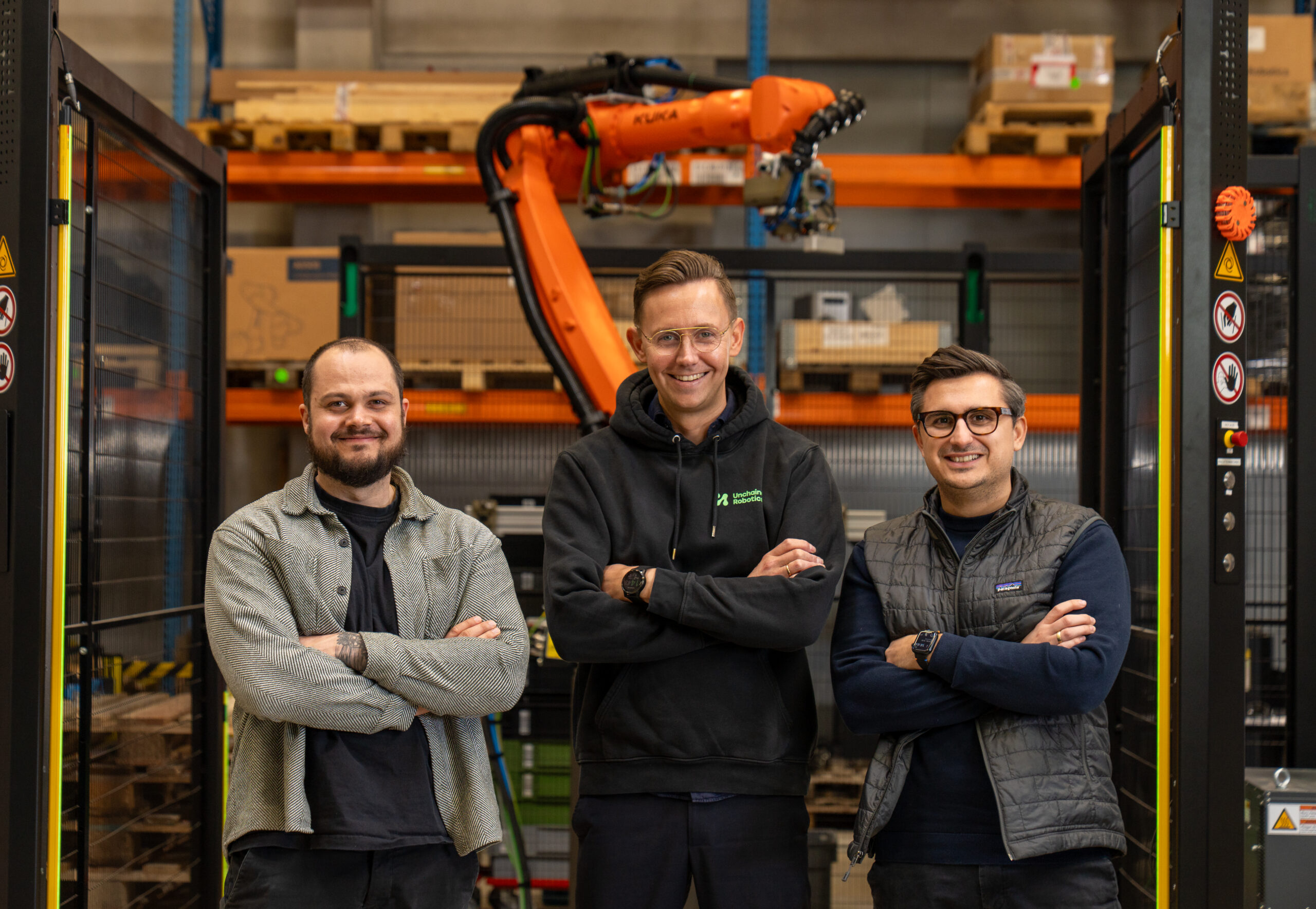
Arvato has struck a strategic partnership with Unchained Robotics and acquired a minority stake in the German automation company, as the supply chain and fulfilment operator steps up plans for wider robotics deployment across its network.
The arrangement is designed to move robotics out of the isolated pilot phase and into repeatable operational use. Arvato said it plans to implement a three-digit number of robots across logistics and fulfilment environments over the coming years, with new systems developed around specific use cases, tested in live operations, and then prepared for larger-scale rollout.
That sequencing is important. Warehousing is not short of robotics demonstrations. It is short of deployments that survive contact with shifting order profiles, customer-specific handling rules, seasonal peaks, and the daily messiness of multi-client fulfilment. Arvato is effectively using its own operations as the proving ground, while Unchained Robotics brings the modular and vendor-independent architecture needed to avoid locking every site into a different technology stack.
“Automation today must achieve one thing above all: deliver impact quickly,” said Frank Schirrmeister, CEO of Arvato. “Through our partnership with Unchained Robotics, we are accelerating the deployment of robotics in our operational logistics. We develop solutions from practice for practice – and use robotics specifically as an accelerator for scalable implementations.”
Unchained Robotics, founded in 2019 in Paderborn, has built its business around brand-agnostic automation and modular turnkey systems. Its proposition is not that every warehouse needs a bespoke robotics programme, but that robotics should be easier to configure, integrate, and operate across different environments. That makes it a logical fit for a logistics operator trying to standardise deployment rather than collect disconnected proofs of concept.
Arvato also appears to be treating the partnership as the next layer in a broader automation strategy already under way. In January, the company expanded its AutoStore system at Hams Hall in the UK to 165 robots and 87,600 bins, lifting capacity by more than 30% and pushing peak picking performance above 26,000 orders per day. Across its global network, Arvato says it now operates more than ten AutoStore systems spanning Germany, the Netherlands, the UK, Austria, and the US.
The Unchained partnership takes that automation push into a wider robotics category. Instead of focusing on one storage and picking architecture, it opens the door to a more mixed estate of modular robotic applications developed against operational need. Arvato said the collaboration is built for geographic scaling too, with the US singled out as an important expansion market alongside Europe.
For Unchained Robotics, access to complex international logistics operations offers a faster route to product hardening. For Arvato, the value is implementation speed and a degree of standardisation across sites. “Arvato gives us access to highly complex, international logistics setups where we can further develop our solutions directly in real operations,” said Mladen Milicevic, founder of Unchained Robotics.
The minority stake suggests this is more than a supplier agreement dressed up for the press room. Arvato wants robotics that can be rolled out across a network, not admired in one aisle and forgotten in the next. That generally requires closer alignment between operator and developer than a conventional procurement contract provides.