IN Brief:
- Maersk has opened a 1.1 million sq ft automated global and regional distribution centre in Singapore.
- World Gateway II combines multi-shuttle, ASRS, and autonomous case-handling systems with bonded storage and real-time transport visibility.
- The facility points to a regional hub model built around automation density, modal proximity, and contract logistics integration.
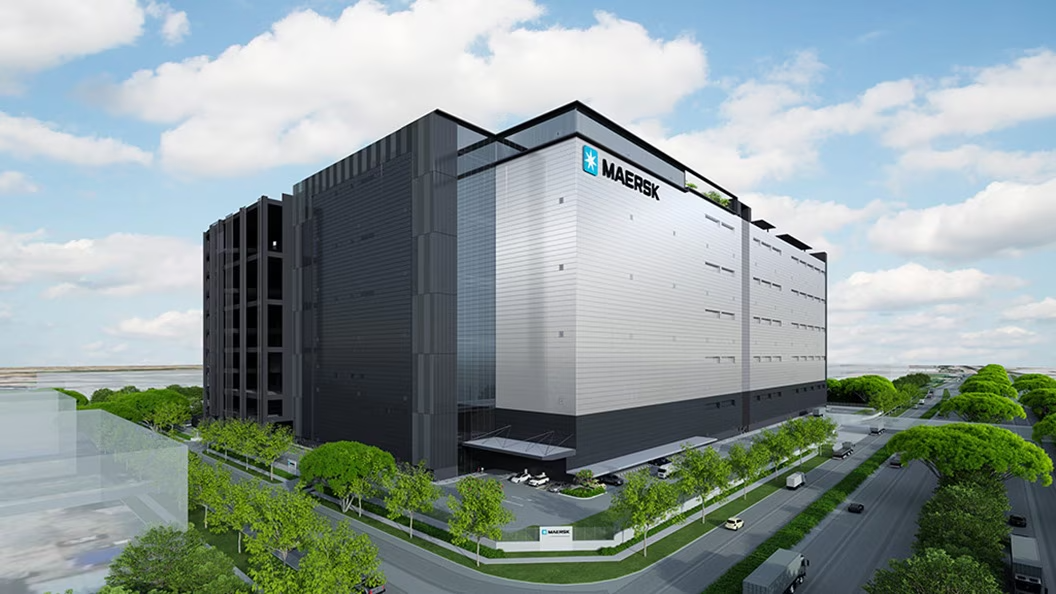
Maersk has opened World Gateway II in Singapore, adding a fully automated 1.1 million sq ft distribution centre to its Asia Pacific logistics network. Located close to Tuas Mega Port and within reach of Changi Airport, the site is positioned as both a regional and global fulfilment node, serving B2B and B2C flows across Asia Pacific for sectors including lifestyle, FMCG, retail, wellness, and technology.
The technical profile of the building is as important as its size. Maersk says the facility uses a multi-shuttle system, automated storage and retrieval, and autonomous case-handling robots to reduce manual handling, improve order accuracy, and shorten lead times. It also includes customs-bonded, zero-GST storage, alongside an end-to-end transport management system intended to provide real-time shipment visibility. In practice, that gives the site both warehousing density and a stronger role in inventory control.
There is also a clear network play behind the investment. Singapore has long functioned as a regional consolidation and distribution base, but World Gateway II tightens the connection between contract logistics and transport infrastructure in a more deliberate way. By placing automation-heavy distribution capacity close to a major port complex and air gateway, Maersk is reducing the distance between inbound freight, storage, value-added handling, and outbound fulfilment. That kind of compression matters when inventory strategies are being rewritten around faster turns and more selective stock positioning.
Maersk says it has invested more than S$200 million in the development, and that the site is already around 70 per cent occupied. At full operation it is expected to create about 500 jobs tied to digital and automation-led operations. The immediate significance is added capacity, but the longer-term point is broader: regional distribution centres are no longer judged only by square footage. They are increasingly being measured by how tightly automation, customs treatment, and transport connectivity can be combined in one controlled logistics environment.