IN Brief:
- The P-CAL project has validated a fully autonomous terminal tractor in a live port environment.
- The system combined terminal operations integration, secure communications, crane coordination, and a cyber-resilient architecture.
- The next phase will depend on broader deployment across mixed traffic, higher activity levels, and more complex operating conditions.
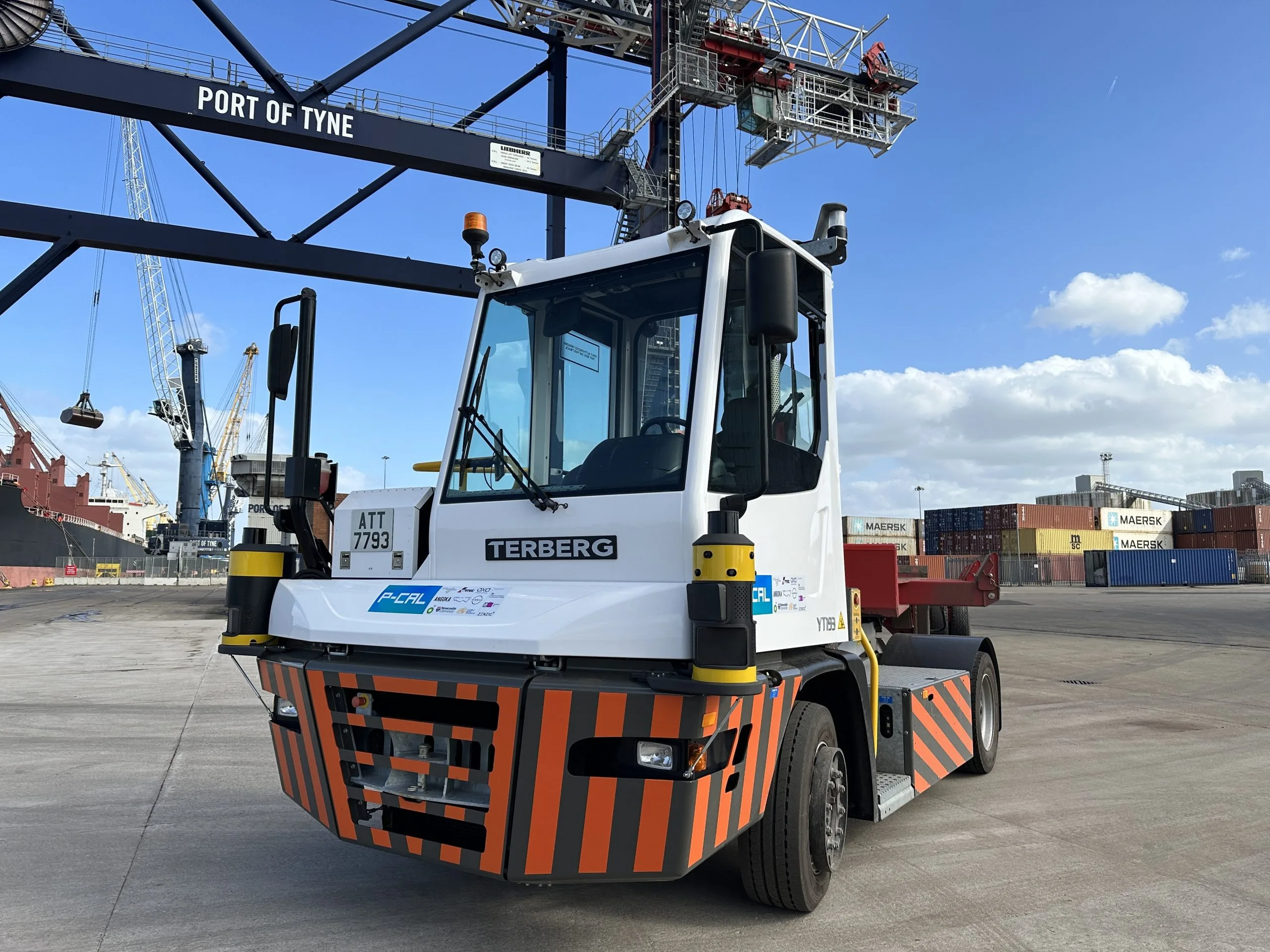
The Port of Tyne and its project partners have completed the P-CAL programme, a live autonomous logistics trial designed to test container movements in a working port environment. Led by the North East Automotive Alliance, the project deployed and validated a fully autonomous terminal tractor on the quayside, moving the discussion beyond controlled demonstrations and into the daily conditions of industrial freight operations.
The programme covered far more than the vehicle itself. Partners designed and tested an autonomous container transport system built around secure mesh communications, integration with terminal operating systems, coordination with live crane activity, and a cybersecurity framework intended to support safe remote and automated operations. The trial was carried out within a defined operational design domain shaped around the realities of a busy port rather than an isolated test track.
Ports have long been seen as practical environments for early freight automation because many of the movements are structured, repetitive, and safety-critical. Yard tractors, shuttle routes, and short container transfers offer a clear route into autonomous deployment. The challenge has always been the wider system. Quayside operations depend on accurate timing, dependable communications, human interaction, and integration with other terminal processes. An autonomous tractor has to work inside that system rather than beside it.
P-CAL approached the problem as an operational systems project rather than a vehicle-only project. That is why it carries more weight than many broader autonomous mobility announcements. In a freight setting, the key question is not simply whether a vehicle can navigate. It is whether the operation can monitor it, trust it, govern it, and fit it into the cadence of live terminal activity without adding new points of failure.
The consortium behind the project included Oxa, ANGOKA, Nissan, Newcastle University, and LOGISTEED UK, combining expertise across autonomy, cyber security, industrial systems, and logistics. That mix reflects the direction automated freight is taking. Deployment is becoming less about a single technology stack and more about how multiple systems are integrated, supervised, and secured within an operational environment that cannot tolerate much ambiguity.
The next stage will be more demanding. A bounded trial can validate the technology, but wider commercial use depends on how it performs across denser traffic, multiple vehicles, more varied operating patterns, and larger volumes of live work. Questions around exception handling, safety management, interoperability, supervision, and return on investment become sharper as soon as the operating envelope expands.
Even at this stage, the Port of Tyne project is a useful marker for UK logistics and industrial automation. It suggests that autonomous freight deployment is likely to emerge first through tightly defined, repetitive movements where safety, labour allocation, and system integration can be improved in measurable ways. From there, the route into broader port, industrial, and logistics-site use becomes easier to chart.