IN Brief:
- Westons Cider has opened a 43,000ft² distribution facility near its Herefordshire mill.
- More than 3,000 pallet positions will double the producer’s owned storage capacity.
- Shuttle racking will reduce forklift travel while limiting external storage and internal stock transfers.
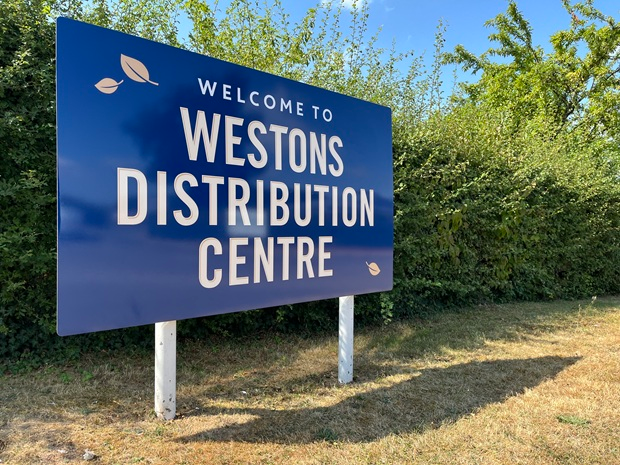
Westons Cider has opened a £3.5 million distribution centre in Ledbury, Herefordshire, doubling its owned warehousing capacity and bringing a larger share of finished goods storage closer to the company’s production operation.
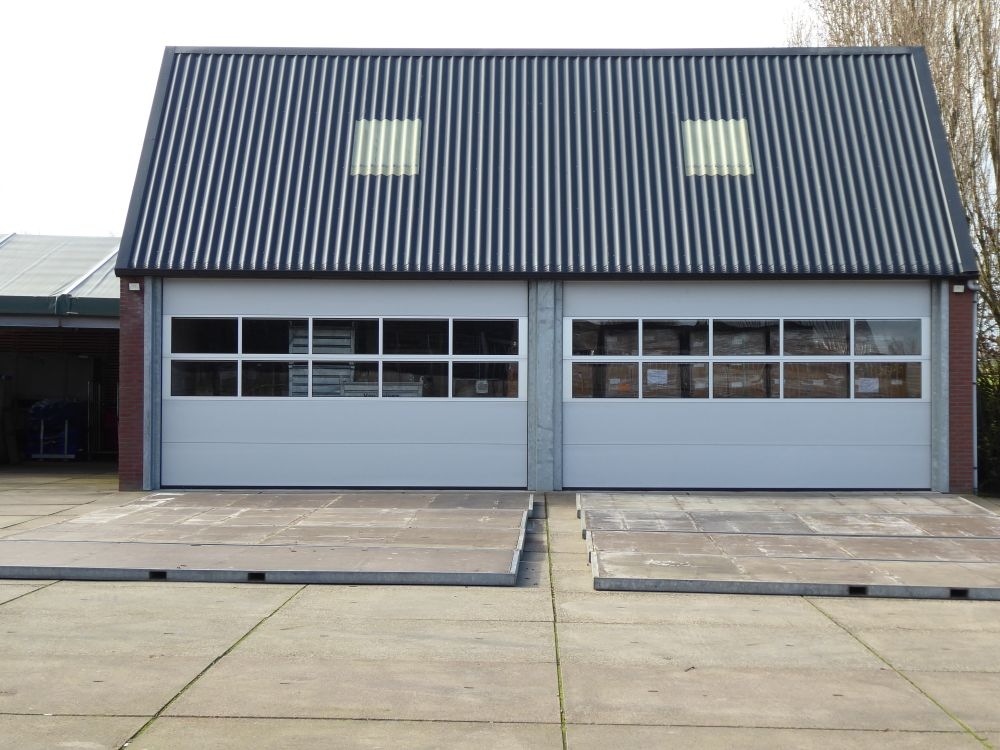
The 43,000ft² facility provides more than 3,000 pallet positions and is located near Westons’ historic mill and the main transport routes serving the site. By centralising inventory, the producer intends to reduce its reliance on external warehouses and simplify the movement of goods between production, storage, and dispatch.
A semi automated shuttle racking system forms the core of the warehouse. Pallets are carried into deep storage lanes by powered shuttles, allowing the building to hold more stock within each aisle while reducing the distance travelled by forklift operators.
The configuration also limits the number of vehicle movements required inside the racking structure. Forklifts can deposit pallets at the face of each lane rather than repeatedly entering deep storage positions, improving separation between equipment, infrastructure, and warehouse personnel.
Westons produces brands including Henry Westons, Stowford Press, and Old Rosie, creating a finished goods portfolio with varied pack formats, batch dates, promotional cycles, and customer order patterns. The new capacity will support both domestic deliveries and export inventory.
Holding stock close to production reduces transfers to external sites that consume haulage capacity without progressing an order towards the customer. Each additional movement also introduces another booking, loading, unloading, stock reconciliation, and damage risk before the product reaches final dispatch.
The distribution centre forms part of a wider logistics programme that has moved more than 80% of the company’s forklift fleet onto electric power. Route planning technology is also being used across outbound deliveries, aligning warehouse changes with vehicle scheduling and transport utilisation.
Food and beverage manufacturers are carrying a wider range of stock keeping units while customers continue to demand tight delivery windows and frequent replenishment. Warehouses designed around long production runs and full pallet orders increasingly have to accommodate mixed loads, promotional inventory, and fluctuating seasonal demand.
High density storage can release substantial capacity within an existing footprint, although it requires disciplined inventory allocation. Pallets placed several positions deep are less individually accessible than stock held in selective racking, making product velocity, batch rotation, and expiry management central to lane planning.
Fast moving product families can occupy dedicated lanes, while slower items require enough flexibility to prevent stock becoming trapped behind pallets assigned to different orders. The quality of the warehouse data and operating rules will therefore influence the return achieved from the physical equipment.
Domino’s has adopted a similarly integrated model at its £25 million Avonmouth supply chain centre, where manufacturing, storage, and distribution functions have been brought together to support a growing national network.
At a larger industrial scale, Unilever’s Port Sunlight logistics investment has connected production with automated warehousing and more efficient transport flows, reducing the number of routine vehicle movements between factory and storage.
Westons’ project applies the same principle within a regional manufacturing operation. The investment does not seek full warehouse automation, but instead targets the repetitive movement that consumes the most floor space and forklift time while retaining conventional handling around receiving and dispatch.
That measured approach can provide greater flexibility than a fixed automated storage system where demand remains seasonal or the product mix continues to change. Shuttle racking can be adjusted by lane and product family, while conventional vehicles can still access the wider warehouse operation.
External capacity may remain useful during exceptional peaks, promotions, or harvest related production cycles, but routine dependence on third party space exposes manufacturers to tariff increases, capacity shortages, and additional transport. Owning more core storage gives Westons direct control over inventory priorities and dispatch sequencing.
The long term performance of the Ledbury centre will be visible through inventory accuracy, pallet retrieval time, forklift utilisation, external storage spend, and delivery reliability. Its strongest return should come from removing avoidable movement between production and dispatch, rather than from the additional square footage alone.